





Dear Shaded Viewers,
For the first time, Martin Margiela is opening the doors of his own personal archives and letting the pieces step out into the world under the hammer of Maurice Auction in collaboration with Kerry Taylor Auctions. This landmark sale, held in Paris, is not a tribute assembled at a distance, but a direct gesture from the designer himself—an artist editing his past in real time and inviting collectors, museums and obsessives to share responsibility for his legacy.
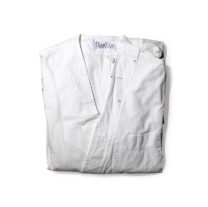
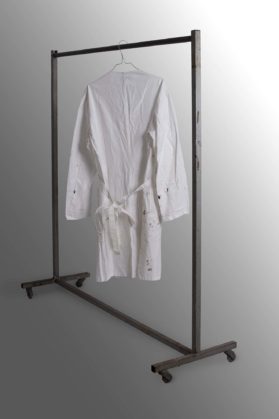
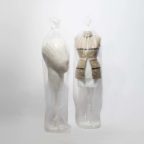
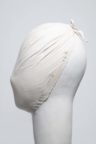
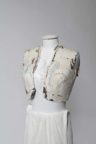
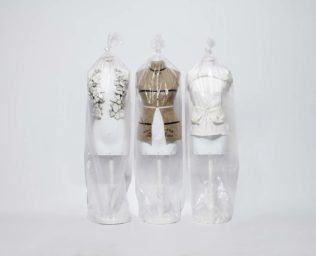
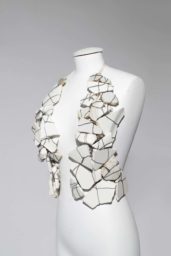
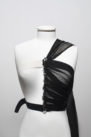
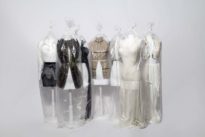
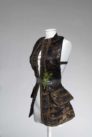
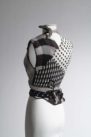
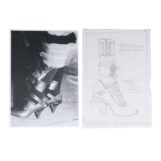
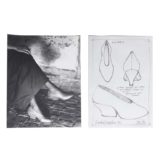
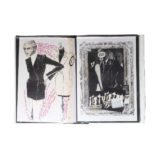
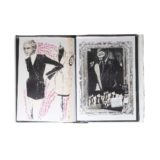
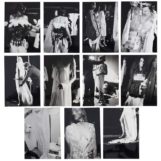
The auction gathers more than 150 lots spanning Margiela’s career from 1987 to 2008, crystallising the journey from the first hand‑made dossier to the fully formed Maison Martin Margiela myth. At its origin is the now‑legendary 1987 portfolio, a white‑cotton‑covered file of silhouettes and accessories first stolen on a train, then obsessively remade, a double that eerily mirrors Margiela’s own fascination with copy, replica and the aura of the original. Nearby, his personal white “blouse blanche” apron and the cotton veil studies tell the story of a maison that chose anonymity and uniformity as a radical stance, redirecting attention from personality to pure clothing.
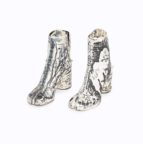
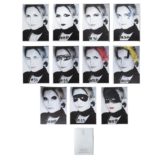
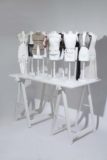
Margiela’s world was never limited to garments and this sale proves it: a personal telephone drowned in rough white paint, its number scrawled directly on the body, sits alongside graffiti‑covered Tabi boots tagged spontaneously by the public at the Galliera museum in 1991. There are Barbies dressed in runway‑faithful looks, miniature replicas of iconic silhouettes created years later on a half‑scale mannequin, and long fringe diadems once suspended above Polaroids like relics of an oversized dream. Each lot reads like a footnote to the larger Margiela cosmology, where the studio wall, the fitting room, the street and the museum all collapse into a single, continuous installation.
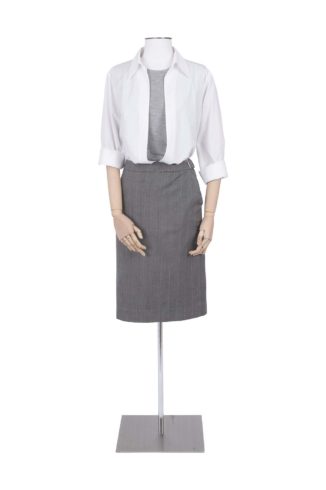
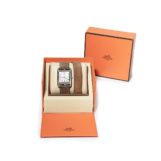
Adding an unexpected emotional charge, the sale unveils the Hermès wardrobe of Margiela’s late mother, La Bouchet, a woman who encouraged his desire to become a designer and later wore the quiet revolutions he created for the house between 1997 and 2004. Her cashmere‑and‑silk ensembles, iconic vareuse shirts, enlarged clochette necklace, Cape Cod watch with the first double tour strap and the rare Initial bag form an intimate counter‑archive: luxury defined as comfort, quality and timelessness, lived day after day rather than staged on the runway. These are not just museum pieces; they are portraits of a bond between mother and son, of a designer testing ideas of power, discretion and ease on the person whose approval mattered most.
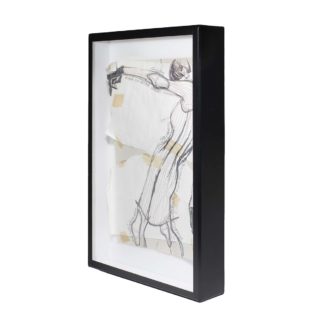
Before the gavel falls, the work is staged in an exhibition conceived as a slow, almost cinematic unwrapping, curated by longtime friend Bob Verhelst in a space evoking a small early‑20th‑century manufacture. Visitors move through an environment where most objects are shown for the first time, encountering the fragility of photocopied drawings, the grain of painted cotton, the weight of cashmere and leather at near‑intimate range. It feels less like a preview of lots for sale and more like a final atelier visit with Margiela himself—a rare moment where the designer’s famously elusive presence is felt in every pencil mark, every pin, every handwritten note.
Later,
Diane
