
Dear Shaded Viewers,
« Corset is a kind of carapace, it’s a protection to help you face the world. That’s in my experience. »
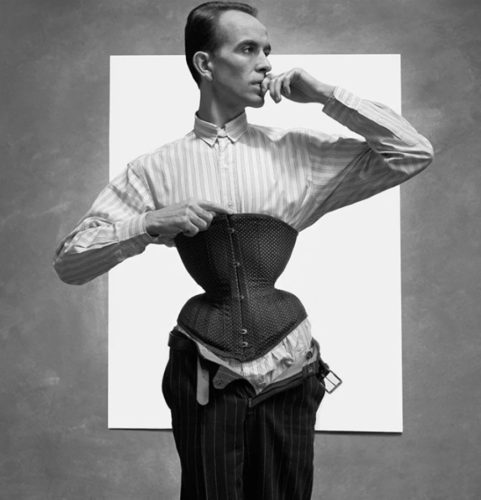
Known as the world’s most dedicated corsetier, he has spent decades shaping bodies, redefining silhouettes, and challenging modern ideas about comfort and beauty. Yet behind the tightly laced waists and dramatic hourglass figures lies a story rooted in rebellion, performance, and devotion to craft.
Whether regarded as a symbol of female oppression made manifest or as an object of fetishistic fascination, the corset is marked by a history of controversy, sexuality, power and pleasure.
For Mr Pearl, the seeds of fascination were sewn in childhood, lacing his grandmother into her corsets, a formative ritual that would come to define his life’s work.
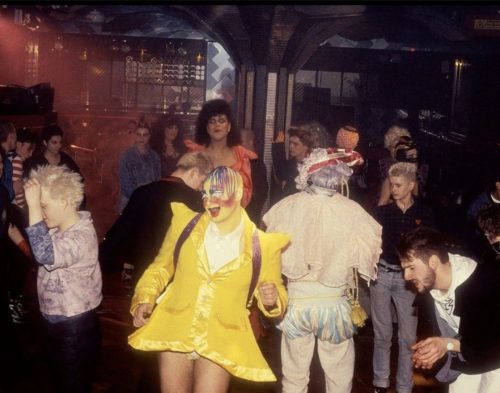
When Mr Pearl arrived in London in the early 80s, the city was a world apart from what it is today. Margaret Thatcher was in government, and the nightclub scene was everything. Even living on the dole and sleeping in a squat, nothing felt more important than dressing up and going out. It was on that scene that he encountered what were known as the butterflies of the night, among them Steve Strange, still running clubs, and later Leigh Bowery, whom Mr Pearl met when Taboo opened. He became Bowery’s assistant and close collaborator, moving through a world that was, as he describes it, hedonistic, vibrant, and fiercely creative.
Fashion, however, was never his original focus. His early interests lay in theatre and dance, making costumes for choreographers including Michael Clark and Matthew Hawkins. It was through this work that he grew preoccupied with a particular silhouette, the tiny waist, and began exploring how fabric could be used to achieve it. His first corsetry client was Pete Burns of Dead or Alive, followed by New York party impresario Susanne Bartsch, for whom he made an outfit for her first Love Ball in 1989. Leigh Bowery was the MC that evening, and it was there that Mr Pearl met Thierry Mugler, who invited him to create a piece for one of his Paris runway shows. That chance encounter drew him fully into the world of fashion.
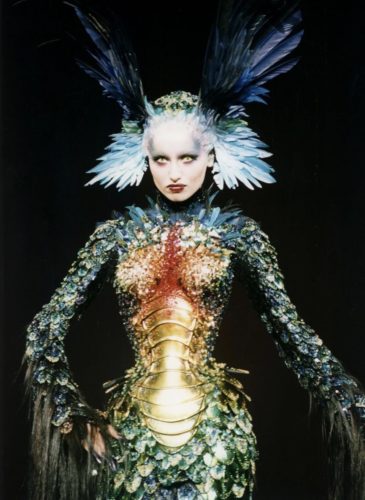
His influence on the fashion world is difficult to overstate. Over nearly two decades, Mr Pearl became the corsetier of choice for the most daring names in couture, building pieces for Thierry Mugler, Jean Paul Gaultier, John Galliano, Alexander McQueen, Christian Lacroix and Antonio Berardi. Each collaboration pushed the possibilities of the silhouette further. For Mugler’s Fall-Winter 1997 couture show La Chimère, Mr Pearl collaborated with Jean-Jacques Urcun on the creation of the iconic centerpiece. Designed by Stefano Canulli for Thierry Mugler, the piece combined Urcun’s metallic elements with Mr Pearl’s corsetry and construction work. The elaborate creation took approximately two months to complete and involved around 25 artisans working on the embroidery and sewing. Performers including Kylie Minogue and Dita Von Teese have long worn his creations on stage, cementing his status beyond fashion and into spectacle. Yet despite the breadth of his collaborations, Mr Pearl has always kept his distance from trends.
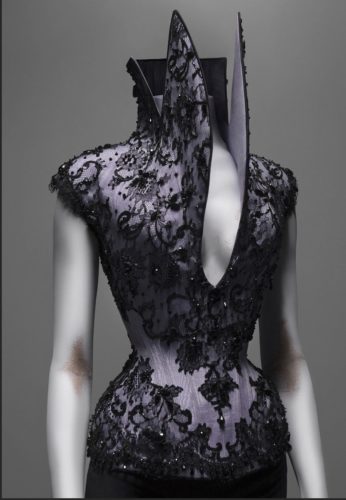
At its core, Mr Pearl understands corseting as something far older and deeper than fashion. It is, he insists, a discipline, daily, ritualistic, and rooted in an ancient form of body adornment that spans both sexes.
Though today it is largely considered a female domain, the practice has always been shared by men and women alike, stretching back to the Minoan culture of Crete.
It is precisely this depth of history that continues to fascinate him.
We look forward to continuing the conversation with Stephen Jones at ASVOF 18 this November.
Later,
Eva
