
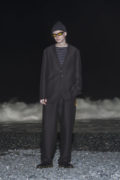
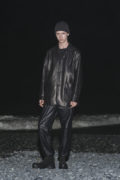
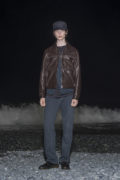
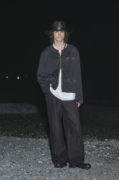
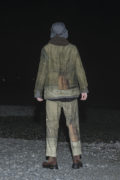
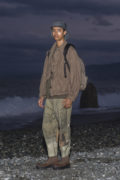
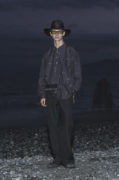
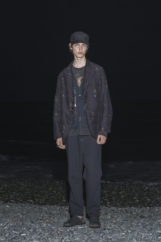
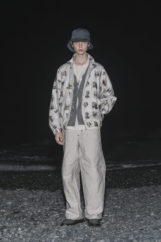
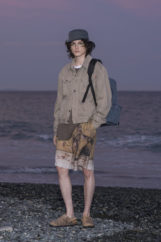
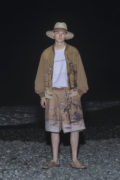
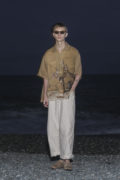
Dear Shaded Viewers,
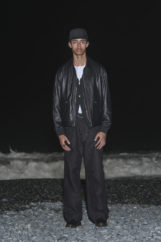
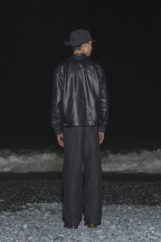
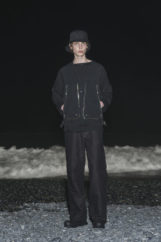
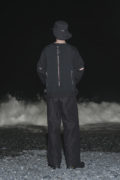
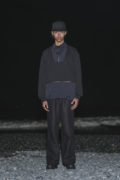
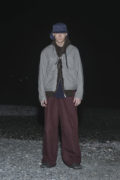
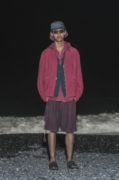
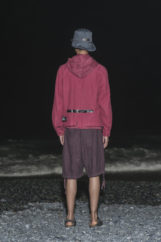
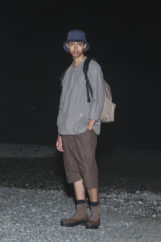
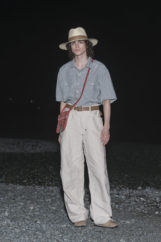
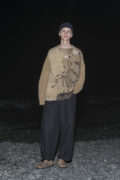
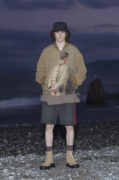
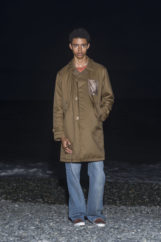
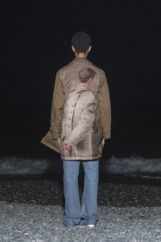
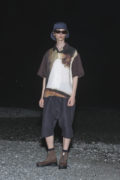
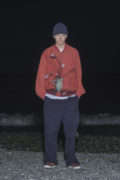
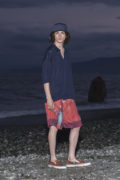
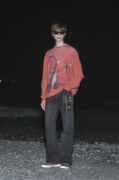
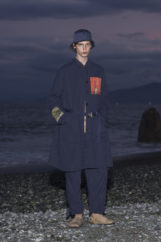
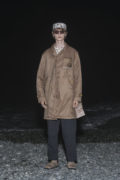
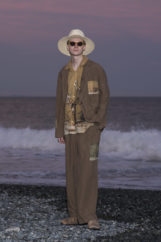
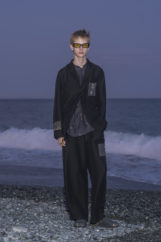
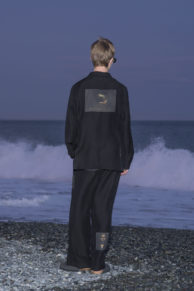
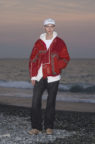
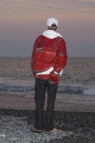
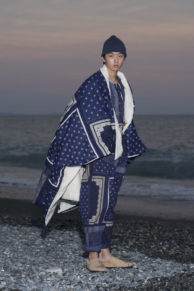
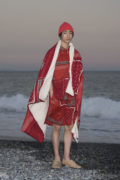
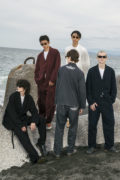
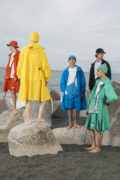
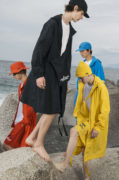
There is a particular kind of quiet that settles over a showroom on the last stretch of Paris Fashion Week Men’s — the runways have mostly emptied out, the calendar starts to thin, and what’s left feels less like spectacle and more like confession. That was the mood today at the UNDERCOVER showroom, where Jun Takahashi opened the doors on his Spring/Summer 2027 men’s collection, “Poisonous Plants” — and, fittingly for a designer who has spent over two decades treating beauty and dread as two names for the same thing, the room felt less like a product presentation and more like a greenhouse somebody forgot to ventilate.
It has been twenty-four years since Takahashi first crossed the Périphérique and showed in this city, arriving with Rei Kawakubo’s blessing and a reputation for treating fashion as a place to make noise rather than just clothes. Two decades on, the noise has quieted into something more controlled, but no less unsettling — and “Poisonous Plants” is proof that age has only sharpened his instinct for unease dressed up as comfort.
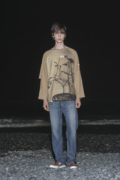
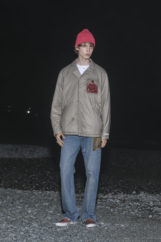
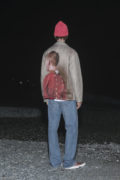
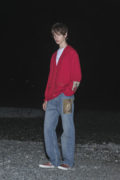
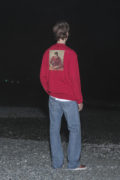
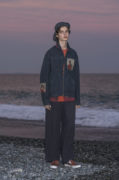
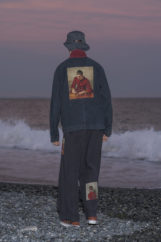
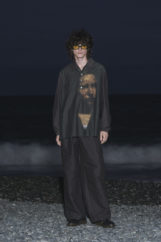
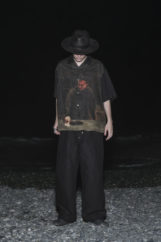
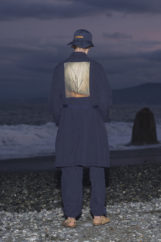
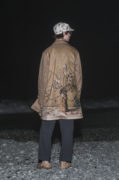
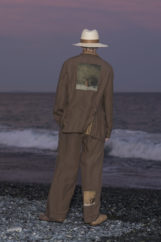
The headline here is the return of Michaël Borremans, the Belgian painter Takahashi has called one of the artists he reveres most, and whose work last infiltrated an UNDERCOVER collection eleven years ago, on the “Instant Calm” outerwear of Fall/Winter 2016 — the season that sent Borremans’ eerily lit portrait “Black Mould” out into the world on the back of a fishtail parka. Eleven years is a long time to wait for a sequel, and the wait shows in how confidently the two sensibilities have folded into each other this time. Where “Instant Calm” was about importing a single haunting image onto outerwear, “Poisonous Plants” feels like it was built from the inside of Borremans’ whole world — his oil-on-canvas boys in red-and-blue livery from the “Lakei” series, faces turned away or half-obscured, posture both deferential and faintly threatening; the shadowed, magnetic stillness of his “Magnetics” portraits; and, running through everything, his recurring obsession with cut flowers dying beautifully in a vase — magnolias caught mid-wilt, bare branches rendered with the same tenderness as a body.
That last image is the whole thesis of the collection, really. Takahashi has always understood that the most interesting danger is the kind that doesn’t announce itself — and here it arrives as flowers. Florals worked into “sophisticated materials,” as the brand puts it, rendered in UNDERCOVER’s own offbeat, slightly wrong techniques, so that a relaxed shirt or an easy trouser reads first as something gentle and wearable, and only on a second look gives up its hint of poison. It’s the Borremans paradox translated into cloth: technical mastery in service of disquiet, precision that never quite resolves into safety. You want to live in these clothes. You’re just not sure you should trust them.
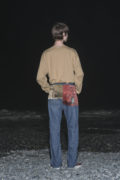
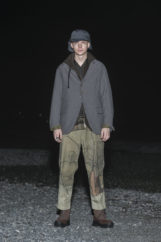
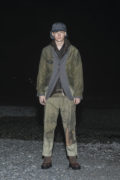
Practically, this is some of the most wearable UNDERCOVER has felt in years, and that’s clearly the point — “relaxed wear” is the brand’s own phrase for it, comfort placed front and center rather than treated as a concession. The supporting cast of collaborators reinforces that everyday-object instinct: VANS for the kind of low, scuffable footwear that disappears into a wardrobe, KIJIMA TAKAYUKI presumably handling the headwear with his usual exacting hand, EASTPAK turning the humble backpack into something with a little more poison in its lining, and Dr. Martens grounding the whole thing in the boots that have outlived every trend they were ever supposed to be a part of. None of these read as logo exercises. They read like Takahashi quietly recruiting the most dependable, least precious names in everyday dressing and asking them to carry a darker idea than usual.
It’s worth remembering, looking at all this relaxed, easy-breathing tailoring, that Takahashi is a marathoner — Gyakusou, his long-running Nike running line, came out of his own daily mileage, not a marketing brief. There’s a runner’s logic underneath “Poisonous Plants” too: nothing here looks like it would fight you. The clothes are built to move, to breathe, to be forgotten about on the body — right up until you notice the flower print is curling at the edges like something pressed too long in a book, or that the “comfort” of a piece has a stiffness to it that wasn’t quite expected. That’s the UNDERCOVER sleight of hand, performed again at full maturity: he never needed the loudest collection in the room. He needed the one you’d still be thinking about on the walk home.
For those of us who have followed this brand since those first nervous, electric Paris seasons, “Poisonous Plants” doesn’t feel like a victory lap so much as a quiet reaffirmation. Takahashi at this stage of his career doesn’t need to prove that he’s an artist as much as a designer — he’s been doing both, visibly, since long before it was fashionable for designers to call themselves that. What he’s proven today, instead, is that the things that made UNDERCOVER essential in 2002 — the discomfort smuggled inside the beautiful, the joke that turns serious if you look too long — haven’t dulled with two and a half decades of success. They’ve just learned to wear something softer on top.
UNDERCOVER x VANS UNDERCOVER x KIJIMA TAKAYUKI UNDERCOVER x EASTPAK UNDERCOVER x Dr.Marten Michaël Borremans (born in1963), a Belgian painter and filmmaker © Michaël Borremans Courtesy the artist and David Zwirner.
Later,
Diane
