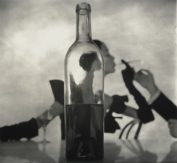
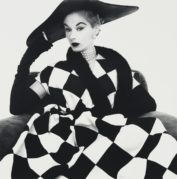
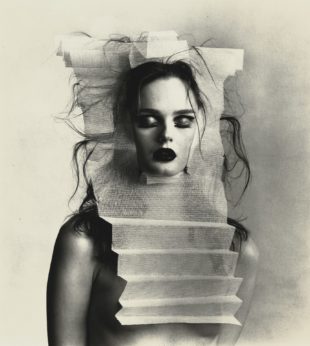
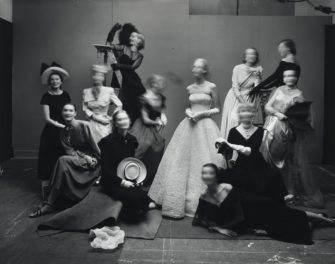
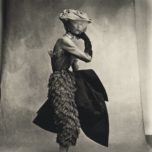
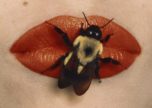
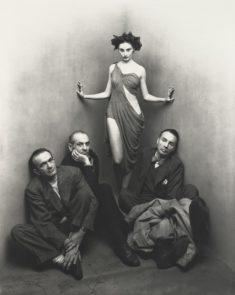
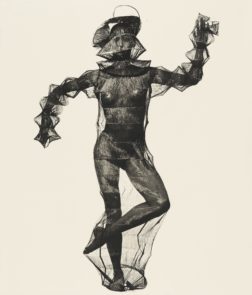
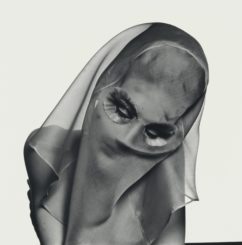
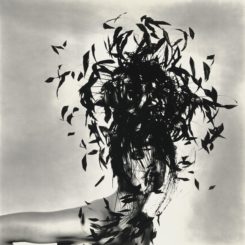
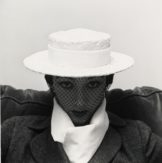
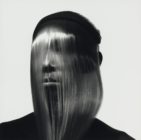
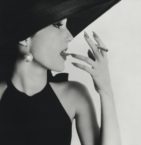
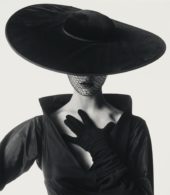
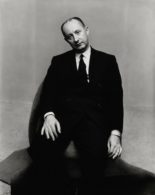
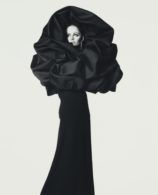
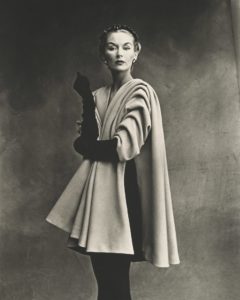
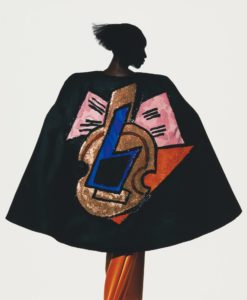
© The Irving Penn Foundation,© Condé Nast
Dear Shaded Viewers,
There is a particular kind of silence in an Irving Penn photograph. Not the absence of noise, but the presence of restraint — a mind that knew exactly what it wanted to see, and refused everything else. This autumn, the Maison Européenne de la Photographie opens its thirtieth-anniversary season with Penn & Fashion, a tribute long overdue to the man who spent sixty years proving that less, photographed correctly, is everything.
30 September 2026 — 17 January 2027
Penn arrived at Vogue almost by accident, in 1943, sketching layouts for Alexander Liberman before Liberman looked at him and saw something else entirely — “a mind, and an eye that knew what it wanted to see.” He was handed a camera. He never really put it down.
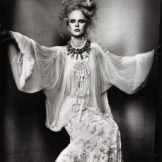
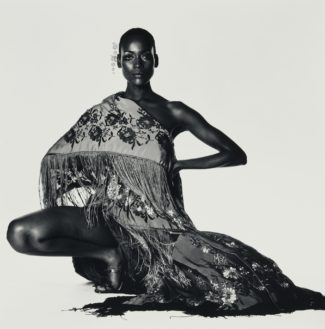
What follows, across more than one hundred prints drawn from the MEP’s own collection and the extraordinary Nicola Erni holdings, is less a retrospective than an argument: that fashion photography, at its most exacting, is a form of portraiture, and portraiture, at its most exacting, is a form of sculpture. Two screens meeting at a corner. A worn carpet. Daylight. Within that narrow frame — a frame Penn built deliberately, the better to eliminate everything that did not matter — walked Dior, Balenciaga, Picasso, the Duchess of Windsor, and a very young Lisa Fonssagrives, who became his most enduring collaborator and, not long after Paris, his wife.
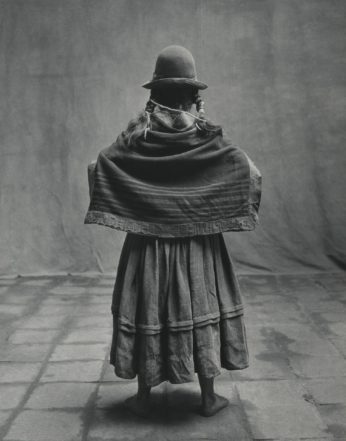
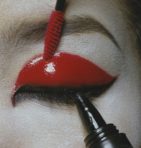
The exhibition moves chronologically, and the pleasure is in watching a language sharpen. The haute couture of the 1950s, photographed against nothing at all, so that only the cut and the woman wearing it remain. The 1948 detour to Lima and then Cuzco, where Penn photographed Quechua sitters with the same unwavering attention he gave a Balenciaga gown — the beginning of a lifelong interest in the mask, and in dignity under scrutiny. The startling colour experiments of the 1990s, the beauty pages Liberman called “stoppers,” images built to arrest a reader mid-turn: a bee settled on a lacquered red mouth, an eyelid painted like a wound.
And at the centre of it, unexpectedly moving: thirteen years of correspondence-by-photograph with Issey Miyake, a designer Penn never once watched present a collection. The clothes arrived in New York, were photographed, and were sent back to Tokyo as transparencies — an entire creative relationship conducted in absence, and somehow all the more intimate for it. “Penn’s photographs allow me to see my own creations,” Miyake said. It is not hard to believe him.
The MEP has always claimed Penn as one of its own — he was a founding artist of the collection, and maintained ties with the institution from its earliest years. This season, that history deepens: a major gift from Tom Penn, drawn from what once belonged to Lisa Fonssagrives-Penn herself, joins the walls alongside loans from the Irving Penn Foundation and the Miyake Issey Foundation. It is, in every sense, a homecoming.
The season continues in the MEP Studio with two smaller, sharper gestures — pays des merveilles, Nanténé Traoré’s first museum exhibition, built from expired film and the disquiet of a remembered coastline, and David Gilbert’s Apparitions, fragile paper-and-light constructions photographed like a theatre after the actors have gone. Both feel, in their own way, like Penn’s children: image-makers still asking how much can be left out of a frame before what remains becomes unbearably present.
Penn & Fashion runs 30 September 2026 to 17 January 2027 at the Maison Européenne de la Photographie, 5/7 rue de Fourcy, Paris 4th. Closed Mondays and Tuesdays; full admission €13.
Later,
Diane
