
The Master in Creative Knitwear Design at Accademia Costume & Moda, developed in collaboration with Modateca Deanna, offers a unique environment where creativity, technical expertise, and experimentation converge. More than a specialization program, it encourages students to challenge conventions, explore new narratives, and push the boundaries of what knitwear can communicate today.
For two days Fondazione Sozzani was transformed into a laboratory of research and innovation, hosting an exhibition, a fashion show, and a series of talks dedicated to the evolving language of contemporary knitwear. At the heart of the event were fourteen students and fourteen final collections, alongside four industry projects developed in collaboration with some of the most significant names in Italian fashion and supported by a network of more than fifty companies across the manufacturing supply chain.
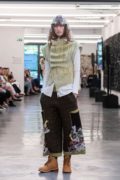


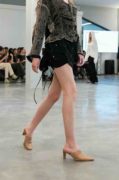
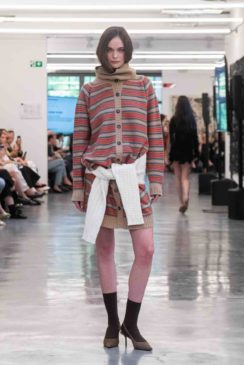

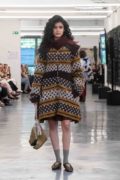
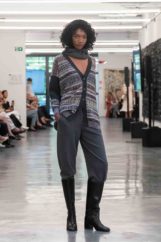
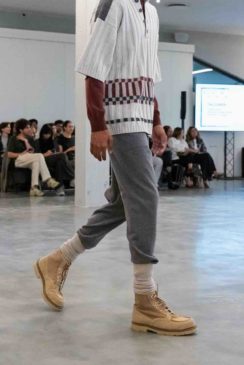
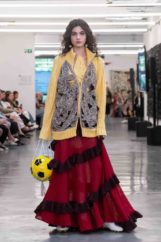
The result was a vision of knitwear that transcended its traditional role, revealing its potential as a powerful medium for storytelling and personal expression. Through projects bearing evocative titles such as Born to Die by Eleonore Beeckman, Don’t Grow Up, It’s a Trap by Viola Manzoni, Fragilmente Forte by Marta Tognotti, Grammatica delle Pietre by Yu Chen Xu, Leaving the Nest by Cristina Blázquez, and Petra.Mia by Rosa D’Alberti, yarn became a vehicle for emotional reflection, conceptual inquiry, and cultural exploration. Themes of memory, fragility, transformation, and belonging emerged through collections that demonstrated the expressive versatility of knitwear.
Alongside the personal collections, engagement with industry represented one of the most valuable aspects of the educational experience. Lorenzo Pezzotta collaborated with Brunello Cucinelli and Sportmax, Arianna Foffano with Falconeri, while Matteo Rosellini and Marta Tognotti developed projects for Faliero Sarti. These collaborations challenged students to engage with the established identity of a brand while preserving their own creative perspective.
The students were mentored in their individual collections by Edward Buchanan, a designer renowned for balancing experimentation with rigorous design methodology. He was joined by Gigi Vezzola, who supervised the projects developed with Max Mara and Falconeri, and Simona Barbieri, who guided the groups working with Brunello Cucinelli and Faliero Sarti. Their involvement highlights a fundamental aspect of contemporary knitwear education: creativity flourishes when supported by technical mastery and a deep understanding of production processes.

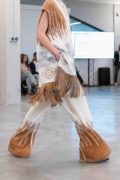






Equally significant was the contribution of Italy’s manufacturing excellence. Companies including Alpes Filati, Blu di Prussia, Lanificio Cariaggi, Steiger, Tollegno 1900, and Zegna Baruffa Lane Borgosesia, together with many other partners, supported the development of the collections, reaffirming the central role of craftsmanship and industry in shaping the next generation of designers.
What emerged was a vision of knitwear as a sophisticated design discipline, where material, structure, and construction become tools for innovation and cultural expression. Far beyond technique alone, the collections demonstrated how knitwear can serve as a language through which new ideas, identities, and perspectives take shape.
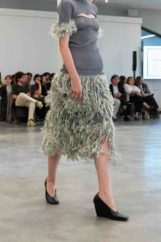
The final fashion show offered a compelling synthesis of this journey. Yet beyond the runway, what remains is the sense of encountering a new generation of designers who regard yarn not simply as a material, but as a creative language capable of expressing vulnerability and strength, memory and innovation, intimacy and experimentation—one stitch at a time.
Knitwear, as we know, has an image problem. It’s grandma stuff, Christmas sweaters, that slightlysmug sense of comfort a good cashmere gives you. Then you go to a show like the Master in Creative Knitwear Design at Accademia Costume & Moda, in collaboration with ModatecaDeanna, and you discover that wool isn’t actually reassuring at all. If anything, it’s sometimes almost aggressive, or melancholy, or strangely conceptual.
The event took place at Fondazione Sozzani – a space that keeps proving itself the heart of the contemporary cultural scene. For two days, June 4 and 5, it became the stage for a small textile revolt. On the program was everything you’d expect: a fashion show, an exhibition, talks, drinks. But the real substance was something else: fourteen students, fourteen final capsules, four projects in collaboration with companies that carry serious weight in Italian fashion. Plus a list of technical partners so long it takes up half a press release – around fifty names, from spinners to knitwear makers to workshops.
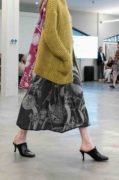
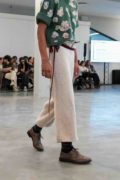
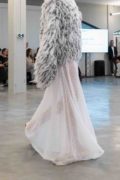
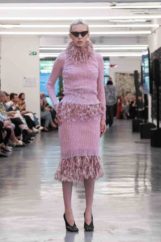
The students took a soft, warm, well-behaved material – yarn – and pulled it inside out. The titles of their personal projects are already a mission statement: Born to Die (Eleonore Beeckman), Don’t grow up, it’s a trap (Viola Manzoni), Fragilmente forte (Marta Tognotti), Grammatica delle pietre(Yu Chen Xu), Leaving the Nest (Cristina Blazquez), Petra.Mia (Rosa D’Alberti). There’s not much desire to comfort here, or to make things nice and cozy. Instead, there’s the idea that knitwear can be edgy, conceptual, even a little tragic. As if those threads had suddenly found their voice to tell a completely different story.








The Company as Alphabet
Among the industry projects, the names carry weight. Lorenzo Pezzotta designed for Brunello Cucinelli and Sportmax, Arianna Foffano worked for Falconeri, Matteo Rosellini and Marta Tognotti for Faliero Sarti. Because the real lesson in a master’s like this is getting your idea through the walls of a company that already has its own language, its own grammar, its own customer – and doing it without betraying either yourself or them.
Guiding the students through their personal collections was Edward Buchanan, a designer who knows how to balance rigor and freedom. Alongside him, Gigi Vezzola oversaw the projects for Max Mara and Falconeri, while Simona Barbieri supported the groups working on Brunello Cucinelli and Faliero Sarti. That’s no small detail. In a course called Creative Knitwear Design, creativity without technique is just smoke. And here, technique was taught by people who’ve been working with it for years.
The Weight of a Thread
But the detail that stands out most, flipping through the list of acknowledgments, is the roster of manufacturers: Alpes Filati, Blu di Prussia, Lanificio Cariaggi, Steiger, Tollegno 1900, Zegna Baruffa Lane Borgosesia, and dozens more. People who turn wool into serious stuff, who know the weight of a thread and the tension of a stitch. With them, the students made garments that stand on their own, that you can touch, that you can wear. Reinforcing the idea that knitwear today is neither a revival nor a nostalgic return to craftsmanship. It’s a way of thinking of fabric as structure, as slow construction in a world that wants everything fast. And slowness, these days, is almost an act of rebellion.
One Stitch at a Time
Then there was the fashion show. But fashion shows, as everyone knows, last only a few minutes. A rhythm, an order of exits, a few camera flashes. What stays with you afterward are the names of the fourteen students – Eleonore Beeckman, Cristina Blázquez, Rosa D’Alberti, Arianna Foffano, Emma Karlsson, Viola Manzoni, Anita Nuccioni, Ana Beatriz Pais De Sa Pinto, Valentina Pedalino, Elif Peksert, Lorenzo Pezzotta, Matteo Rosellini, Marta Tognotti, Yu Chen Xu – and the idea that one of them, a few years from now, might no longer have to explain that knitwear is a real language. And like any language, it can say gentle things, or it can grate. Here, thankfully, it grated – making heard the impatience of those who want to remake the world one stitch at a time.
