

Dior Christmas
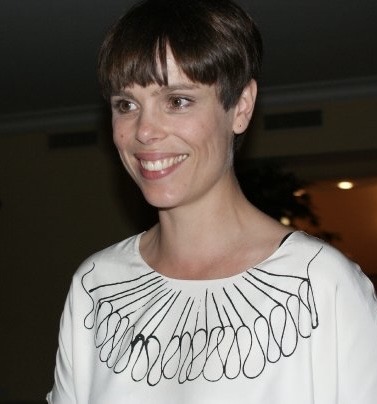
Bianca Redgrave, Studio Private
A New Aesthetic Frontier in Fashion
Fashion imagery is entering a new emotional and aesthetic phase, one shaped as much by cultural shifts as by technology itself. AI, CGI, VFX and immersive techniques are no longer futuristic concepts; they’re embedded in the campaigns shaping today’s visual culture, often invisibly.
This shift isn’t about abandoning photography or physical craft. Nothing can replace what a fully realised fashion team brings to an image: the instinct of a photographer or director, the precision of styling, the presence of a model on set, and the nuanced work of post-production that ties it all together. Fashion imagery only works when every element is in conversation with the others.
The result is a hybrid visual language. Campaigns today can blend live action with CGI to create intricate details, building worlds that feel emotional and immersive rather than artificial. This isn’t about fashion abandoning its identity or trading heritage for a new, tech-led aesthetic; it’s about using these tools to carry that identity further, faster, and more consistently than ever before. As luxury houses are now producing content at an unprecedented scale, technology has become essential to protecting, not diluting, a brand’s visual language.
Technology as a Creative Catalyst
Across the industry, the convergence we’re seeing isn’t a replacement of craft, but an evolution of how fashion imagery is conceived, produced and delivered. Today, technology is increasingly used as a means of extending creative intent, not diluting it.
Italian luxury brand Moncler, for example, has integrated AI into both design and campaign-making, collaborating with Maison Meta to explore generative approaches to quilted textures and extreme-weather silhouettes. The resulting imagery doesn’t feel futuristic for the sake of it, it reinforces Moncler’s long-standing obsession with performance and innovation.
What defines these projects is restraint. Technology functions as a supporting material to explore the form, speed up ideation and push visual boundaries. Alongside this, creative direction and brand authorship remain human-led.
Inside the Hybrid Process
Increasingly, fashion imagery is built through hybrid workflows that balance agility with control. Across the industry, AI and generative tools are often used at the earliest stages of production to explore ideas and atmospheres quickly, before being refined through more traditional, elevated CGI, and established post-production techniques.
Rather than relying on AI as a final output, Studio Private uses AI within bespoke pipelines. This approach preserves the depth and weight associated with high-end fashion imagery, while allowing for faster experimentation and iteration, a necessity in an industry producing content at unprecedented scale.
You can see this balance playing out across recent campaigns. In Dior’s Cruise campaign, delicate CGI butterflies were woven into live-action footage, not to overpower the imagery, but to heighten its sense of fantasy and lightness. In Nike’s Fit For a King, editor Adam Muscat shaped the narrative through rhythm and contrast, allowing digital techniques to amplify emotion rather than dominate it.
This hybrid approach also reflects how our artists work more broadly. Technology is treated as one of the many materials used within the creative pipeline, not a shortcut. VFX artist Louisiane Trotobas, whose practice was shaped by her time at SHOWstudio under Nick Knight, brings a painterly, tactile sensibility to digital craft. Across Dior, Miu Miu, Hermès and Loewe, her work prioritises mood and emotion over technical display, allowing images to feel human and deliberately imperfect.
An upcoming, unreleased Adidas x Hermanos Koumori project by Adam Muscat offers another clear expression of this convergence. Without revealing detail, the work blends sound, movement and digital craft to create a fashion narrative that feels immersive rather than overtly technological. It’s fashion as atmosphere, something felt as much as seen.
Why Hybrid Feels Right Now
What’s driving this moment isn’t just innovation, but restraint. As AI becomes more visible culturally, many fashion brands are deliberately pulling back from hyper-polish. There’s a growing understanding that meaning comes from choice, from knowing when to use technology, and when to let an image breathe. Especially as fashion imagery accelerates across platforms, knowing what not to do has become as important as knowing what’s possible.
Fashion has always evolved by absorbing new tools. What’s different now is the emphasis on authorship. The most compelling imagery today isn’t defined by how advanced the technology is, but by how carefully it’s guided. The convergence of fashion, art and technology is already here, influencing how images are made and stories are told. From our vantage point, the most successful work isn’t driven by machines, but by the people using them with care for the brand values they’re upholding and the identities they’re shaping.
The next era of fashion imagery won’t be purely digital or purely traditional. It will be hybrid, shaped by creatives who treat technology not as a machine, but as material. Used to deepen atmosphere, emotion and storytelling, while keeping the human hand firmly at the centre.
Bianca Redgrave, Studio Private
