
Dear Shaded Viewers,
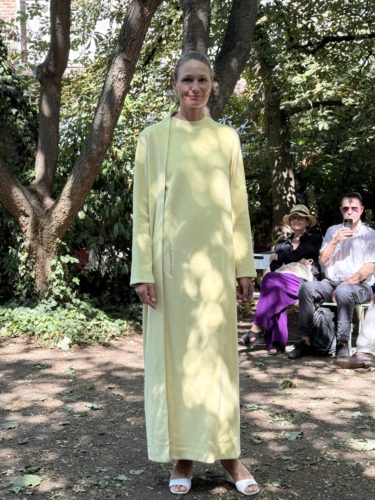
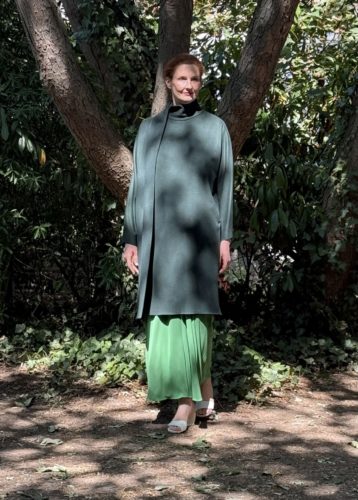
Adeline André has many seasons under her belt and her signatures remain splendid brilliant linear simplicity and an extraordinary sense of colour plus a wonderful understanding of placing a fabrics next to each other. I think of her as less of a couturier and more as a sculptress like perhaps Barbara Hepworth. this season once again she showed 17 pieces in the tranquil garden under the trees. A select group of us sat in a circle and applauded quietly as each piece appeared her models many of whom she has used before appeared so relaxed and perfectly dressed in each piece it was an object lesson and how couture should work in relationship to the clients and the designers understanding of how someone may look in real life. If the very simplicity and restraint of what Madame André does is not for everyone this applies to every house each having their faithful clients, in this particular case some of her key elements in construction have been within her repertoire for decades. Even the simplest pieces or those in heavier fabrics are relaxed and the way initiated hood just slipped off the model’s hair exemplified the ease of this version of couture. So, perhaps my favourite personally was.the the three sleeve pure wool doe skin tunic in yew green over a grass green viscose jersey dress, although I also loved the turmeric outfit with wide silk mousseline trousers, or maybe, I loved every piece. As I left this the final collection of the season, I thought how lucky we were and how lucky am I to see the work of this visionary.
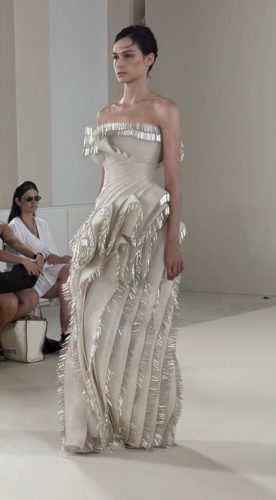
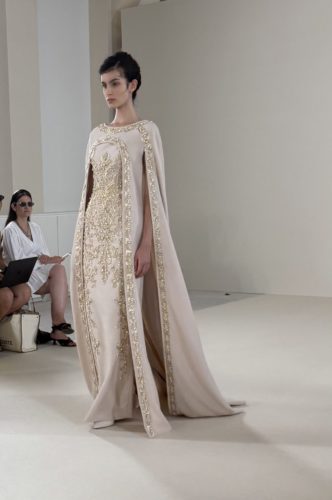
If rigour and a ruthless editorial eye are rare, then Rami Al Ali should be even more valued for his vision of couture. The colour palette is restrained, almost bleached into pale and warm neutrals tending towards the natural with sand, flax, straw, and other natural inspirations. Embroideries, decorations, and embellishments are often almost tonal to the fabrics shimmering and light reflecting and indeed sometimes confusing the viewer as to their exact composition becoming almost iridescent. The architectural lines of the clothes, the superb construction from the ateliers and the designers own talents are clearly expressed throughout the collection. Even the pieces which are the most complex have a lightness of touch, a feeling of spareness and not a massive construction or overworked complexity, it’s as though each layer of fabric is fluttering over the other. One dress has embroidery on the top layer and then more as though behind a gauze screen on the next layer, also close to it was apparent that the bell shaped skirt was constructed out of bands of fabric to create the shape. Cultural references are discreet, barely hinted at and never overworked yet clearly apparent within the designers repertoire. In the final analysis the collection is about beauty, a concept less easy to realise than many people imagine here it was faultlessly conveyed.
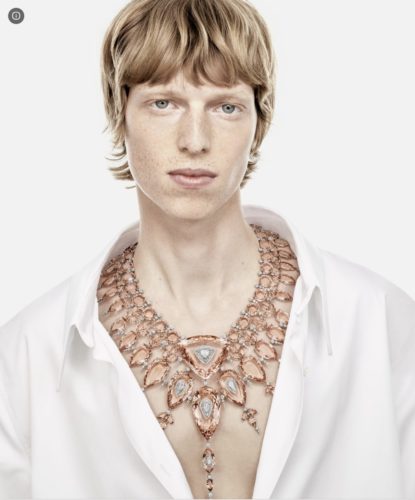
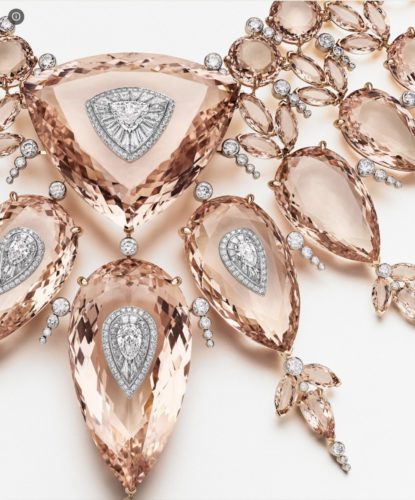
At Boucheron Creative Director Claire Choisne showed five necklaces, plus rings, which looked as though a line had been drawn in time. Human Being was the title of the collection and “ looking at what connects us, then drawing closer to discover what sets us apart” was the concept of thought behind the pieces. Each were similar, but the differences in the lines were extraordinary Rain, Flower, Light, Tattoo and Checkers. The savoir faire was beyond magical, the craft the workmanship breathtaking. Yet all this would be nothing if the pieces were not also staggeringly beautiful. Shown on five models, male and female in crisp white white shirts and plain trousers it was Claire explaining the work which was amazing. Hand drawn flowers, stones so fragile to vibration they needed new ways to be shaped, colour matching stones which as natural objects are rarely the same, forming tattoos behind the stones, or hollowing out stones to make them lighter. The linear journey of each and every component is a fragile thread where expertise has to join infinite patience, intense focus and concentration and love. Because throughout every moment of our time at Boucheron the love of the team for their work, and the pieces they produce is abundantly clear. Thank you once again for permitting me to be part of this joy and beauty.
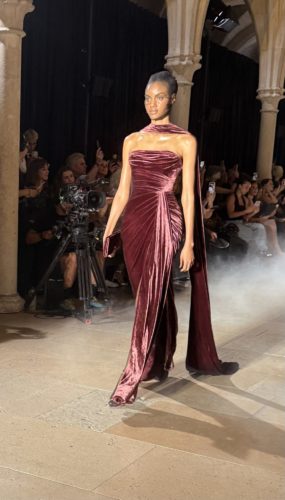
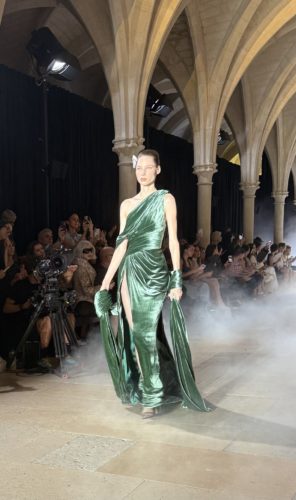
There was a fascinating update if you like at Zuhair Murad, the pieces accompanying his amazing evening wear were as great standouts as the dresses. A floor length black velvet coat had a swagger and a dandyism that was spectacular, a bubble of a jacket curving around the model’s body and slipping from her shoulders was really beautiful, like petals around her. A feathered cape moved from black at the hem to deep crimson across the top a garment any diva would covet. There is a new lightness to many of the decorations with flowers and florals both embroidered and applique, whilst Rococo patterns made traceries around the body. There were many standout pieces, as they always are, but perhaps I would select the brilliant deep Bordeaux draped dress which recalled Rita Hayworth in her heyday, and a beautiful pale ecru ballgown with cascading flowers in the same colour scattered across the surface, like a bleached Mary Antoinette gown. The lines and silhouettes, the shapes the cleanliness of the outlines of the pieces have a boldness to them and a drama. Yet they are never over complex or overstated, they are an illustration of couture at its most refined, taking the silhouette as a starting point to provide a background for decoration, and offering those various options in shapes to many different clients.
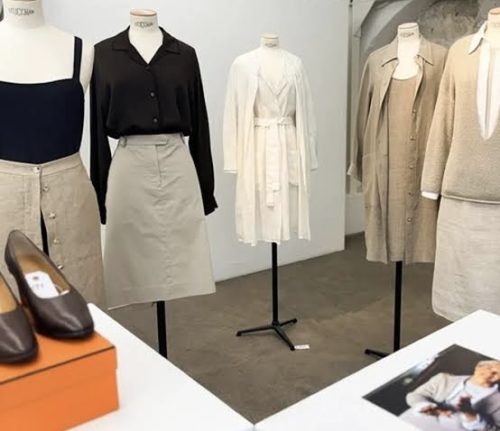
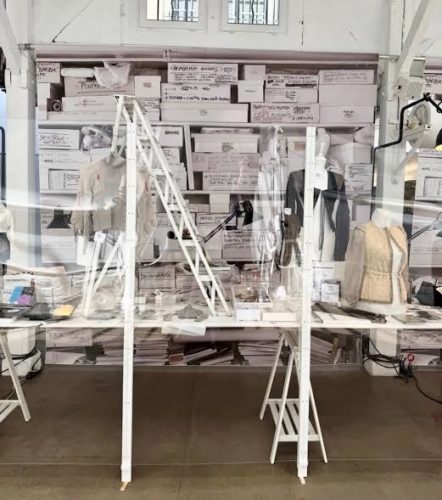
The wonderful Martin Margiela – Personal Archive auction at Maurice Auction in collaboration with Kerry Taylor Auctions, featured not just his archives but also the wardrobe of Hermès clothes he had given his mother during his seasons as creative director. The visual display was entirely done by Martin Margiela himself. With their purity of line and restraint of colour and fabric the Hermès pieces look as good now as back in1997-2003. Silhouette, line and the simple were always key in Margiela’s work. One has only to see his reverence and reference to the white coat his team wore to understand so much of his creative ethos, and his ability to create the new basic or simple foundation piece whilst also venturing into the madness of the original Margiela Artisanal. His archive, like the work of the great Madeleine Vionnet shows quarter scale mannequins with partial toile ideas on them. He was a genius.
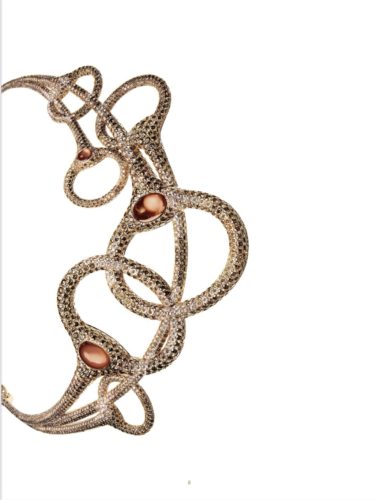
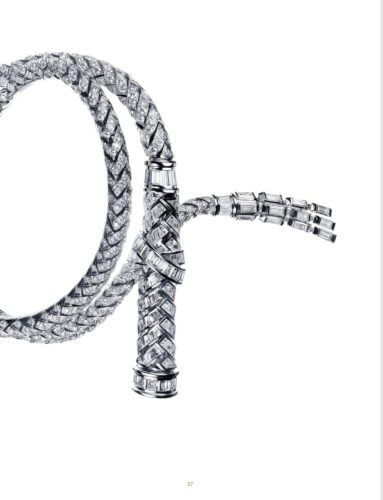
Hermès High Jewellery was about equestrienne chic, which I chose to interpret as the Amazone of chic Paris riding society. The private view held at the Louvre was spectacular and one piece, a bracelet inspired by an Hermès saddle, which was in an adjoining glass case, demonstrated how the pst, the present and the future can sit in total harmony. This we could see this with both the simplicity of a chain fastened with a ridding toggle or the splendour of an entire golden and diamond studded harness. The delicate tightrope balance between the over stated and the charming, between the over direct reference and a subtle nod to the horse and its regalia, was perfectly balanced. Indeed the main sounds issuing forth from people being taken round was, “ooooh” and “lovely”! Hard to say which section was my favourite, since it all looked stunning, but I must add that the section showing past seasons and the progression to this collection was brilliantly helpful as a reminder that house signatures, house style, and house heritage are essential foundations to build a great name on and Hermès are testament to the importance of this creative integrity. The white plaster building and architecture that the exhibition was set is was perfect, and the harmony of line of the structure offered a calm and timeless frame for the jewellery.
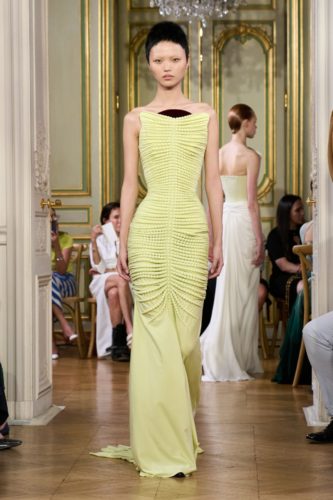
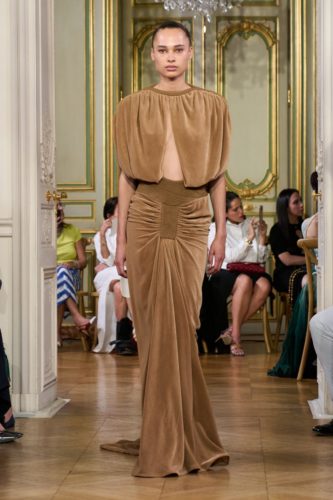
Although I wasn’t there within this story I must mention Standing Ground and their couture debut. If anyone understands linear it’s Irish designer Michael Stewart. His long lines, sweeping silhouettes and purity of vision means this debut collection at couture was outstanding. From drape to pure line and even in two full skirted looks the collection is modern yet timeless, long and lean, but not constricted, I think like Halston, the designer understands that the delicate balance of narrow is just slim enough. The colour palette was alive with natures blue, green, pinks etc, the colours of flowers and fields, leaves and sky, colours that lift the spirit, in fact the whole collection wasn’t “minimal” but joyful and close up the craft and detail was superb. It’s a different and special vision sitting in a luxury, “less is more” aesthetic, and also an investment approach to couture pieces. These aren’t just for today, but to wear again and again and nurture and collect, because they’re works of art.
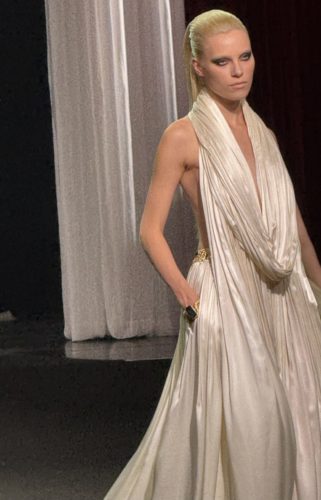
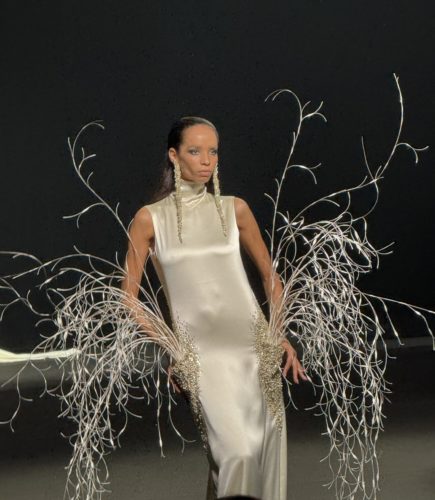
Stephane Rolland is a couturier whose signature is line, from the sweep of a vast caftan, to the flounce of a ballgown he understands silhouette. His decorative touches are within his lines and emphasise or enhance his architectural pieces. Each season his overall theme or concept changes and he pays homage to amazingly diverse inspirations but after years of creating collections, working with his clients and dressing women he knows what works, what he loves and his focus is razor sharp. This season at Olympia he paid tribute to the great chanteuse Dalida. She herself filled Olympia several times and her career both as actress and singer was celebrated in fashion terms back in 2017 with an exhibition using some of the 300 pieces donated by her brother to the Palais Galliera, fashion museum of Paris. Stephane Rolland chose to use amazing black and white film of the diva singing as a background for much of the show and also selected to drain the show of colour using white, ivory or cream, with one brilliant piece in vibrant rich lacquer scarlet and a flash of black. Much use was made of nude sections both to create shapes and lines, but also to reveal, conceal or trompe l’oeil. The flourish of a coat, the swing of vast folds of taffeta, or the slender column of crêpe showed the mastery of creating pieces offering clients options and alternatives, yet always within the designer’s repertoire, once again the editorial eye was triumphant in creating a cohesive and beautiful statement. A severe strapless dress erupting into a complex ruffled Niemeyer, a plisse deep cowl front, with a bare back swirled into a full skirt and a long sleeved Empire bodice entirely embroidered in coruscating sparkled had attached to it miles of flowing jersey. The collection closed with a black silk gazar dress, princess line with long sleeves and a “necklace” of sculptural embroidery worn huge floating matching black silk gazar coat which appeared to have folds of fabric like black storm clouds and huge Renaissance cuffs. The show finished with the singer Oumaima Taleb, with a dramatic finale performance of Dalida’s famous Arabic anthem, “Helwa Ya Baladi”. Her live vocals were backed by a full symphony orchestra led by Egyptian maestro Hany Faraha.
To be continued.
Tony Glenville
