


Dear Shaded Viewers,
As we enter this season, change is abundant, new designers are presenting their first or early collections at many houses, brands, and labels. There’s a huge amount of attention on these debuts and there will be much social media uproar and journalistic debate as the work appears. This is important because it’s about big fashion names, recognised throughout the world and key contributors to the business.
Since the beginning, at the top of the fashion business there have been big names who were established with a single creative vision, if you like the signature of the house that is where you go. It is what a name stands for, and stands for to the public, and the professional observers, and most importantly the clients.
As the seasons pass, the foundations of the house and the signature can become diluted, outdated, or simply irrelevant. Yet instinctively we think we know the house style, the logo, the packaging, the carrier bags, and they spell out the signature.
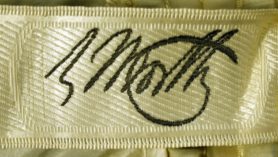
The oldest name we know and recognise is Worth, currently being celebrated at the Petit Palais where we can see the development of the Worth label woven with his signature, but the house passed from the nineteenth to the twentieth centuries, from carriages to cars, and crossed generations of the Worth family. It was its signature in terms of the clothes had to shift not the name. Yet, it is indeed odd that for many it is still the crinoline heyday we associate with the name, the founder Charles Frederick Worth.
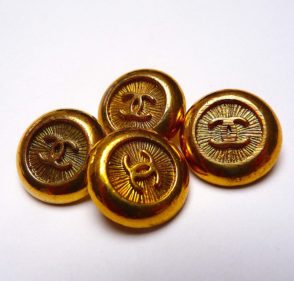
Coco Chanel designed from the 1900’s up to her death in 1971, her great luck was to have a huge gap, 1939- 1954, which as Karl Lagerfeld once pointed out, gave her the chance to come back and reexamine her own work and refresh and produce her signatures for a new generation. Yet when Philip Guibourge took over there was no pret a porter at Chanel, and indeed Lagerfeld initially only designed couture. Virginie Viard during her seasons at the house, and then the studio team can easily keep presenting Chanel collections. This is because it has a house style and a series of design details to endlessly plunder from tweed to gilt buttons, from camellias to braid, from the neat jacket to the romantic evening dress, a host of ideas which are all Chanel signatures.
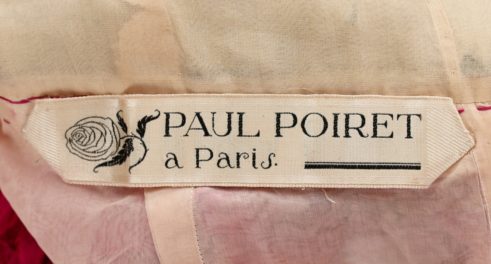
The revivals of some great names, including Worth has been problematic, with Madame Gres and Paul Poiret amongst those whose signatures in fashion proved impossible to produce to the satisfaction of their new audience.
Originally Gucci was a handbag and shoes company, silk scarves and silk shirts were their main clothing. When Dawn Mello entered and then bought on board Tom Ford, they were able to create a “Gucci” look formed almost entirely from their shared vision. Each successive designer has tried to continue that house style, some with more success than others. What is interesting is that house signatures such as the red and green signature stripe of Gucci no longer seem so desirable and the printed silk shirts have disappeared.
At Dior we have a house founded through the vision of one man, extended by his successor Yves Saint Laurent, built up by Marc Bohan, continued by Gianfranco Ferre, celebrated and extended by John Galliano, managed by Bill Gayton, modernised by Raf Simons, managed by Lucie Meyer and Serge Ruffieux, romanticised by Maria Grazia Chiuri and now we watch what Jonathan Anderson will do will a repertoire of signatures. Lily of the valley, dogtooth check, The Bar Jacket, the New Look silhouette, silver grey, and many more. It is a gift to build upon, or are archives a burden? Discuss.
Burberry really had a house check, a charging knight logo, and a trench coat as key signatures; Christopher Bailey of all the designers somehow managed the creative balance. The wet countryside of England and international urban chic, plus a hint of British humour poured out of his studio. Riccardo Tisci followed and now Daniel Lee, but somehow the magic escapes them, the signatures almost a burden.
In a world where sales and investment looks are uppermost in many people’s minds for luxury fashion, John Galliano with his densely researched narrative and historical references seems less fashion designer, more artist, perhaps. Possibly his finest moment at Maison Margiela was his final collection, the most Galliano he did for the house. At Dior he had a huge archive, and of course Monsieur Dior was originally inspired by a romantic view of the past, and his artistic friends such as Christian Berard, offering Galliano the perfect outlet for his vision.
The following names are at present “out in the cold” Riccardo Tisci, Hedi Slimane, Lucie and Luke Meyer, Francesca Russo, John Galliano, Stefano Pilati, Maria Grazia Chiuri, and others. Is it because they have tried to balance their own style with that of established houses without success? Is it that the balancing act of creating a fresh look whilst respecting the past is extremely difficult? Again, we must continue to analyse and discuss their time at Givenchy, Celine, Jil Sander, Marni, Dior, Yves Saint Laurent, and Dior.
Sometimes the new compliments the old, the fresh eye is in harmony with the past yet understands the nuances and subtleties of balance. Camille Miceli at Pucci and Nicolas de Felice at Courreges, or Guillaume Henry at Patou ( a house founded in 1914/19 that has been a fertile starting point for Marc Bohan, Karl Lagerfeld, Jean-Paul Gaultier and Christian Lacroix ) seem to deal well with the conundrum, but these are smaller houses and the past and the archive is lighter. Yves Saint Laurent demands acknowledgment of his signatures, and each season Anthony Vaccarello “is inspired” by a different facet of the masters art. We see a well balanced collection mixing the past and the present.
One question that often goes unanswered is do people buy the big classic names for the cachet of the name or do they really understand that new designers are behind the venerable houses? This then perhaps points to how much those customers are interested less “fashion “and more the signature they recognise, be that a house logo or a specific item. The packaging and carrier bag may matter as much as what is in it, and the experience of shopping in the scented atmosphere of a legendary fashion label. Obviously, this is where cosmetics and fragrance come into the equation, it’s the most accessible segment of the luxury houses.
I have no real conclusion to finish with, since this is really about watching as the new designers offer their views on many brands, houses and labels we know and love. But I would say the expression “poisoned challis” really is true in many of the classic established fashion names. On the other hand, we must question with some choices, who did the selection? Was it the senior management, the money men in suits, the creative team or the interview panel who considered this was the best choice. There is also the team they inherit, the entire establishment they must enter and become emerged in, almost instantly, to start producing collections. Consider also that in many cases first collections are demanded very, very quickly for the continuity, not to say increases in sales at the house. It is also true many designers are barely given time to settle in with two or three winter and summer collections to establish their view of the brand. As in a dating service, a mismatch can be fatal, in this I offer you two oddities at Givenchy; Julian Macdonald and Matthew Williams, both gentlemen with extraordinarily strong personal signatures whose aesthetic links to this house seems unlikely and tenuous to say the least.
Well, that’s it, below are the newest moves, the freshest challengers, or perhaps the bravest fashion designers around. I am sure in some cases whatever the difficulties, the honour and the challenge would be hard to turn down.
As so often I use a simple quote from Mr David Downton to sum up the situation – Onwards!
To watch closely this season for first or early collections.
Nicholas Aburn – Area
Simone Belloti – Jil Sander
Demna – Gucci
Rachel Scott – Proenza Schouler
Mark Thomas – Carven
Louise Trotter – Bottega Veneta
Jonathan Anderson – Dior
Pier Paolo Piccioli – Balenciaga
Dario Vitale – Versace
Miguel Castro Freitas – Mugler
Duran Lantink – Gaultier
Matthieu Blazy – Chanel
Jack McCollough and Lazaro Hernandez – Loewe
Michael Rider – Celine
Glenn Martens – Maison Margiela
Meryll Rogge – Marni
Sarah Burton – Givenchy
Veronica Leoni – Calvin Klein
Later,
Tony Glenville
