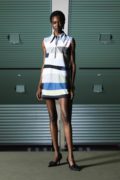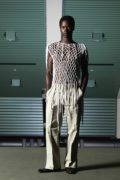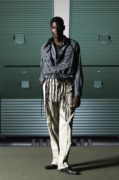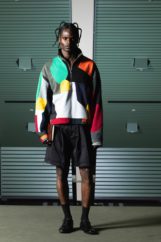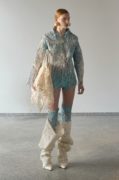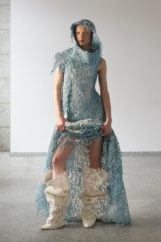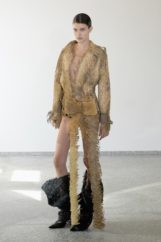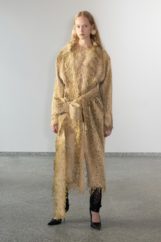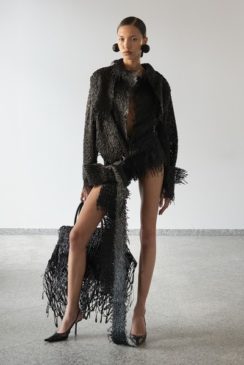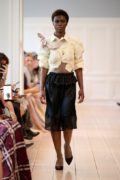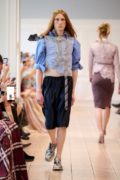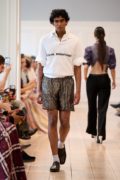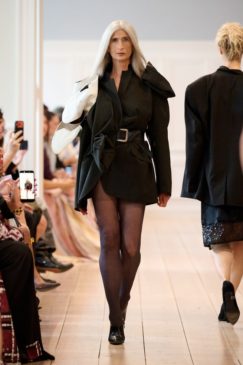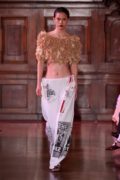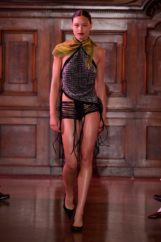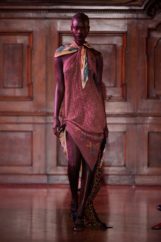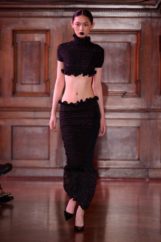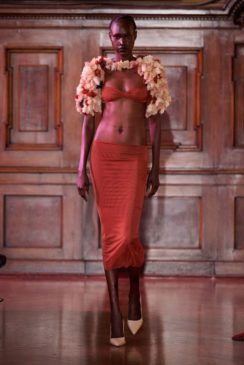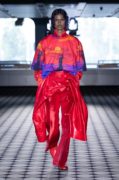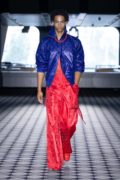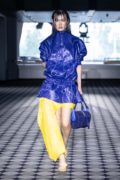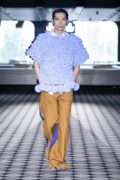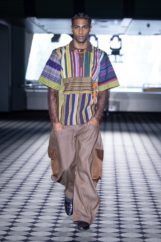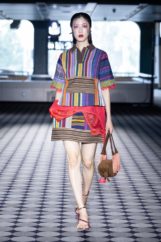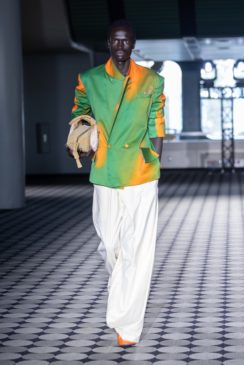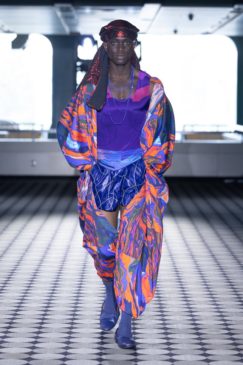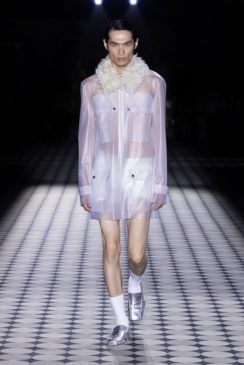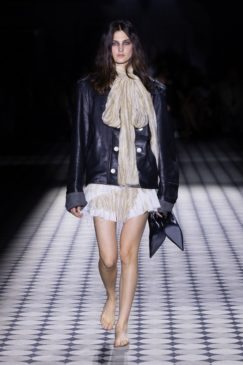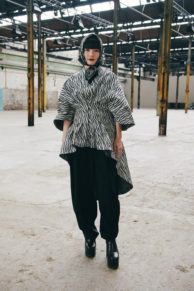
The recently concluded Berlin Fashion Week was not defined by one dominant show, a single aesthetic direction, or a central venue. With around 50 shows, presentations, exhibitions, talks, and side events taking place across Berlin, the Summer edition reflected the city’s decentralised structure: a week shaped by different locations, perspectives, and forms of presentation.
Instead of following one fixed route, visitors experienced Fashion Week through their own choices, moving between designers, institutions, cultural spaces, and discussions. This variety has become one of Berlin’s most recognisable characteristics, allowing different approaches to exist alongside each other.
Curation was therefore at the centre of this edition. Berlin Fashion Week did not simply showcase collections; it placed them within wider environments where history, technology, craftsmanship, and cultural questions became part of the presentation. The focus extended beyond the garments themselves towards the ideas, processes, and backgrounds that shaped them.
The Fashion Council Germany plays an important role in supporting this structure. Through formats such as RAUM.Berlin, STUDIO2RETAIL, the FCG Showroom, and further initiatives throughout the week, the organisation connected designers, industry professionals, and audiences across different parts of the city. The FCG bus facilitated visitors following the official programme, while the showroom at Hotel Zoo presented 29 labels in a setting that encouraged direct exchange.
RAUM.Berlin at the John Jahr House illustrated this philosophy particularly clearly. Across four days, 16 labels presented their work through individual formats instead of traditional runways. Installations, conversations, and unconventional presentations allowed guests to engage with the worlds behind the collections. Among the participating designers, Elodie Carstensen, Anne Bernecker, and Natascha von Hirschhausen explored different ways of involving their audiences. With Humus Create, a crowd performance, von Hirschhausen invited attendees to become part of the exhibition by draping textile elements placed on the floor and experiencing the materials through touch.
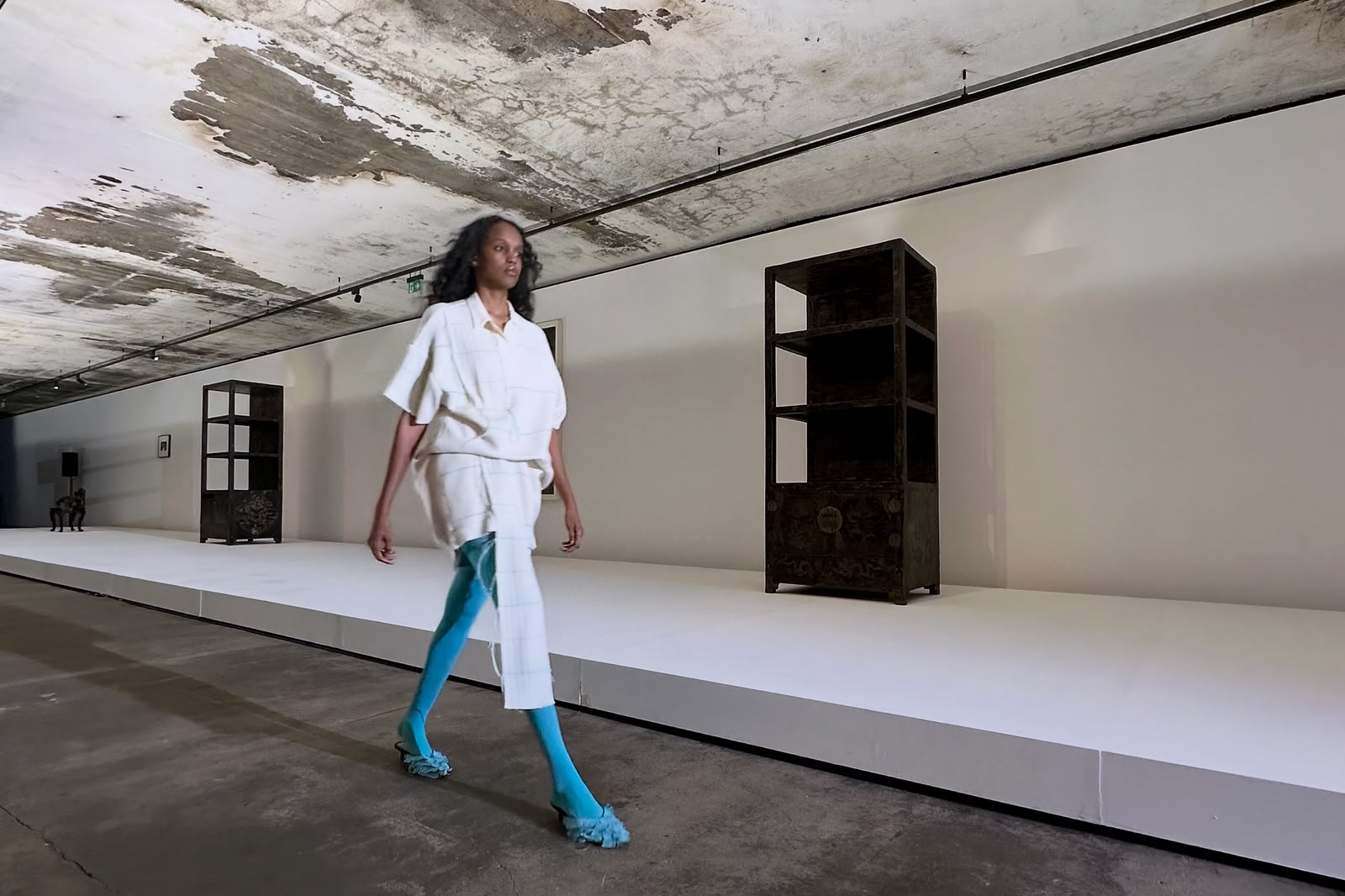
The importance of location was visible across the week. Spaces such as the Feuerle Collection, Schinkel Pavillon, Flughafen Tempelhof, Kronprinzenpalais, an old gym or other institutions influenced how collections and concepts were perceived. Der Berliner Salon, curated by Christiane Arp and Marcus Kurz, transformed the Great Orangery at Charlottenburg Palace into a setting where contemporary design met historic architecture. Berlin Curated Runway Show, shaped by Christiane Arp, Josepha Rodríguez, and Sonja Hodzode at the Feuerle Collection, introduced a new generation of graduate talents at the intersection of fashion, art, and education.
Reference Studios’ INTERVENTION VI, the platform initiated by Mumi Haiati, presented Shayne Oliver’s MUSEUM + eBay Archetypes at Schinkel Pavillon. The latest chapter of Oliver’s ongoing archival series marked 20 years of his creative practice. The exhibition explored the relationship between fashion, memory, ownership, value through vintage garments sourced via eBay alongside selected pieces from his own archive. By bringing archival material together with digital experiences, the project showed how clothing can remain connected to different moments over time.
Beyond exhibitions and presentations, conversations also played a central role during these days. The METAMORPHOSIS talk series at Hotel Amano Eastside addressed key topics shaping fashion today, from circularity to sustainability, innovation, technology as well as communication. Additional formats such as Le Black Sofa by SUPERMARQUE Concept Store, where Berlin State Secretary Michael Biel joined discussions on the relationship between culture and business, and Future Fashion Concepts’ Round Table Brunch at The Social Hub Berlin brought together different voices from across the field to discuss the future of the industry.
Independent Voices: Labels Shaping the Identity of Berlin Fashion Week
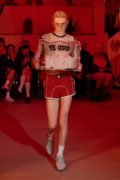
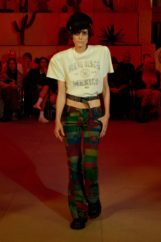
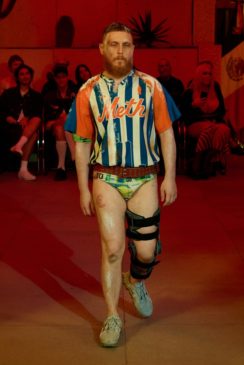
BARRAGÁN presents SS27, a collection that examines Mexican identity as a complex construct shaped by history, politics, migration, and cultural exchange. Founded in Mexico City by designer Victor Barragán, the label challenges conventional fashion through a fusion of art, social commentary, and deconstructed silhouettes. Presented at the Mexican Embassy in Berlin, the collection reflects on identity as something negotiated across borders, where documentation, diplomacy, and displacement influence perceptions of belonging. Referencing the symbolic timeframe of “SS30,” the garments explore themes of transition and foreign spaces through embassy-inspired uniforms, travel silhouettes, and artistic references, continuing BARRAGÁN’s exploration of culture, image, and identity.
Find more about BARRAGÁN here.
BUZIGAHILL’s RETURN TO SENDER 13 explores the visual and political codes of post-independence East Africa, revisiting a period when clothing became a powerful expression of freedom, identity, and solidarity. Creative Director Bobby Kolade looks to the 1960s and 1970s, when figures such as Zambia’s Kenneth Kaunda and Uganda’s Princess Elizabeth Bagaaya shaped new narratives of African presence on a global stage. The collection reinterprets the lighter forms of political dress that emerged beyond colonial conventions, transforming historical references into contemporary silhouettes. With a focus on cultural memory and unrealised possibilities, BUZIGAHILL continues to question how fashion can preserve, challenge, and redefine narratives of liberation.
Find more about BUZIGAHILL here.
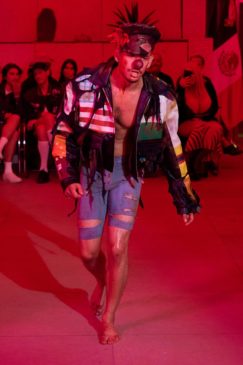
DAGGER captures the restless energy of youth with “Lifestyles of the bored and disenfranchised,” created as part of INTERVENTION by Reference Studios. Designer Luke Raines revisits the coastal seaside town of his adolescence, shaped by an early 2000s skate scene and the experiences that defined his teenage years. The collection transforms memories of first jobs, first drinks, first kisses, and first heartbreaks into a narrative of discovery and possibility. Familiar characters from AW26’s Play Hard continue their development, reflecting DAGGER’s focus on growth, continuity, and identity. Through nostalgic references, customised details, and a celebration of youthful freedom, the collection explores resilience and the imagination of a future beyond familiar surroundings.

Dagger Runway Show – Intervention VI am 5. Juli 2026 at Kronprinzessinnenpalais am Unter den Linden 3

Dagger Runway Show – Intervention VI am 5. Juli 2026 at Kronprinzessinnenpalais am Unter den Linden 3
Dagger Runway Show – Intervention VI am 5. Juli 2026 at Kronprinzessinnenpalais am Unter den Linden 3
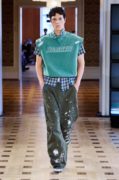
Dagger Runway Show – Intervention VI am 5. Juli 2026 at Kronprinzessinnenpalais am Unter den Linden 3

Dagger Runway Show – Intervention VI am 5. Juli 2026 at Kronprinzessinnenpalais am Unter den Linden 3

Dagger Runway Show – Intervention VI am 5. Juli 2026 at Kronprinzessinnenpalais am Unter den Linden 3
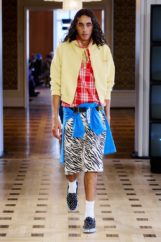
Dagger Runway Show – Intervention VI am 5. Juli 2026 at Kronprinzessinnenpalais am Unter den Linden 3
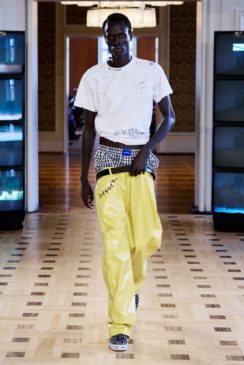
Dagger Runway Show – Intervention VI am 5. Juli 2026 at Kronprinzessinnenpalais am Unter den Linden 3
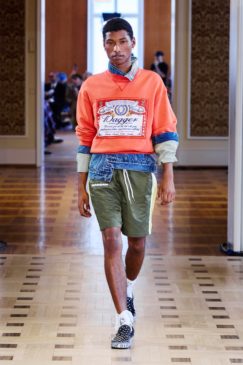
Dagger Runway Show – Intervention VI am 5. Juli 2026 at Kronprinzessinnenpalais am Unter den Linden 3
Find more about DAGGER here.
JOHN LAWRENCE SULLIVAN explores the fluid relationship between masculine and feminine identities with the Spring/Summer 2027 collection “Androgyny,” presented as part of INTERVENTION by Reference Studios. The collection approaches the body as a space where opposing forces can exist simultaneously, combining strength and fragility, restraint and liberation, discipline and desire. Inspired by Bettina Rheims’ Modern Lovers portrait series, the designs challenge established gender codes through transformed tailoring, unexpected proportions, and materials associated with both ornamentation and structure. Elements of shibari inform tied constructions and sculptural details, while lace, velvet, patent finishes, and snake-inspired textures reinforce the idea of transformation, renewal, and fashion as a second skin.

John Lawrence Sullivan Runway Show – Intervention VI am 5. Juli 2026 at Kronprinzessinnenpalais am Unter den Linden 3

John Lawrence Sullivan Runway Show – Intervention VI am 5. Juli 2026 at Kronprinzessinnenpalais am Unter den Linden 3
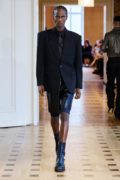
John Lawrence Sullivan Runway Show – Intervention VI am 5. Juli 2026 at Kronprinzessinnenpalais am Unter den Linden 3
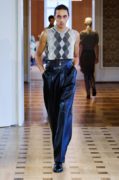
John Lawrence Sullivan Runway Show – Intervention VI am 5. Juli 2026 at Kronprinzessinnenpalais am Unter den Linden 3
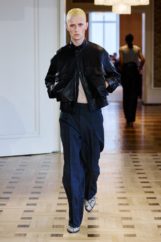
John Lawrence Sullivan Runway Show – Intervention VI am 5. Juli 2026 at Kronprinzessinnenpalais am Unter den Linden 3
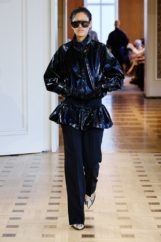
John Lawrence Sullivan Runway Show – Intervention VI am 5. Juli 2026 at Kronprinzessinnenpalais am Unter den Linden 3
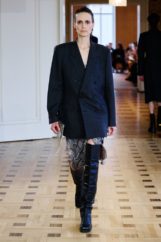
John Lawrence Sullivan Runway Show – Intervention VI am 5. Juli 2026 at Kronprinzessinnenpalais am Unter den Linden 3
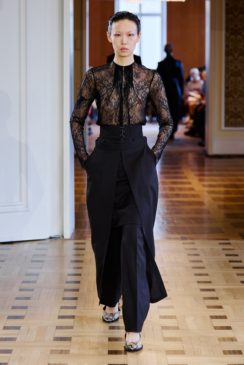
John Lawrence Sullivan Runway Show – Intervention VI am 5. Juli 2026 at Kronprinzessinnenpalais am Unter den Linden 3
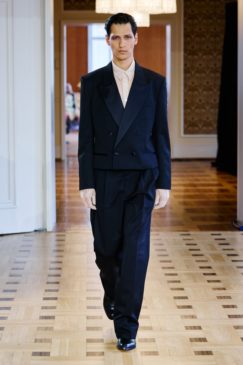
John Lawrence Sullivan Runway Show – Intervention VI am 5. Juli 2026 at Kronprinzessinnenpalais am Unter den Linden 3
Find more about JOHN LAWRENCE SULLIVAN here.
KASIA KUCHARSKA creates an immersive experience for Spring/Summer 2027, exploring the tension between appearance and reality through the concept of trompe-l’œil. The collection examines the contrast between external perception and inner emotions, where confidence can conceal uncertainty and everyday gestures become performances. Familiar wardrobe archetypes such as trench coats, denim jackets, and knitwear are transformed through handcrafted latex constructions, creating unexpected illusions disrupted by missing details, playful distortions, and childlike interventions. Developed further through a spatial presentation in collaboration with Nike and AAS, the collection extends its narrative beyond clothing, introducing characters who navigate a world that appears familiar while revealing hidden layers beneath the surface.
Find more about KASIA KUCHARSKA here.
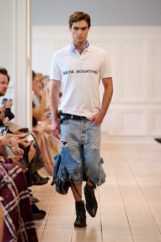
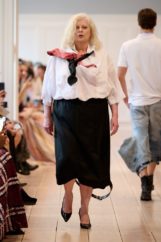
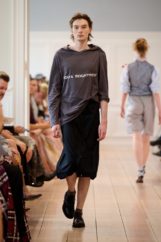
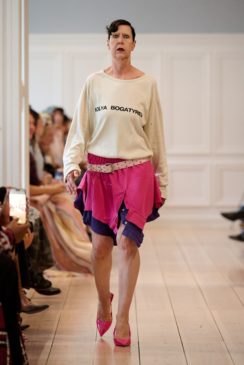
KOLYA BOGATYREV reflects on the beauty of ordinary moments with the Spring/Summer 2027 collection CLASSICAL REMINDER, presented during the official programme of Berlin Fashion Week. Exploring the shared experiences that connect generations, the collection considers clothing as a living archive of memory, emotion, and time. Existing garments, from tailoring and uniforms to eveningwear and everyday pieces, are carefully reconstructed, allowing traces of their previous lives to remain visible. Precision meets vulnerability through softened silhouettes, delicate transparencies, and handcrafted details, while a multi-generational cast reinforces the collection’s message. Rather than looking back with nostalgia, KOLYA BOGATYREV celebrates the quiet significance of the present and the enduring value found in everyday life.
Find more about KOLYA BOGATYREV here.
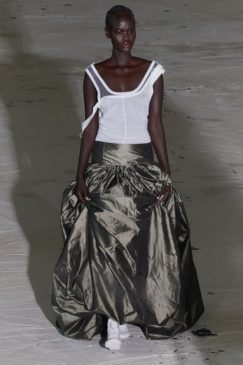
LAURA GERTE closes a three-part exploration of femininity with the Spring/Summer 2027 collection Lost to Virtue, where radical silhouettes meet experimental textile innovation. Inspired by Mina Loy’s Feminist Manifesto, the collection rejects historical notions of feminine virtue, transforming clothing into an expression of autonomy, vulnerability, and strength. Reclaimed garments, deadstock fabrics, and recycled textiles are reworked into sculptural hybrids through modular draping and textile manipulation rather than conventional pattern cutting. Hand-dyed vintage silk scarves, upcycled T-shirts, flowing plissé constructions, and layered mesh create garments that simultaneously reveal and conceal the body. Presented within Berlin’s historic Berliner Ensemble, the collection reimagines femininity as fearless, uncompromising, and constantly evolving.
Find more about LAURA GERTE here.
ORANGE CULTURE turns its attention to Makoko, Lagos’ historic waterfront community, with the Spring/Summer 2027 collection Water Will Carry Us. Inspired by one of the city’s most enduring symbols of resilience and adaptation, the collection reflects on displacement, survival, and the strength found within fragile environments. Imbalanced proportions, layered textures, sheer fabrics, and hand-stitched embellishments echo the visual language of shelter and protection, balancing vulnerability with resilience. Traditional Guinea fabrics, locally sourced textiles, and collaborations with artisans and creatives from Nigeria and Berlin enrich the collection’s narrative. Through contemporary design, Orange Culture celebrates identity, heritage, and the enduring human capacity to preserve hope, joy, and community in times of uncertainty.
Find more about ORANGE CULTURE here.
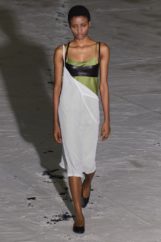
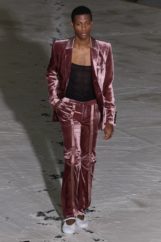
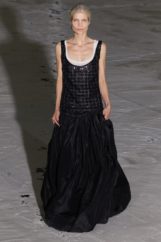
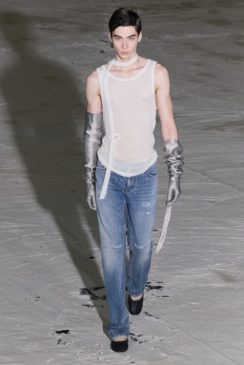
SF1OG investigates the shifting boundaries between good and evil with its Spring/Summer 2027 collection, where beauty, power, and ritual exist in constant dialogue. Inspired by Luca Guadagnino’s Suspiria, the work of photographer Ari Versluis, and the visual language of rock, punk, and religious symbolism, the collection questions how authority and conformity are constructed and perceived. Tailoring and sculptural silhouettes mirror this tension, balancing control with disruption and familiarity with unease. Presented within Berlin’s Carl Schumann Sports Hall, the runway itself becomes part of the narrative as its surface gradually fractures beneath the models’ footsteps, transforming movement into a visible record of change, pressure, and transformation.
Find more about SF1OG here.
UNVAIN deepens its exploration of identity with the Spring/Summer 2027 collection SKINS, presented at Berlin’s iconic ICC. Founded by Robert Friedrichs, the Berlin-based label approaches clothing as a second skin, where protection and exposure exist simultaneously. Each look is developed from a single imagined character, translating personal narratives into garments that blur the line between portrait and fashion. Deadstock leather, upcycled fur and feathers, lace, sheer fabrics, and artisanal ageing create a dialogue between refinement and rawness, while contrasting silhouettes balance softness with structure. Rooted in emotional storytelling and responsible material choices, SKINS transforms fashion into an intimate reflection of character, memory, and self-expression.
Find more about UNVAIN here.
Alongside established names and curated formats, this July also showed how individual designers continue to use the event as a space for personal statements and experimental ideas.
One of the most memorable examples came from Esther Perbandt, who used artificial intelligence as an extension of her artistic language. Her AI-generated film, paired with a live dance performance, transformed elements from her previous work into a deeply personal visual narrative. The calm atmosphere reflected the intimacy of the project, while the complete process — from concept and direction to the technical development and final realisation — remained in Perbandt’s own hands.
A similarly forward-looking effect came from Taskin Goec, who presented BLACK EYE as a dialogue between physical craftsmanship and artificial intelligence. The Berlin-based designer transformed the traditional runway format into a digital experience, combining fashion imagery, algorithmic music, and moving image. Starting with physical textiles and analogue experimentation, Goec integrated AI into his creative process to develop and expand his designs while keeping the human vision at the centre.
At BUZIGAHILL’s presentation, founder Bobby Kolade addressed the audience before the runway, adding historical and conceptual background to the collection. He traced the story behind the garments back to Africa’s post-independence period, highlighting the impact of the decline of local textile production and the cultural significance of second-hand clothing transformed through upcycling. This personal introduction, delivered from the catwalk, changed the way the garments were perceived, allowing the audience to understand the ideas and stories behind them.
These cases reflect an overall characteristic of Berlin Fashion Week: presentations often become moments of explanation and exchange, where designers can communicate the thinking behind their work. At the same time, the growing number of shows, exhibitions, and side events sparks new questions around visibility and discovery. The challenge is no longer a lack of creativity, but how emerging voices can continue to receive attention within an increasingly diverse programme.
New initiatives such as FASHION BLOCK, a permanent space close to PLATTE.Berlin, reflect this development by providing a place where designers, creatives, and industry professionals can meet beyond the concentrated days of Fashion Week. PLATTE.Berlin also demonstrated this collaborative role during the week by supporting external projects, fashion school presentations, and public showcases.
From the Fashion Council Germany opening dinner at the beginning of the week to the Berlin Fashion Week closing party, informal gatherings remained an important part of the existing structure. The Vogue Café opened Fashion Week to a larger audience through a public programme of talks, workshops, and meetings, making participation possible beyond industry visitors and adding another accessible point of connection.
The season demonstrated that Berlin Fashion Week has grown into a more extensive network shaped by designers, institutions, schools, museums, galleries as well as international participants. Its relevance lies not only in reach, but in the exchange, collaborations, and discussions surrounding fashion. At a time of major changes within the industry, from technological transformation and sustainability to shifting business models, Berlin continues to develop its own direction, linking fashion with the central questions of the present.
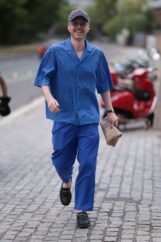
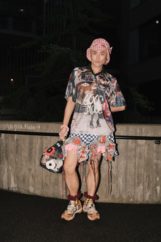
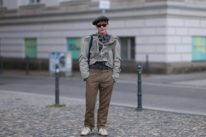
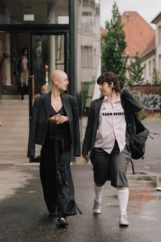
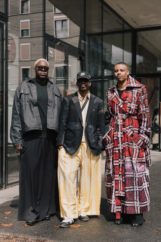
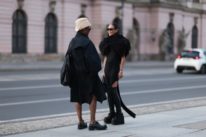
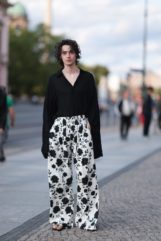
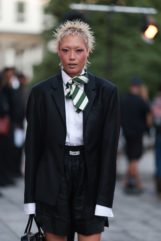
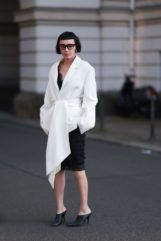
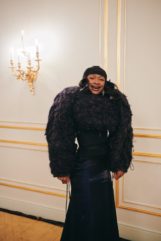
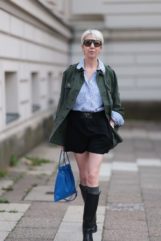
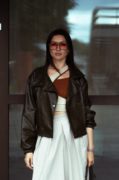
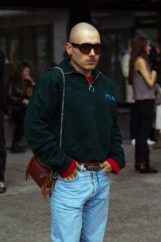
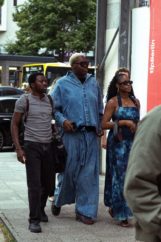
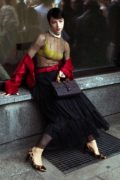
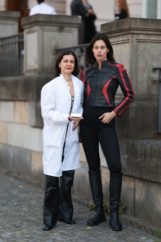
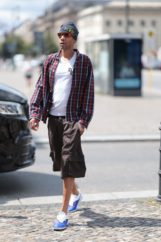
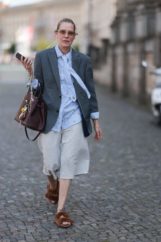
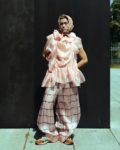
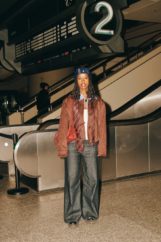
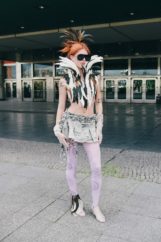
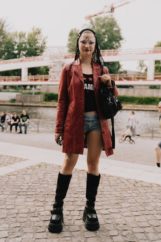
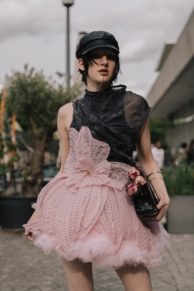
Streetstyle images of Berlin Fashion Week:
Later,
Florian Müller