


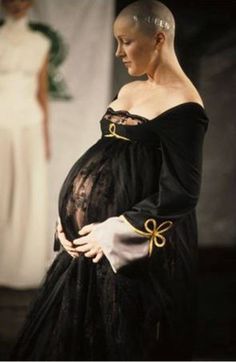
Dear Shaded Viewers,
There is something remarkably interesting and important about the general attitude to the announcement and subsequent cancellation of the John Galliano exhibition. The views nearly all agree on one thing, his contribution to fashion history. This has prompted me to think about something; narrative.
“Once upon a time; Alice in Wonderland; when you wish upon a star…. Toto, I’ve a feeling we’re not in Kansas anymore; last night I dreamt I went to Manderley again.”
It is the very heart and spirit of fashion that through clothes we are telling a story, from the origins and inspiration behind the clothes, the presentation of the collection, the advertising, right through to the way a client wears the pieces. We are all presenting a narrative to the observer.
The enthusiasm for Galliano, especially amongst those whose fashion years are few, is about his spectacular story telling, and it throws intro relief the fact that we are no longer telling stories in fashion to the same extent, and certainly not exciting ones. It is not nostalgia or a constant harking back amongst those of us who lived through those years, it is across a broad swathe of fashion ages.
Vivienne Westwood, Dries van Noten, Jean – Paul Gaultier, Alexander McQueen, and John Galliano presented the audience, the clients, and the press with a story. The show was about their seasonal statement. Although they were all vastly different in so many ways, at their height they offered a romantic escapism and a drama. They told us about dreams and escapades, adventures, and intrigues. The box was opened each season and the treasures displayed. The invitation heralded something already, the introduction to the event, in an envelope, a box or whatever, from a key to a scroll, from the thickest and stiffest of cardboard to flimsy tissue. The journey continued from arrival at the venue, the setting, the music, the casting, and the spell cast while we watched was all embracing. We jumped from the madness of a silent museum for Comme des Garçons to the screaming crowds at Halle de La Villette for Gaultier. John Galliano offered narratives so complex we sometimes even sniggered. McQueen, especially before Givenchy, had us staggered by his audacity, in the threatening danger and unnerving us in our seats. Banshee at the Café de Paris in 1994 was a special favourite of mine.
Now there seems to be a lack of real ambition to challenge fashion, and the rise of making money has erased much of this and deadened much of what we see into “another collection.” The heavy hand of the finances department of a house, brand or label has snuffed out much of the boldness. Selling product now outweighs creativity, sales figures spells success.
Demna Gvsalia, Alessandro Michele, Pier Paolo Piccioli, Olivier Rosteing, Maria Grazia Chiuri, Mathieu Blazy, Jonathan Anderson, famous and successful designers, each and every one, all seem to have a story that’s watered down before delivery. It ends up being bogged down by commerciality and it’s always about the clothes, from sportswear to retro, it makes no difference. Long before discrete luxury and the trend of “buy less buy better,” the power of Bottega Veneta, Prada and The Row was in the power of commerciality. This is an observation and not a criticism, and being good at creating clothes people want to buy is no easy task, but it is only one aspect or section of the fashion business. Where are the dreams?
Galliano and McQueen especially jumbled the stories through overlapping layers, multiple inspirations, and a firm belief in each season’s power to excite and to grab our attention and our fashion imagination. It wasn’t just “I had a holiday in Venice, so my collection is based on Venice.” It was so much more than that, and in spite of history revealing just what the price was they paid for endlessly giving us a new story, it’s now history. Surely, it is time to refresh and renew, rethink and reinvent in 2027, which will be seventeen years next February since McQueens’ death, and sixteen years next March since Galliano’s last Dior collection.

I then realised as I wrote this, there was another reason to love the stories of the runways, because we are totally lacking great and inspirational stories elsewhere. The truth is there is also a lack of stylists being offered the opportunity to make magic. Grace Coddington told stories, and retold nursery rhymes, if necessary, to fill glossy magazine pages with aspirational escapism. Carlyn Cerf du Dudezeel and Tonne Goodman sold fashion but through subtlety, their beautiful stories might look escapist and amazing but also showed clothes and accessories to dream about. Huge spreads page after page, torn out and pinned on the wall, treasured back issues. We look back on Diana Vreeland and of course Polly Mellon and Verushka are unrepeatable and unbeatable, but coming up to date the great fashion editorials are no longer being produced. As we watch the movie, September Issue now looks like a golden age and next year it will be twenty years since that 2007 Issue was created.
Another thing we no longer have are great advertising spreads of page after page telling us stories. For example, remember the Louis Vuitton, Marc Jacobs, Edwardian travellers, back in 2012, there is nothing like that any longer.
Now the stylists don’t take clothes by the scruff of the neck and pull them into adventures, they are instructed by the houses to not mix names, they lack the creative impetus to improvise, to mix their own finds with the designers’ clothes. There isn’t a huge excitement to much of the styling work since many of them are now de opting so much time to dressing one person for performing at concerts or a series of movie premier events. In this regard I also find it is fascinating that menswear is often more adventurous right now than womenswear? Will we finally enter the new dandy millennium?
So, John Galliano threw parties on the runway, he plagiarised and he plundered cultures, then he took the models and painted them. He took us physically to Versailles and he conjures up Paris under snow. Martin Margiela showed the same collection in adjoining venues but one was white, one was black, he dragged us into a filthy disused Metro station only lit by candles, or he dumped us in a sorting office for post and parcels. Rei Kawakubo showed to only the sound, back then, of the hundreds of cameras clicking. Karl Lagerfeld showed the dozens of variations of the Chanel suit and the little black dress, but took us to the beach, launched a rocket, or installed a formal garden. Soundtracks were extraordinary, models were actresses and we could watch them perform different roles across the days. Dries van Noten put us on mattresses to watch the show, piled us into a tiny street of artisans, and served us tea. There are myriad examples of amazing shows in the past supplementing and even boosting the seasons narrative.
Of course, not every collection and every designer needs to be taking this same route, but that’s never been true anyway. We need variety, we need variations on a theme. Many designers have successfully run houses without each season promoting a strong theme or explaining the story and the inspiration. Have we become over sensitive in using cultural influences, has bad cultural appropriation caused a complete lack of interest in other cultures and heritage in subtle or hommage ways? Has the commercial become so important that designers do not add in catwalk or special order pieces? Back in the day at Gucci all the special Tom Ford pieces, like the blue sequinned mohair coat were limited edition or like the printed silk shirts, to order only. Indeed, Gucci had a “commercial collection” to underpin Mr Ford’s wonderful work, which the press never saw. The balance was there. I am pretty sure most of the boutique collections during Galliano’s Dior years were the job of the studio teams, it certainly bore little resemblance to what was shown at full throttle on the runway. Listen, we all know you have to make money to survive but it appears it’s gone in the other direction, inspiration, and aspiration in both the collections, and the main glossy magazines has faded away.
One of the reasons we love Rick Owens is the narrative. The consistency of his story flows from catwalk to boutique, from top to toe, from menswear to womenswear, but it’s a continuing story. He is a brilliant talent but we others who offer insanity in ideas, we need collections to argue about, and the current fashion rules need challenging.
I do have one John Galliano question for you, dear reader, to ponder upon. How were Andrew Bolton and his team planning to present the pieces? Removed from the attention to every detail from the shoes to Stephen Jones chapeaux, the superb models of the time, the setting, the atmosphere and the the event, how do you replicate that in a museum gallery? I personally dislike fashion exhibitions as a general rule, Olivier Saillard part, who is a genius, I call them dead clothes. Unworn, not seen in 360 degrees and moving, static on a mannequin, how was the magic narrative of the designer going to be conveyed?
Once upon a time…………
Tony Glenville
