
Dear Shaded Viewers,
Palais de Tokyo, Wednesday 17:30.
For her second official appearance on the Paris Fashion Week calendar, Jeanne Friot transformed the Palais de Tokyo into a space of tension, resistance, and release. Titled Hysteria, the Spring/Summer 2027 collection revisited a term historically used to police women’s behavior and reimagined it as a symbol of defiance. Rather than treating the concept as a historical reference, Friot built an entire visual narrative around it, tracing a journey from confinement to emancipation.
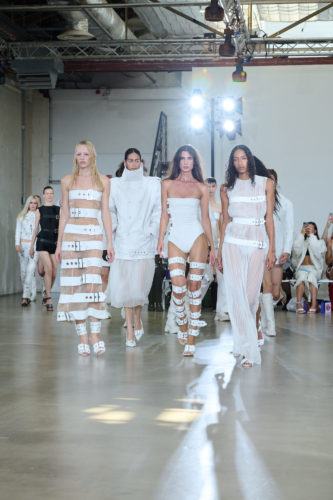
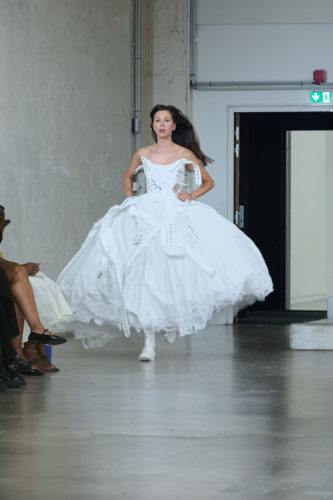
The show unfolded almost like a performance piece. The opening look immediately established the mood: an exaggerated white silhouette appeared in motion rather than in pose, setting a pace that contrasted with the traditional formality of the runway. Throughout the first section, white dominated the collection. Far from conveying purity, it suggested institutional control, clinical environments, and the rigid structures imposed on bodies. Dresses, corseted constructions, and sharply tailored pieces were bound together by straps, belts, and metallic fastenings that recurred from look to look.
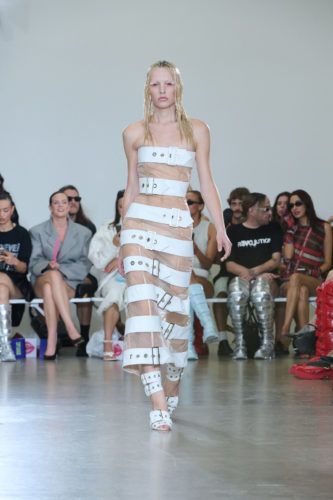
These details were central to the collection’s success. Friot’s signature belts no longer functioned solely as decorative elements but became symbols with shifting meanings. Depending on the silhouette, they appeared restrictive or protective, recalling both restraint devices and pieces of armour. This ambiguity gave the collection much of its emotional charge. Garments seemed caught between discipline and rebellion, order and disorder.
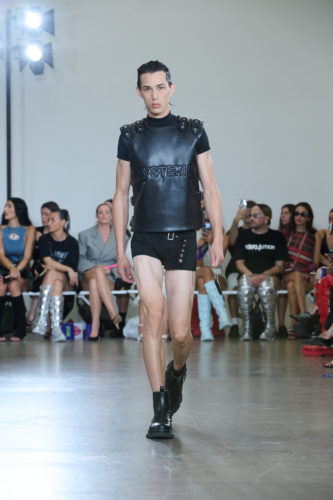
As the show progressed, the atmosphere darkened. Black gradually entered the palette, replacing the sterile brightness of the opening looks with a more confrontational energy. The transition felt less like a simple color shift than a transformation of identity. Tailoring became sharper, proportions more assertive, and references to sportswear emerged with greater clarity. Elements drawn from boxing, motorcycling, and racing introduced a sense of physical readiness, reinforcing the idea of clothing designed not only for display but also for action.
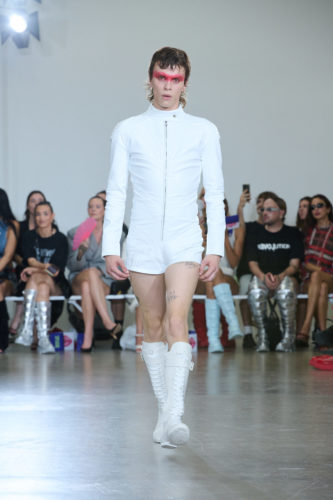
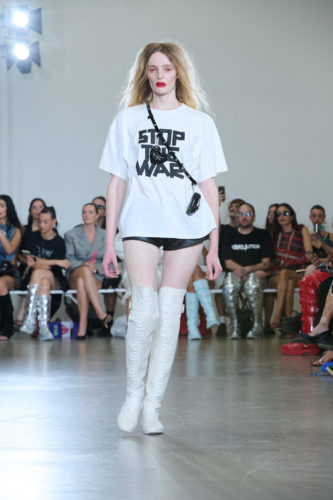
The collection’s references were numerous but carefully integrated. Historical figures associated with marginalization and institutionalization hovered in the background, while traces of artistic rebellion appeared through handwritten markings, splashes of color, and beauty choices that distorted conventional ideals. White-coated lashes and unsettling contact lenses contributed to an atmosphere that felt deliberately uncomfortable, challenging viewers to reconsider who society labels as irrational and why.
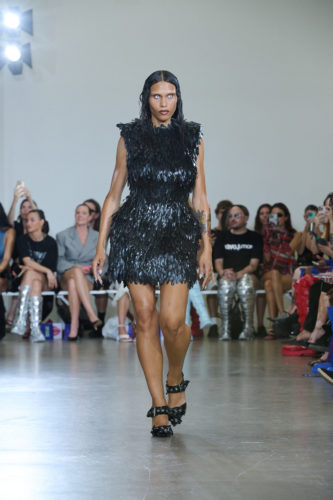
The final silhouettes delivered some of the collection’s strongest images. Short dresses with exaggerated volumes and textured surfaces pushed the body into unfamiliar territory, creating figures that appeared both fragile and powerful. These closing looks abandoned any remaining sense of restraint and embraced theatricality without losing coherence.
What made Hysteria compelling was not only its political message but its ability to translate that message into clothing. Friot avoided straightforward illustration, instead using construction, styling, and movement to communicate her ideas. The result was a collection that balanced conceptual ambition with visual impact, confirming her position as one of the most distinctive voices of the emerging Paris scene.
At the Palais de Tokyo, Jeanne Friot delivered a show that was less interested in defining hysteria than in questioning who has historically had the authority to define it. In doing so, she turned the runway into a space where fashion, history, and resistance intersected.
Lately,
Eva
