

Dear Shaded Viewers,
Kiki Smith’s FLIGHT at Galerie Lelong feels like a hush before a storm: restrained in gesture, yet charged with an almost devotional intensity. It is a show about birds, yes, but more urgently about how a body—human, animal, spiritual—finds a way to move through gravity, grief, and grace.
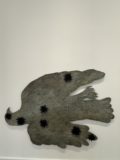
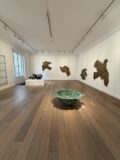
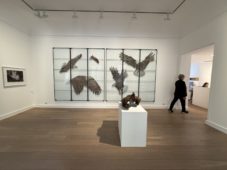
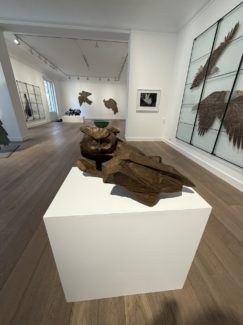
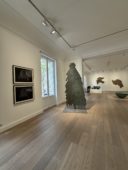
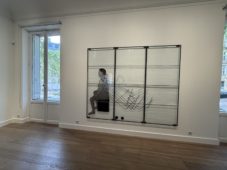
Entering Lelong’s rue de Téhéran space, you’re met not with spectacle but with weight: a gathering of nine bronzes whose stillness has the density of monuments, offset by two luminous stained-glass windows that turn the room into a kind of makeshift nave. Bronze, that traditional material of tombs and public statuary, and stained glass, long reserved for rosaces and cathedrals, are repurposed here as vehicles for an intimate, almost whispered mysticism. The exhibition marks Smith’s tenth collaboration with the gallery over twenty-five years, and you feel that seasoned trust in the way the works are allowed to breathe, unhurried, in the space.
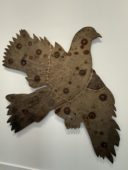
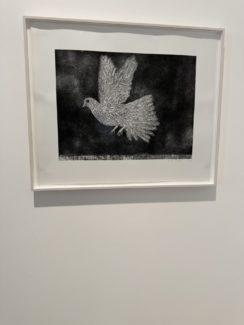
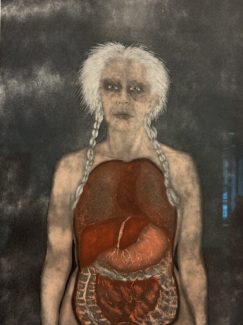
In FLIGHT, the body has taken wing: where once Smith gave us intestines in glass and wax hearts, we now encounter eagles, doves, and owls—creatures loaded with symbolic memory rather than viscera. These are not polite “animal motifs” but avatars of the psyche, echoing medieval iconography and the tremulous, metaphysical birds of Emily Dickinson. Smith lets nature mirror human feeling: fear clenches in the talons of an eagle, desire softens in the roundness of a dove, and a sleepless mind finds its twin in the unblinking gaze of an owl.
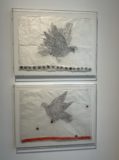
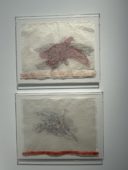
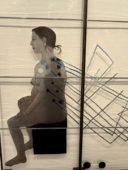
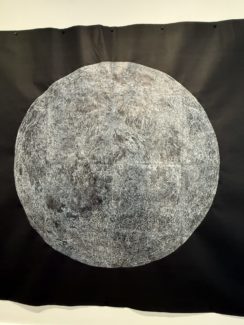
What is striking is how insistently FLIGHT refuses the seduction of the “new” while feeling completely of this moment. Bronze and stained glass, among the oldest supports of Western art, are treated not nostalgically but as technologies of duration, of surviving time and fashion. The bronzes bear a physical gravity that makes each bird feel like a reliquary of experience, while the large stained-glass windows—mouth-blown antique glass, traced in black paint and enamel—catch Paris’s fickle daylight and transmute it into a mutable skin of color. In between, drawings and an imposing print act like marginalia or footnotes, smaller notations of flight, hesitations in graphite that counterpoint the declarative weight of metal and glass.
The double meaning of “flight” hovers over everything: to flee and to fly. Smith’s answer, again and again, is that to rise is not to run away but to return differently—to loop back above those who remain on the ground, to keep vigil from the air. Her birds don’t promise transcendence; they promise companionship in uncertainty, a way of carrying our fears, desires, and dreams without resolving them. Standing among them, you don’t feel invited to escape the world but to inhabit it more acutely, as if every flap of wing were a reminder that gravity and grace are, after all, the same condition.
Later,
Diane
