












Dear Shaded Viewers,
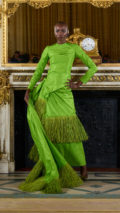
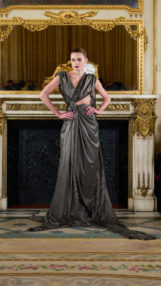
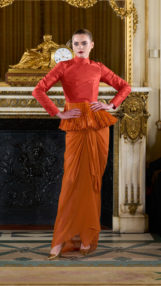
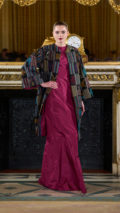
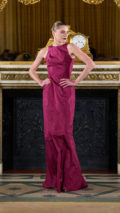
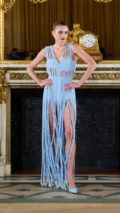
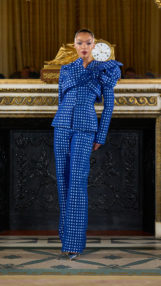
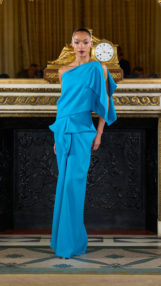
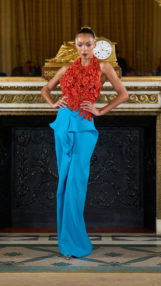
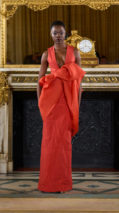
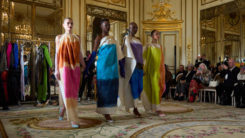
Couture is searching for new rituals this season, and at Imane Ayissi the answer was disarmingly simple: four models, two dressers, one rack of clothes, and a bare room that felt closer to a fitting at mid‑century Balenciaga than to the hyper-produced runways that now dominate the calendar. The designer titled his spring–summer 2026 couture collection “Bissakarak,” Ewondo for “scribble,” that charged first draft when the hand dares something on paper and then in fabric, and the format made that idea literal: we watched the clothes being tried on, adjusted, re‑tied, as if the atelier door had been left deliberately ajar.
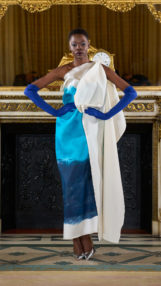
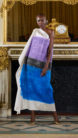
What emerged from that apparent informality was a very controlled exploration of silhouette and volume, rooted in Ayissi’s ongoing dialogue between African modes of wrapping and the codified history of haute couture. He spoke in drapes, pleats and knots, invoking Ancient Greece and African chiefdoms, with whispered homages to Madeleine Vionnet and Madame Grès in the way cloth slid around the body and refused to sit still. Kente from Ghana, raffia from Madagascar and woven loincloths from Nigeria danced with silk faille and gazar, each look proposing a different way of “becoming again after having been,” as if the textiles themselves were mid‑metamorphosis rather than frozen in a final state.
Ayissi has always believed clothes should stay alive on the body, and here that belief became the whole dramaturgy. In many African traditions, the pagne is not a closed system but an open score—wrapped, unwrapped, re‑wrapped, never seeking the perfect finish so much as the right effect—and “Bissakarak” celebrated that gesture over and over. The soft‑edged colour fields on some silhouettes, influenced by his encounter with Rothko’s paintings at MoMA in 2024, seemed to let colour leak beyond their borders, echoing the way the show itself refused a neat frame. There was a quiet thrill in seeing a dress come to life in real time, the fabric breathing, the line shifting with each adjustment, but also a certain test of patience: stretching this exercise in process to an hour risked diluting the sharpness of the idea.
If many designers this season are escaping the tyranny of the catwalk with films, installations and salon‑scale activations, Ayissi chose to go back to the 1950s couture house, when presentations unfolded slowly in front of a seated clientele—but he added a twist by exposing the machinery, the dressers’ hands, the in‑between moments that were once kept politely out of sight. The intimacy suited the clothes, which ask to be seen up close, to have their ties understood, their fabric stories heard, yet the pacing raised the question of measure: how long should we look at a “first draft” before it becomes repetition rather than revelation?
That tension, between the exhilaration of work‑in‑progress and the discipline of editing, sat at the heart of “Bissakarak.” Ayissi’s statement that creation is “always alive, always in motion” felt both like a declaration of method and a gentle provocation to a system still obsessed with definitive images and viral moments. On this evidence, the most radical gesture in couture right now might not be another spectacle, but the refusal of spectacle—the willingness to stand in front of an audience with nothing to hide except, perhaps, the fact that even beauty needs an ending.
Later,
Diane
