










Dear Shaded Viewers,
This fall, the Guimet Museum invites visitors to explore the opulence and artistry of the Ming imperial court (1368-1644) through its extraordinary exhibition, “L’Or Des Ming (14th – 17th Century) Splendors and Beauties of Imperial China.” Running from September 18th to January 13th, this exhibition is a part of the Franco-Chinese Year of Cultural Tourism and offers a rare glimpse into the sophisticated craftsmanship of Ming period goldsmithing.
The exhibition features a remarkable collection of gold ornaments and vases on loan from the Qujiang Museum of Fine Arts in Xi’an, China. These masterpieces, rarely seen outside of China, highlight a level of refinement in craftsmanship unparalleled during the same period elsewhere in the world. Gold, a symbol of wealth and status in China, was used exclusively for creating luxury items and ceremonial pieces, unlike silver which was the primary monetary metal under the Ming.
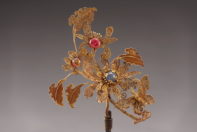
At the turn of the 15th century and even more so in the 16th century, the production of gold objects flourished. This era saw the creation of exquisite pieces adorned with precious stones like rubies, sapphires, jade, pearls, and kingfisher feathers. Such ornaments became symbols of wealth and social success, often imitating the fashions of the imperial court. They were not only ostentatious displays of status but also believed to enhance a woman’s beauty, a notion celebrated by poets of the time.
The exhibition sheds light on the cultural and economic context of the Ming dynasty, a period marked by significant maritime explorations and increased international trade. The Ming emperors’ voyages, led by Admiral Zheng He, expanded China’s influence and brought immense wealth into the empire, contributing to the luxurious lifestyles of the elite.
Visitors will be transported into the world of Ming aristocracy, where gold tableware and jewellery played pivotal roles in social and ceremonial life. The exhibition also delves into the significance of various motifs, from dragons and phoenixes reserved for the imperial family to flowers and birds symbolizing seasonal and auspicious meanings.
Among the highlights are gold objects showcasing intricate techniques like filigree and granulation, demonstrating the virtuosity of Ming artisans. The exhibition also offers educational and digital content, including multimedia presentations developed with the support of L’École des Arts Joailliers, to help visitors understand the techniques used in goldsmithing and the cultural significance of these objects.
The Guimet Museum’s collaboration with the Qujiang Museum of Fine Arts for this exhibition underscores the enduring cultural exchange and friendship between France and China. As Yannick Lintz, President of the National Museum of Asian Arts – Guimet, notes, this exhibition not only highlights the aesthetic beauty of Ming goldsmithing but also the broader historical and cultural narratives of a period that significantly shaped modern China.
This exhibition is a unique opportunity to witness the grandeur of a civilization that continues to fascinate and inspire.
Later,
Diane
Credits in the order they appear above:
Paire de bracelets
Dynastie Ming (1368-1644)
Or serti de rubis
- 1,9 cm, D. 6,7 cm ; poids 57,1-57,8 g
Xi’an, musée des Beaux-Arts de Qujiang, XYB0077/1-2
© Peter Viem Kwok’s Dong Bo Zhai Collection (Collected
in Xi’an Qujiang Museum of Fine Arts)
Pendant d’écharpe à décor ajouré de dragons ailés
Dynastie Ming (1368-1644)
Or serti de rubis
- 18,2 cm, L. 7 cm, l. 3,8 cm ; poids 92,2 g
Xi’an, musée des Beaux-Arts de Qujiang, XYB0045
© Peter Viem Kwok’s Dong Bo Zhai Collection
(Collected in Xi’an Qujiang Museum of Fine Arts)
Épingle à cheveux à décor de fleurs et de papillon
Dynastie Ming (1368-1644)
Or serti de rubis et de saphirs
- 16 cm, l. 5,5 cm ; poids 18,9 g
Xi’an, musée des Beaux-Arts de Qujiang, XYB0070 et XYB0073
© Peter Viem Kwok’s Dong Bo Zhai Collection
(Collected in Xi’an Qujiang Museum of Fine Arts)
Épingles à cheveux à décor de lanterne
Dynastie Ming (1368-1644)
Filigrane d’or
- 17,6-18,6 cm ; poids 23,8-25,2 g
Xi’an, musée des Beaux-Arts de Qujiang, XYB0105/1-2
© Peter Viem Kwok’s Dong Bo Zhai Collection
(Collected in Xi’an Qujiang Museum of Fine Arts)
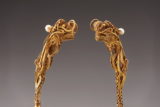
Épingles à cheveux à décor de tête de dragon
Dynastie Ming (1368-1644)
Filigrane d’or serti de perles
- 14,1-14,9 cm ; poids 17,6-18 g
Xi’an, musée des Beaux-Arts de Qujiang, XYB0080/1-2
© Peter Viem Kwok’s Dong Bo Zhai Collection
(Collected in Xi’an Qujiang Museum of Fine Arts)
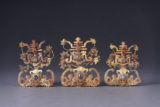
Ornements en forme de chauve-souris surmontée
du caractère shou
Dynastie Ming (1368-1644)
Filigrane d’or ajouré et serti de rubis et saphirs
- 7-8 cm, l. 5,8-6,7 cm ; poids 19,8-24,5 g
Xi’an, musée des Beaux-Arts de Qujiang, XYB0043/1-3
© Peter Viem Kwok’s Dong Bo Zhai Collection
(Collected in Xi’an Qujiang Museum of Fine Arts)
Épingle à cheveux à décor de phénix
Dynastie Ming (1368-1644)
Filigrane d’or serti de rubis et saphirs
- 14,8 cm, l. 4,7 cm ; poids 36,1 g
Xi’an, musée des Beaux-Arts de Qujiang, XYB0089
© Peter Viem Kwok’s Dong Bo Zhai Collection
(Collected in Xi’an Qujiang Museum of Fine Arts)
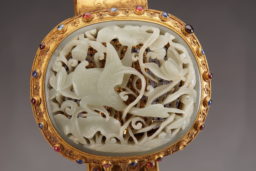
Sceptre ruyi (détail)
Dynastie Ming (1368-1644), règne de Wanli (1573-
1620), daté 1601
Filigrane d’or serti de jade, de rubis et de saphirs
- 36,5 cm, l. 4,2 cm ; poids 476,8 g
Xi’an, musée des Beaux-Arts de Qujiang, XYB0109
© Peter Viem Kwok’s Dong Bo Zhai Collection
(Collected in Xi’an Qujiang Museum of Fine Arts)
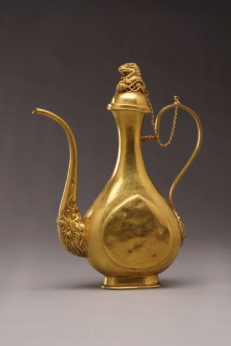
Aiguière à décor de dragon et de lion jouant avec
une balle
Dynastie Ming (1368-1644), règne de Wanli (1573-
1620), daté 1601
Or
- 27,4 cm, L. 21,4 cm, l. 7,7 cm ; poids 869,8 g
Xi’an, musée des Beaux-Arts de Qujiang, XYB0086/1-2
© Peter Viem Kwok’s Dong Bo Zhai Collection
(Collected in Xi’an Qujiang Museum of Fine Arts)
Paire de vases à anses en forme de phénix
Dynastie Ming (1368-1644)
Filigrane d’or serti de perles, rubis et saphirs
- 26 cm, D. 6,7 cm ; poids 718,8 g
Xi’an, musée des Beaux-Arts de Qujiang,
XYB0092/1-2
© Peter Viem Kwok’s Dong Bo Zhai Collection
(Collected in Xi’an Qujiang Museum of Fine Arts)
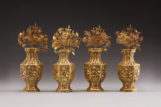
Paire de vases à décor de dragons
Dynastie Ming (1368-1644)
Filigrane d’or serti de rubis
- 15-15,5 cm, l. 9,5-10 cm ; poids 259,6-267 g
Xi’an, musée des Beaux-Arts de Qujiang, XYB0063/1-2
© Peter Viem Kwok’s Dong Bo Zhai Collection
(Collected in Xi’an Qujiang Museum of Fine Arts)
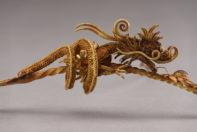
Épingle à cheveux ornée d’un dragon enroulé
Dynastie Ming (1368-1644)
Filigrane d’or serti de rubis
- 24 cm, l. 2 cm ; poids 41,3 g
Xi’an, musée des Beaux-Arts de Qujiang, XYB0051
© Peter Viem Kwok’s Dong Bo Zhai Collection
(Collected in Xi’an Qujiang Museum of Fine Arts)
Boîtes à décor de daim
Dynastie Ming (1368-1644), règne de Wanli (1573-1620),
daté 1601
Filigrane d’or serti de rubis et saphirs
- 13-14 cm, l. 9,5-10,5 cm ; poids 270,6-282 g
Xi’an, musée des Beaux-Arts de Qujiang, Xi’an, XYB0049/1-2
© Peter Viem Kwok’s Dong Bo Zhai Collection (Collected in
Xi’an Qujiang Museum of Fine Arts)
Paire de bracelets
Dynastie Ming (1368-1644)
Or
- 6,4-6,6 cm ; poids 143,8-145 g
Xi’an, musée des Beaux-Arts de Qujiang, XYB0047/1-2
© Peter Viem Kwok’s Dong Bo Zhai Collection
(Collected in Xi’an Qujiang Museum of Fine Arts)
Épingles à cheveux à décor de dragon
Dynastie Ming (1368-1644)
Filigrane d’or serti de rubis
- 17,2-17,6 cm, l. 7-7,1 cm ; poids 54,6-55 g
Xi’an, musée des Beaux-Arts de Qujiang, XYB0085/1-2
© Peter Viem Kwok’s Dong Bo Zhai Collection
(Collected in Xi’an Qujiang Museum of Fine Arts)
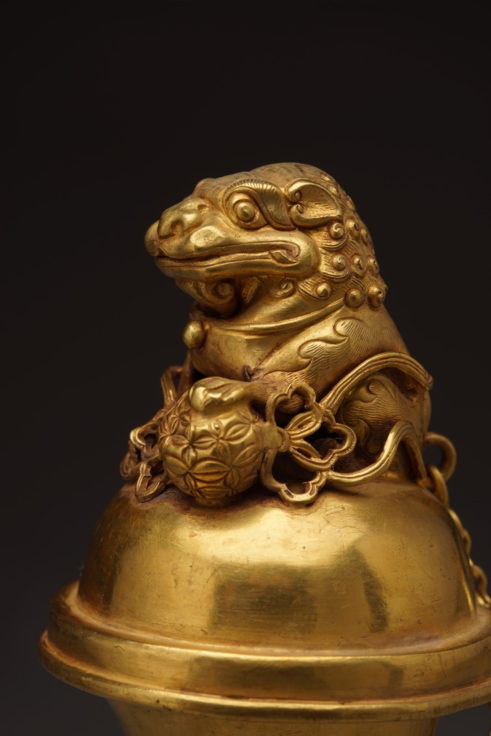
Aiguière à décor de dragon et de lion jouant avec
une balle (détail)
Dynastie Ming (1368-1644), règne de Wanli (1573-
1620), daté 1601
Or
- 27,4 cm, L. 21,4 cm, l. 7,7 cm ; poids 869,8 g
Xi’an, musée des Beaux-Arts de Qujiang, XYB0086/1-2
© Peter Viem Kwok’s Dong Bo Zhai Collection
(Collected in Xi’an Qujiang Museum of Fine Arts)
Musée national
des arts asiatiques – Guimet
6, place d’Iéna 75116 Paris
The exhibition catalogue is in french/english
L’Or des Ming
Fastes et beautés de la Chine impériale (14e – 17e siècle)
