
Dear Shaded viewers,
Three artists share the space at Lafayette Anticipations: Yu Nishimura, Hélène Fauquet and Mungo Thomson. An obscured landscape, a mirror with no reflection, and a single candle, pieced together from hundreds, burning down. Each is a way of looking, a carrier of perception, and an existential confrontation with the self.
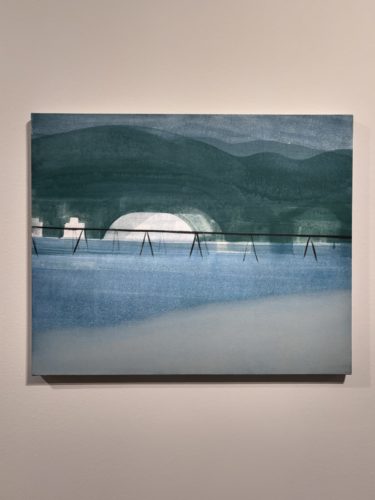
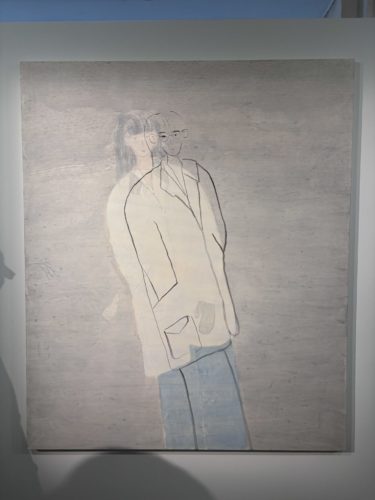
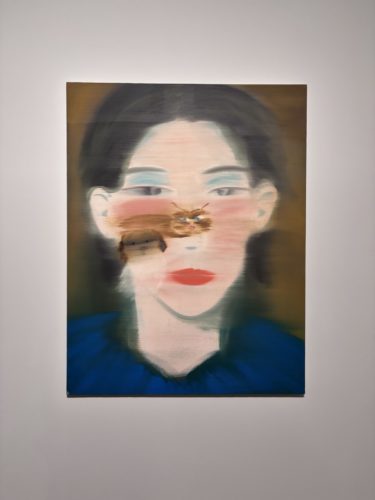
At the centre of Nishimura’s paintings is the landscape. For Nishimura it is not only the scene in front of us, but that scene as shaped by the experiences, emotions, and memories we project onto it. The landscape is not simply a place that we have passed through or travelled to; it becomes some sort of indicator of self-identity. The place you see is not the same place that I see. I am reminded of John Locke’s memory theory of personal identity, which holds that memory constitutes the self. Is that why the landscapes I grew up with mean more to me than to someone seeing them for the first time? If I suddenly lost my memory, would they become just another view?
 .
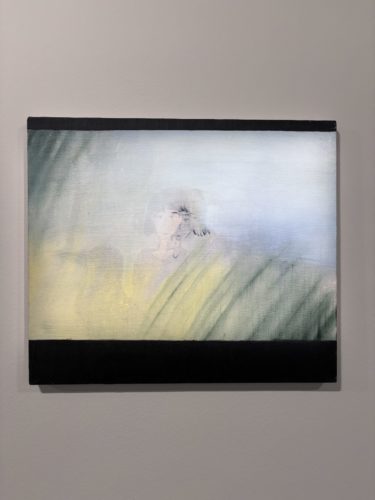
Through techniques of blurring and superimposing translucent layers of paint, Nishimura creates a space of the in-between. This relates to the Japanese concept of ma, an experienced interval between two things or two presences – an idea that’s come up more than once this season, with Issey Miyake having just presented the Figure of Ma for SS27. For Nishimura, the landscape is the space that exists between the images he layers. The same is true for his human figures, where perhaps the body becomes the landscape. He paints a doubled version of the figure over itself, often a simple black line drawing suspended just above the lower layer, as if the soul were being lifted and separated from the material body. Where Western thought tends to keep space and time as distinct, ma merges the two. It can be the physical distance between two objects, or the silence between two words or musical notes. Nishimura magnifies and takes us into this interval of space and time, a place between intention and manifestation – instead of something that we pass by, it becomes the destination.
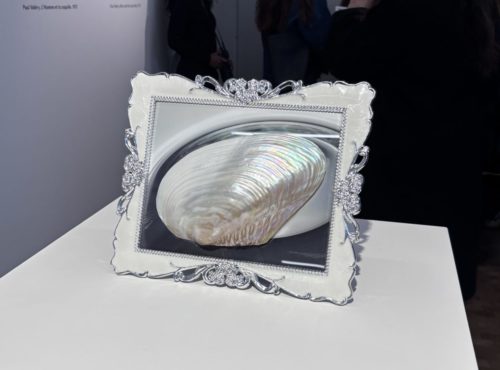
This inspection of the self becomes more interrogative and confronting with Hélène Fauquet’s shell mirrors. Mirrors of various sizes sit on podiums, but where your reflection should be, there are pearls and seashells instead. Fauquet quotes Paul Valéry’s essay L’Homme et La Coquille, where he likens a person holding and examining a seashell to Hamlet holding Yorick’s skull. This gesture of confronting the object in one’s hand forces one to face the mysteries of life and creation, much like Hamlet looking into the empty socket of a skull and seeing a reflection of human existence.
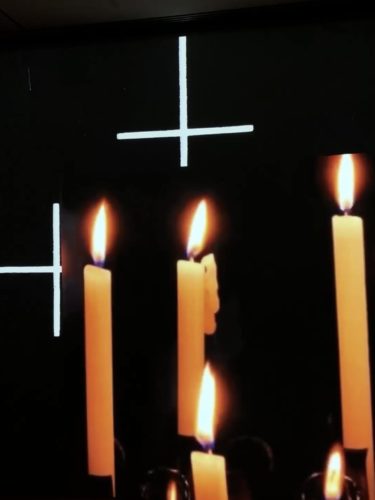
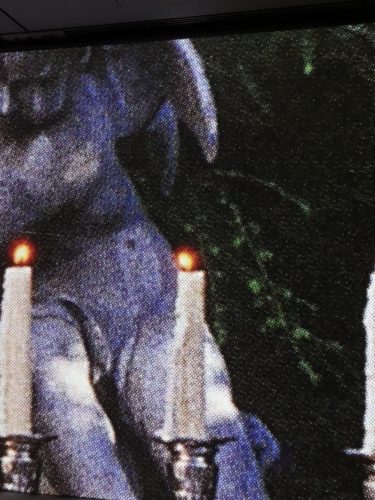
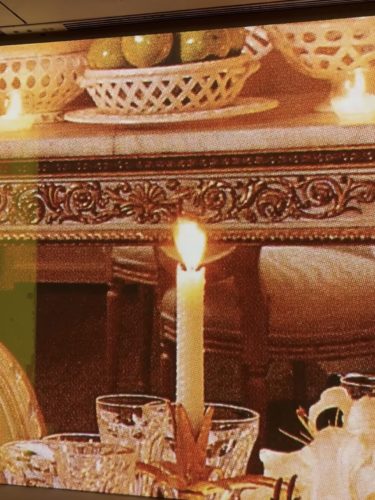
The exhibition closes with Mungo Thomson’s stop motion video, the fifteenth chapter of his Time Life series. It is made up of successive images of candles taken from Gerhard Richter’s Atlas and books on the making of Stanley Kubrick’s Barry Lyndon and Game of Thrones. Set to a YouTube ASMR recording of a needle on a record, the video shows the candle extending beyond the frame and burning down a little with each cut. Thomson examines the digitisation of books on the internet, a process damaging to the books, as they are scanned at such a high speed. Introduced to the internet in his twenties, Thomson makes work that responds to how he and his generation experienced the world’s shift from analogue to digital. Having grown up with the internet, I continuously wonder why the analogue is so often placed above the digital. Why is it treated as more elite, a higher form of art? At a time when images can be reproduced endlessly and almost instantly, is it the image we value, or the labour we imagine behind it?
I don’t think Thomson is saying one is better than the other. The work reads to me as a personal cry in response to the changing forms of daily life and art.
Later,
Estelle
