
Before the show even began, everyone seemed oddly excited about one thing: the basement – a promise of air conditioning. We got the basement. We did not get the air conditioning, perhaps a collective social experiment. And then, somehow, the atmosphere shifted.
Across from me sat Estonian rapper and performance artist Tommy Cash, a master at refining absurdity into an art form. Naturally, he arrived wearing a custom outfit covered in sculpted poop motifs while casually sipping from a giant hospital IV bag filled with a suspiciously yellow, unidentified substance. Whether it was electrolytes or something far more conceptual remains unanswered. Around him, several rappers committed to full leather looks despite the 45-degree heat outside. I spent a good portion of the waiting time wondering whether this was genuine dedication to the culture or a silent cry for help. Blink twice if you need rescuing.
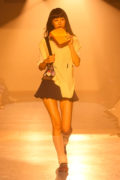
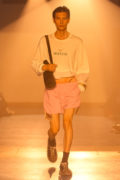
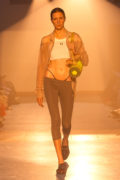
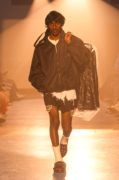
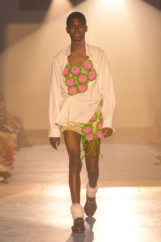
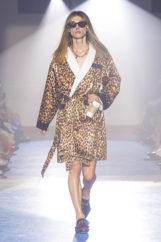
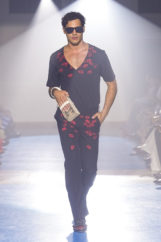
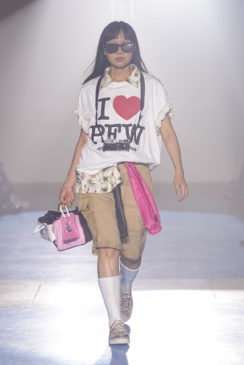
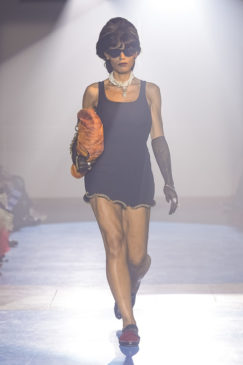
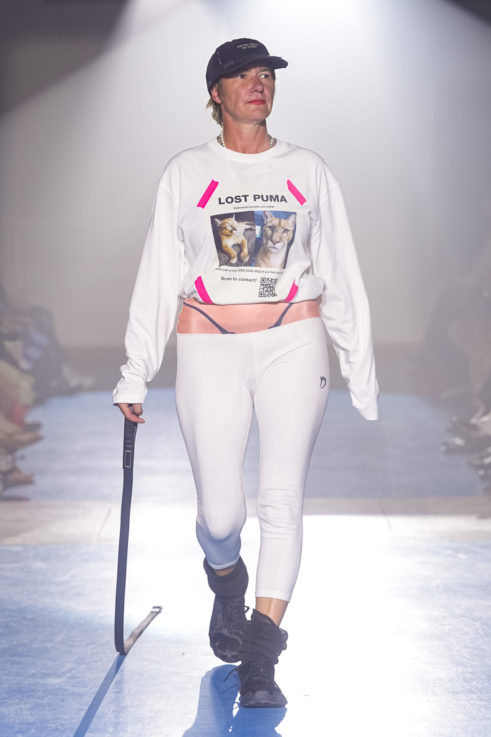
A few moments later, a rooster crowed through the speakers, announcing the start of the day. That simple sound set the tone for Doublet SS27, Masayuki Ino’s latest meditation on the extraordinary hidden inside the painfully ordinary. His world doesn’t imagine the future as a chrome-coated fantasy. Instead, tomorrow slips casually into everyday life, almost unnoticed. As always with Doublet, the runway rewards anyone willing to slow down. A seemingly innocent “I ♥ PUMA” T-shirt appeared, except the logo looked like it had been through an actual puma attack. Models hugged PUMA teddy bears as emotional support objects. A mad crush, obviously, on a sweater reading “Lost Puma.” – making you wonder if you crossed paths with it last night at Silencio. No judgments. As a very normal day, yoga sets with printed drawstrings, tailored businessmen walked with dollar bills emerging from their suits, perhaps a metaphor for the money tree. A dapper gentleman wore lipstick kisses permanently stamped across his jacket. A schoolgirl calmly wandered past while eating an enormous slice of printed toast, no crumbs left behind.
Doublet SS27 leaves everything slightly out of place in the most intentional way. The future here isn’t elevated or distant—it’s already circulating, already worn, already slightly misread. We’re not fortune tellers here, but observers of behavior: how new materials settle into everyday gestures, how the so-called future quietly becomes habit before it becomes language.
