

Dear Shaded viewers,
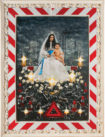
From March 18, to August 31, 2026, the Mucem will present a new exhibition entitled “Bonne mères” (“Good Mothers”). The exhibition explores Mediterranean motherhood as a social construct, a political issue, and an artistic subject through an immersive journey retracing its history from Antiquity to the present day, creating a dialogue between artworks and different historical periods. From ancient mother goddesses to Marseille’s “Bonne Mère,” from patriotic mothers to contemporary artists, it questions representations of motherhood—often laden with expectations—and reveals the plurality of maternal experiences.
The immersive scenography guides visitors along a sensitive pathway structured around three sections. “Bonne mères”examines the complex and singular realities of motherhood, sometimes invisible, shedding light on intimate experiences often left unspoken—such as perinatal grief or abortion. The exhibition concludes with a focus on transmission and mother–child relationships, decoding their codes and forms of mimicry.
In conclusion, visitors encounter the resumés of the “good mother,” who “works as if she had no children and raises her children as if she had no job,” alongside proverbs from across the Mediterranean basin about mothers and mothers-in-law. These thought-provoking tools reflect popular perceptions and reveal with humor that, while motherhood is plural and personal, it is above all universal.
During an interview with Caroline Chenu and Anne-Cécile Mailfert, curators of the exhibition, they were asked: “‘Bonnes Mères’ explores the universal subject of motherhood. Why did you choose to approach it from a Mediterranean perspective?”
Caroline Chenu: As a museum of society, the Mucem naturally takes an interest in this topic, which is rarely addressed in museum contexts—or else approached in a stereotypical way, systematically revealing the expected maternal archetype.
The expression of motherhood is particularly prominent here in the Mediterranean, where mothers occupy a central place in everyday life. Yet this “queen of the domestic sphere” has paradoxically often had little voice in the public arena. Artists from the South frequently invoke motherhood as a creative matrix for their work, whereas in the North it is sometimes perceived as an obstacle. It therefore seemed important to us to give voice to these perspectives—and these paths of expression.
“Bonnes Mères” thus aims to offer an original, comprehensive, and critical exploration of motherhood in the Mediterranean, inviting reflection on the past, present, and future issues surrounding this universal experience.
Anne-Cécile Mailfert: The Mediterranean is the cradle of the great mother goddesses and of very ancient civilizations that some would describe as matriarchal. What has become of these representations of mothers over time and across artistic forms? What has become of these great mother goddesses, and what does that say about our era and our relationship to motherhood? For me, that is the question raised by “Bonnes Mères.”
Marseille, a land of arrival and refuge, is the ideal city to present such an exhibition. Its emblem, the “Bonne Mère” (Notre-Dame de la Garde), embodies protection and tenderness, yet also prompts reflection: what became of Artemis?
“Bonnes Mères” thus explores motherhood as an universal yet deeply Mediterranean experience, at the crossroads of cultures, between myth, transmission, and everyday life.
You can visit the exhibition from March 18, to August 31, 2026 at 7 promenade Robert Laffont, 13002, Marseille, France.
Sincerely,
Alex.
