




Dear Shaded Viewers,
Paris becomes in 2026 the true living laboratory of the Fondation Cartier pour l’art contemporain, a place where Jean Nouvel’s architecture, ecological thinking and the most innovative artistic practices are replayed at the very heart of the city.
Installed on Place du Palais-Royal until August 2026, the Fondation Cartier unfolds with “Exposition Générale” an alternative cartography of forty years of creation, bringing architecture, urbanism, nature, science and technologies into dialogue at the center of Paris’s cultural landscape. This manifesto exhibition, nourished by almost 600 works by more than 100 artists, transforms the building into a laboratory where visitors move from “Machines d’architecture” to the living worlds of “Être nature,” from material experimentation in “Making Things” to the speculative narratives of “Un monde réel.”
In Paris, ecology is no longer a mere theme but a structuring principle, carried by the scenography of the Italian duo Formafantasma and by living art deployed like a forest inside the building itself. The institution questions the role of the museum today, starting from the definition of a “mobile frame without any imposition on art and life,” to redraw the borders between cultural space, urban space and political space.
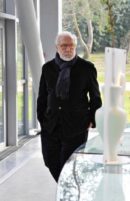
The Parisian program occupies the city as a natural extension of the museum, from metro corridors to major historic squares. In partnership with RATP, the Galerie Valois at Palais-Royal – the former commercial artery linking the metro to the Grands Magasins du Louvre – becomes a narrative thread where Andrea Branzi, Olivier Saillard and then Raymond Hains follow one another, transforming the flow of commuters into an exhibition audience.
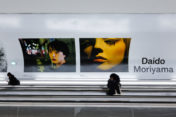
A selection of photographs from a collection that gathers 138 photographers of 30 nationalities is displayed on the long mural in the Montparnasse–Bienvenüe moving walkway, bringing Eggleston, Moriyama, Iturbide or Seydou Keïta into the everyday path of passers-by. On Place du Palais-Royal, Raymond Hains’s installation “Du Grand Louvre aux 3 Cartier” sharply restages the dialogue between construction site, history, urbanism and contemporary architecture, just as the Fondation faces the Louvre.
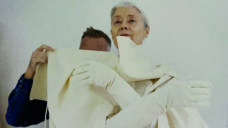
In spring, live performance takes over the exhibition spaces through a series of site-specific commissions, making Paris the theater for an exceptional dialogue between fashion, music, performance and contemporary writing. Olivier Saillard invents “Le Musée Vivant de la Mode,” a moving history of everyday garments, from beige toile dresses to intimate archives, prolonged in the metro by “Le Musée de la Mode en vitrine.”
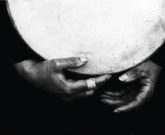
Souffle Collectif brings together Gnawa heritage and the Egyptian Zār ritual in “Ubr – passage Il al-Ilj vers la guérison,” while Jennifer Walshe and Philip Venables propose with “The Alonetimes” a fragmented archaeology of solitude, between personal narratives, dark humor and musical theater. These performative presences turn the Fondation, in the heart of Paris, into a space where the living – bodies, voices, gestures – circulates among the works rather than a fixed museum.
With the opening of “La Manufacture,” more than 300 m² dedicated to craftsmanship and savoir-faire, the Fondation affirms in Paris a pedagogy of gesture, of the intelligence of the hand and of collective practices. This hub welcomes schools, families, social and medical audiences in formats co-designed with artists, artisans, social workers and teachers, making creation both a tool for sharing and a space for empowerment.
Major discussions are also held in Paris: “Conversations Générales,” “EXIT l’image du présent” and “Making Things” revisit the contemporary museum in the age of data, of ecology becoming culture, and of transdisciplinarity. In parallel, the opening in autumn 2026 of a restaurant led by Anne‑Sophie Pic, built around her philosophy of “Imprégnation,” completes the idea of a place where art, city and art de vivre answer one another.
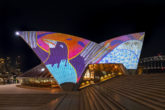
From this new Parisian center, the Fondation Cartier weaves in 2026 a network of international projects that each, in their own way, extend the key lines sketched in Paris. In Sydney, the Biennale “Rememory” and the “Badu Gili Story Keepers” projections on the Sydney Opera House sails place First Nations artists at the core of a narrative of memory and transmission, prolonging the commitment to marginalized voices.
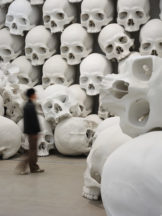
In Milan, the retrospective “Andrea Branzi par Toyo Ito. Continuous Present” and the exhibition “Correspondences” by Soundwalk Collective and Patti Smith explore radical design, ecology, theoretical metropolises and the soundscape of a changing world. In Tokyo, the “Ron Mueck” exhibition continues a longstanding collaboration with the artist around vulnerability and solitude, while in Miami the first major monographic show of Sheroanawe Hakihiiwe inscribes Yanomami culture into the American museum conversation.
From Los Angeles (“In Focus Transformation,” with The World Around) to Copenhagen (“Twenty Years of the Future of Architecture – The Louisiana Manifesto”), the Fondation convenes architects, designers and thinkers around ecological, urban and political issues of our time. Finally, its role as Visionary Partner of the Sydney Biennale and the Homo Faber Conversations program with the Michelangelo Foundation assert a shared conviction: that the museum, in Paris or elsewhere, is now a space for shared fabrication of the real, where art accompanies the transformations of the world rather than standing apart from them.
Later,
Diane
