

There are three official ways to travel between shows at Paris Fashion Week: the metro (classic), the PFW shuttle (theme park-esque, efficient yet stuffy) and Lime(bike)ing (fastest, high armpit-soaking risk). Against better judgement, I chose option three. Between cycling on the wrong side of the road and the decimation of my coccyx across the Parisian cobbled streets, the journey knocked the wind from my sails and I arrived at the Théâtre du Rond-Point late, in a panic, sweaty and delirious.
This was, in fact, the perfect way to arrive to Jeanne Friot’s grudge-meets-glamour queuer-coded club kid FW26 collection Awake. Outside, a swarm of dolls, gays and queens (and everything in between) were illuminated by staccato bursts of flashbulbs, while Friot fans tried to sneak in through any hole possible. I stormed inside wearing borrowed clothes and sunglasses, trying to look like I belonged. A l’intérior, I found my seat in the red soaked auditorium. The room’s quiet sovereign was a man capped in bright pink hair rollers and limbs draped in diamond watches, paying homage to ASAP Rocky’s iconic LollaPalooza look and Grease Lightning’s own Teen Angel.
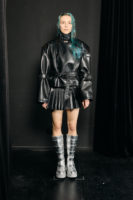
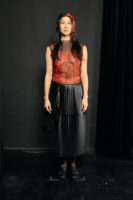
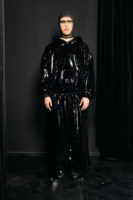
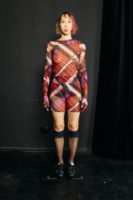
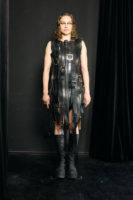
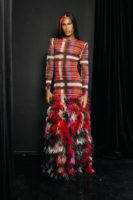
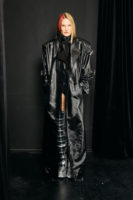
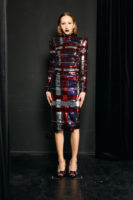
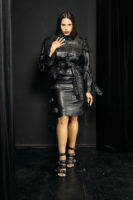
The velvet curtains parted to the echoes of gunshots and the collection was revealed. Hidden throughout were quiet rebellions, manifesting as material distortions. Tartan was made of diamantés and fur, glistening under strobing lights. Model’s eyes were blacked out or alienised by contact lenses. Belts: wrapped and tied, melted into the leather they bound; became garments as a militaristic fringe; were printed across sheer fabric. The humble belt had been used as a symbol of domination and oppression, apotheosised through subversion. Contrasting the experiments in contemporising grunge were sharp, tailored houndstooth suits and blazers fastened with metal buckles paired with flaring disco pants. The collection as a total object defied fixed use, collapsing distinctions between function and fantasy.
Models were interspersed by a conglomerate of dancers from the Ballet de Lorraine, pulsating across the stage. Choreographed by Maud Le Pladec, the kinetic mass performed a ritual of worship to the concept of liberté. Bodies attempted to burst out, beyond their own remit. These garments were not constructed for the runway. They craved activation: to be sweated in, used and stained.
Historically, dancing and partying have acted as forms of political resistance. From the Swingjugend of 1930s Hamburg – who rejected militant Nazism through illicit jazz gatherings and British-influenced dress – to the underground discos of 1970s New York and, more recently, the illegal raves of London’s 2020 lockdown, the ritualistic act of partying through the night has remained humanity’s most instinctive act of protest. In the depths of the current crisis climate, Jeanne Friot reminds us of the importance of collective gathering and action. When politics demand restraint, the human body through movement can always remain free. Why not make it sexy too?
