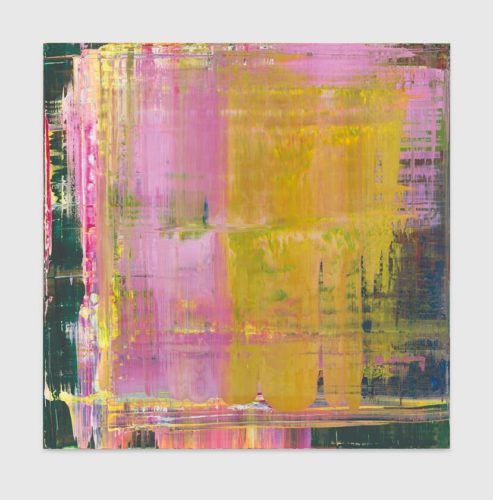
Credits from top to bottom:
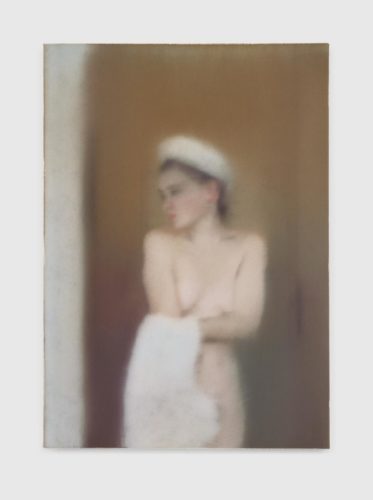
Gerhard Richter, KI. Badende (Small Bather), 1994 Oil on canvas
© Gerhard Richter 2025 (20102025) Courtesy the artist and David Zwirner
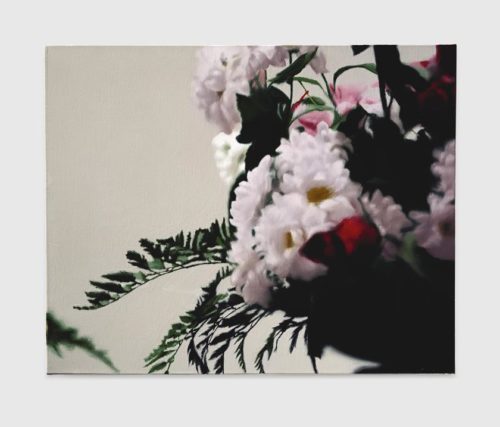
Gerhard Richter, Blumen, 1992 Oil on canvas
© Gerhard Richter 2025 (20102025) Courtesy the artist and David Zwirner
Gerhard Richter, Abstraktes Bild (Abstract Painting), 2001
Oil on alu dibond © Gerhard Richter 2025 (20102025) Courtesy the artist and David Zwirner
Dear Shaded Viewers,
The doors of David Zwirner’s Paris gallery open this autumn onto a world suspended between clarity and enigma—a world shaped by the legendary hand of Gerhard Richter. The celebrated German artist’s works return to the city in an ensemble that spans paintings, drawings, and mirror installations, on the eve of a monumental retrospective at the Fondation Louis Vuitton.
Richter’s vocabulary sprawls beyond boundaries. In his signature Photo Paintings, private snapshots and random clippings—detritus of daily life—dissolve into ethereal surfaces. A blurred face, a faded flower, a distant figure in a pool: these images, once fixed in the certainty of photography, become mutable, elusive, porous. Concept yields to sensation. The viewer is drawn into an iterative dance, never sure if the soul of the image lies in its origins or in the artist’s alchemy.
The abstraction of Richter’s canvases fuses accident with meticulous intent. Vivid marbling—emerald, magenta, gold—sweeps across paintings from 2001, their surfaces lush with contradictions. In oils from the 2010s, the slap and drag of the brush confers volume, urgency, even violence, only to be juxtaposed with the precision and vastness of digital works like “Strip,” a four-meter horizon where painting, photography, and software intersect. Here, technology is not an enemy of craft but an accomplice in expanding the possibilities of looking.
Richter’s latest drawings—intimate yet kinetic—reveal another facet of his pursuit. The artist’s hand, faithful yet restless, slides between graphite and ink, giving shape to abstraction as narrative: a secret story told in lines and stains.
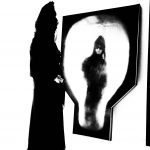
But it is the glass installations that linger, haunted, in memory. Since 1967, Richter has returned again and again to the paradox of glass: a medium that both reveals and withholds, multiplies reality and warps it. The visitor stands before these reflective slabs, caught between the gallery space and the spectral world mirrored back—a shifting, contextual truth that is always just out of reach. As theorists have noted, in Richter’s glass, the spectator becomes co-creator, seeing not only the work but themselves, and the infinite ambiguity of perception itself.
Emerging from the devastation of Dresden and sharpened by countercurrents in postwar art, Richter has never ceased to question the grounds of reality. From founding “Capitalist Realism” with Polke and Lueg, to sweeping the highest honors from Venice to Tokyo, his journey bristles with invention and risk. At David Zwirner, the world is splintered and reassembled—sometimes blurred, sometimes piercingly sharp. It is a world where to see is to wonder, to question, and to lose certainty, if only for a moment.
In Paris this season, Gerhard Richter does not ask for answers. He offers, instead, a prism: a way to approach reality as mutable, fractured, and—through art—endlessly reborn.
David Zwirner represents Gerhard Richter since 2023
Gerhard Richter 20 octobre – 20 décembre 2025 108, rue Vieille du Temple, Paris
Later,
Diane