Dear Shaded Viewers,
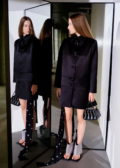
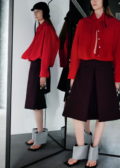
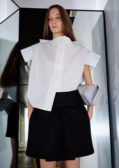
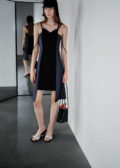
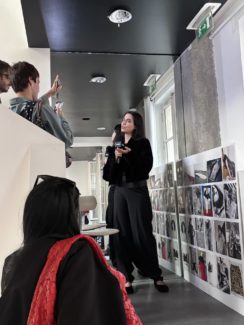
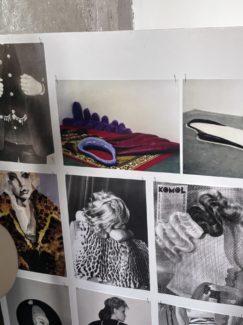
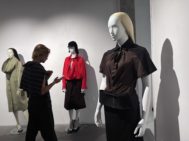
On the first day of Paris Fashion Week, I had the pleasure of speaking to Fidan Novruzova at her SS27 presentation, marking her calendar debut. There were many people waiting to speak to Fidan. I felt there was almost a sense of urgency. When we spoke, we stood by her art direction board, and M-C Hill (@slvsareoptionl) from SHOWstudio also joined us. It was the happiest coincidence (or, as Diane and I would say, the stars aligned), as we soon realised that all three of us are CSM children – two graduates and one who is still there.
M-C pointed at Fidan: “Nineteen”; then himself: “Twenty”; and then me: “Twenty-six” (…and ongoing). As I started to ask my first question, he cut in: “Timeout.” He said, “This is actually very ‘meta’. I’m gonna mic you both” and proceeded to take his phone out to record our conversation.
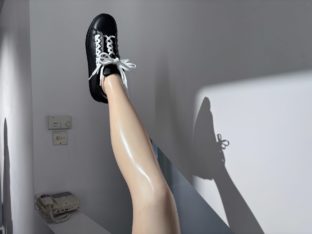
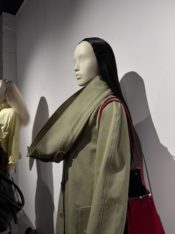
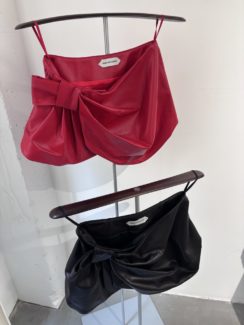
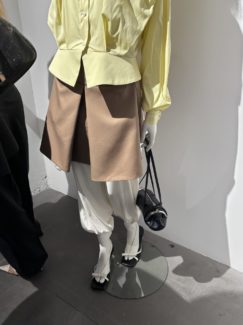
EQ: Your collection is called ‘La Vanité’. What does vanity mean to you and what is your relationship with it?
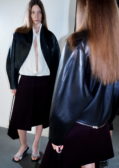
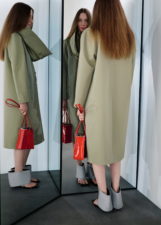
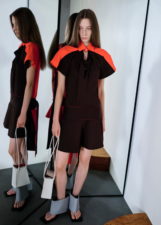
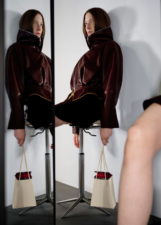
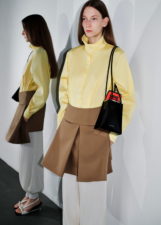
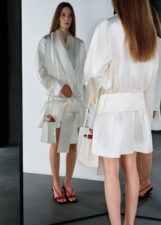
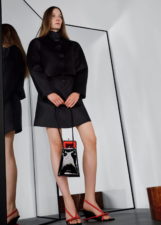
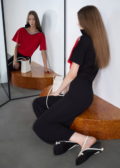
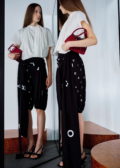
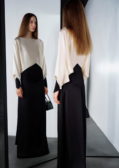
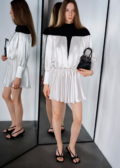
FN: So this season, I wanted to explore the notion of vanity as an attitude rather than a vice. Because I feel like vanity comes across sometimes in some contexts as a negative word. But I don’t see it that way. To me, vanity is not having stigma and shame around how you want to be perceived, having control over how you want to be perceived, having, you know, the whole idea of dressing up, the whole idea of enjoying yourself, enjoying these little rituals. To me, it was quite interesting to go into this whole idea of vanity as a positive phenomenon.
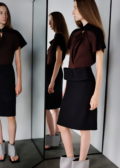
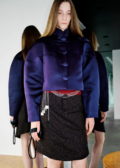
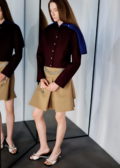
It all started with Mara Goldberg’s work that I discovered this spring – the soft sculptures that she created, which resonated with me, because my work, I think, often is described as sculptural. And what I craved this season was softness, so I felt like the work embodied that idea. Also, the contrasts here – the colours are beautiful, but then the traditional and the contemporary, the sheer and the thick, the man-made, the organic. It was such a beautiful combination of it all. And so, these visuals are the ones that led me to [‘La Vanité’] – couldn’t escape the word in my head.
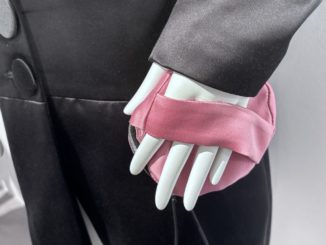
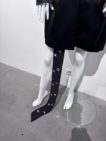
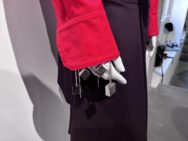
There are little things, very little tongue-in-cheek things. I didn’t want to do anything costumey or novelty. I wanted it to be like little tongue-and-cheek nods to vanity, where I just took my name, my full name, and used the letters of it in all these unexpected places without plastering it as a logo anywhere. And here, we’ve done this cute little belt and all this jewellery and all the prints.
EQ: With vanity, social media comes to mind. Does the freedom to shape how we present ourselves online influence how you design, particularly when considering how a piece looks on screen versus how it feels for the body?
FN: Designing for the body definitely comes first. You can’t escape it and you can’t ignore it. We live in a different time, and you have to acknowledge it to be a part of it, if that makes sense. Definitely, it’s a very current topic and I feel like it can be interpreted in many ways. And this was just my take on it, not to make it as a negative thing.
EQ: Your work draws on West Asian and Eastern European references. Has presenting your work in Paris influenced your references or your designs?
FN: Definitely. I’ve moved to Paris two and a half years ago now. Somehow I can’t say there’s been a huge change within me as a designer, but it’s definitely changed me as a person. And I guess those are interconnected. It’s like you can’t distance one from the other.
With the references, I don’t know, it’s never really on my mood board. It’s more just going back to it. It’s just part of me. I’m raised by Azerbaijani parents. I’m born and raised in Moldova. I live in Paris, and then everything comes from here [gesturing around her head]. You can’t separate those things. So it’s rarely a mood board. It’s more like a lived experience.
EQ: Who or what do you think first shaped your idea of femininity?
FN: I mean, my mom. Are you surprised? [laughs] I mean she’s the one who taught me the importance of clothes and dressing well. Moldova is not a country that was known historically for fashion. So it’s definitely your first understanding of fashion, AKA how you present yourself. She’s the one.
Later,
Estelle
