
Dear Shaded Viewers,
Today, on the opening day of the season, MaXhosa Africa becomes the first South African house on the official runway schedule. After five seasons of presentations, Laduma Ngxokolo no longer has to knock. The door has been opened, a little grudgingly, which is how Paris opens most things.
The collection is called Izihlwele Zivumile, “the crowds/ancestors have approved.” The title skips the question of whether you asked for approval. Fashion usually begs the audience to like it: the nervous lookbook, the hopeful front row, the carefully staged pause before the applause. This one announces that the verdict is already in, and that the dead have signed off first. It is a rare kind of confidence, the kind that doesn’t need to be performed because it was inherited. In a week when so many collections are anxious to explain themselves, a house that opens with the ruling rather than the plea feels almost radical.
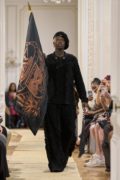



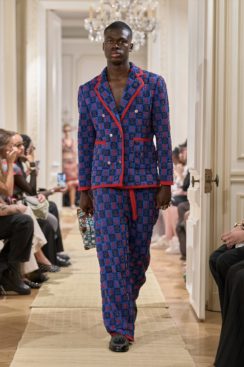
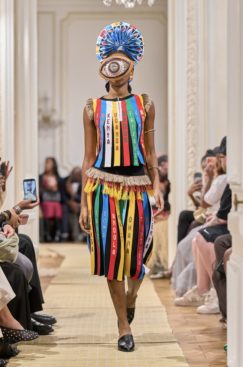
The collection follows the same argument as the house’s earlier work, but in a more tailored, quieter way. The volume has come down and the precision has gone up. Fifty looks, fifty approaches to the geometry, knits, and heritage that you can touch. The patterns that made MaXhosa recognisable, the bold Xhosa-derived beadwork motifs translated into knitwear, are still there, but they now sit inside sharper tailoring, longer lines, and a calmer palette. Each look reads as a sentence rather than a slogan: the zigzags and diamonds carry meaning about lineage, status, and passage, and here they are allowed to be read slowly.
Heritage in fashion is often treated as a costume: a print lifted for a season, a “inspired by” line in the press notes, a gesture toward a culture that is never allowed to speak for itself. MaXhosa refuses that arrangement. The heritage here is not a reference; it is the author. The house wears the map, writes its own names on it, and returns the gaze. Paris has spent centuries looking outward and calling it discovery. This collection looks back, steadily, and lets the audience feel what it is to be observed by a tradition older than the building they are sitting in.
