
In L’Aquila, Italy’s Capital of Culture for 2026, MAXXI brings Ai Weiwei into a city that knows the meaning of the word “after”. A powerful exhibition about earthquakes, war, memory and freedom, but above all about the ability of art to transform a wound into a new form of awareness.There are cities that become Capitals of Culture to celebrate their heritage. And then there is L’Aquila, which in 2026 chooses culture as a way to tell its story: what happened, what has been rebuilt, and what continues to change.
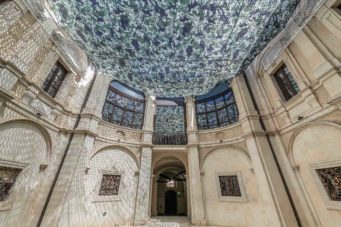
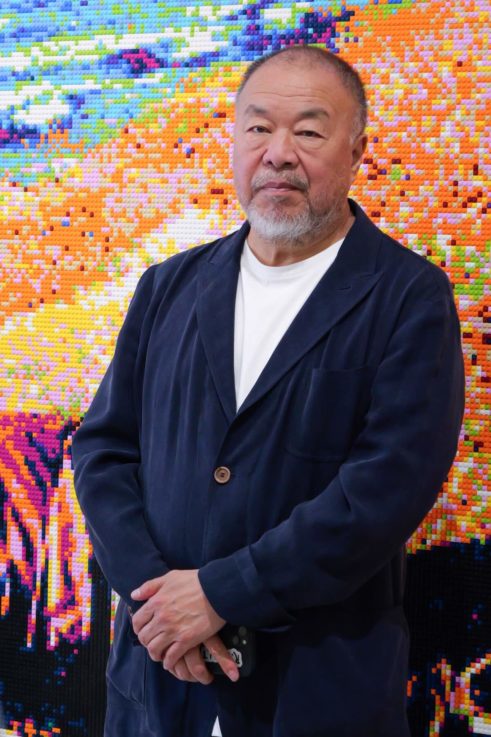
It is against this backdrop that AI WEIWEI: Aftershock arrives at Palazzo Ardinghelli, home of MAXXI L’Aquila, bringing together the work of the Chinese artist, architect and activist until September 6.
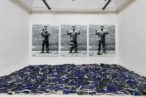
The choice is anything but accidental. Ai Weiwei knows earthquakes not simply as natural disasters, but as events capable of exposing responsibility, fragility and inequality. In 2008, the Sichuan earthquake claimed more than 90,000 lives, including 5,197 students. Ai Weiwei launched an independent investigation to reconstruct the names of the children who died when schools collapsed, openly challenging the Chinese authorities. The most powerful outcome of that experience is Straight: 150 tons of steel reinforcing bars recovered from destroyed schools, deformed by the earthquake and subsequently straightened and transformed by the artist into a monumental installation. In L’Aquila, these materials create a powerful dialogue with Palazzo Ardinghelli and with a city that still carries the consequences of the 2009 earthquake in its architecture. The Sichuan earthquake and the earthquake of L’Aquila become two different memories that begin to speak to one another.
This is where the title Aftershock takes on its most compelling meaning: not the earthquake itself, but what comes after the earthquake. Memory, reconstruction, responsibility and the possibility of starting again. This is also what gives the exhibition particular significance in the year L’Aquila becomes Italy’s Capital of Culture. The project connects contemporary art, territory and memory, turning the museum into a space where the history of the city meets some of the most urgent questions of the present.
THE ARTISTIC PATH OF AI WEIWEI
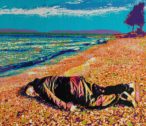
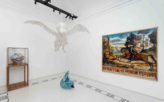
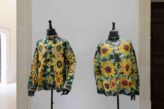
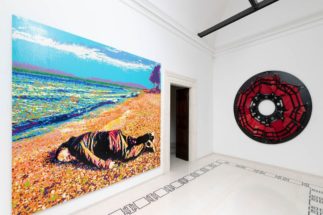
His practice moves freely between art, politics, architecture, photography, film and activism. He works with precious and everyday materials, technology and craftsmanship, popular culture and art history. Above all, he constantly questions what we are accustomed to considering authentic, valuable, beautiful or untouchable. The exhibition brings all of this together. There are the toy building bricks with which Ai Weiwei recreates The Scream by Munch, works by Van Gogh and other icons of Western art. There are life jackets worn by refugees, transformed into Lotus. There are everyday objects carved in marble, destroyed porcelain, jade used to create handcuffs and sex toys, and a coat hanger that becomes a symbol of the artist’s detention. And then there is war. Afghanistan, Ukraine, the refugee crisis, political repression. Ai Weiwei takes images that belong to the daily news and transforms them into works that force us to confront what might otherwise become just another image among thousands. Perhaps this is one of the most contemporary aspects of Aftershock: in an age dominated by rapidly consumed images, Ai Weiwei gives weight and meaning back to what we see. His work often begins with an object but always leads back to people. Behind a piece of steel there are children. Behind a life jacket there is a journey. Behind a photograph there is a story. Behind a destroyed object there is an act of censorship. Art becomes an alternative archive of contemporary life, preserving what risks being erased by the speed of the present. And this may be the true strength of Aftershock: it does not simply tell us what happened, but asks what remains afterwards. For a city like L’Aquila, reconstruction is never merely architectural. It is social, emotional and cultural. And a Capital of Culture should not simply display its past, but use culture as a way of imagining its future.
With Ai Weiwei, L’Aquila chooses to do so through one of the most international, radical and recognisable voices in contemporary art. An exhibition about an earthquake that ultimately becomes an exhibition about us: about how we respond to fractures, what we choose to remember, and whether a shock can become a force for movement.
