
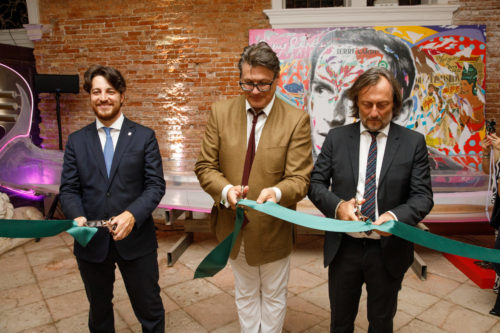
“One should either be a work of art, or wear a work of art.” — Oscar Wilde. Pierre Cardin would have understood the proposition. For him, clothing was never simply ornamental; it was architecture, sculpture, an idea given form around the body. Seventy-five years after the young couturier brought to life some thirty costumes for Charles de Beistegui’s legendary Bal du Siècle at Palazzo Labia, the House of Pierre Cardin revived the great Venetian tradition to inaugurate a museum devoted entirely to its founder. And what better setting than a ball — a return to ceremony, intention, fantasy, and, for one night, to reclaim its sense of theatre.
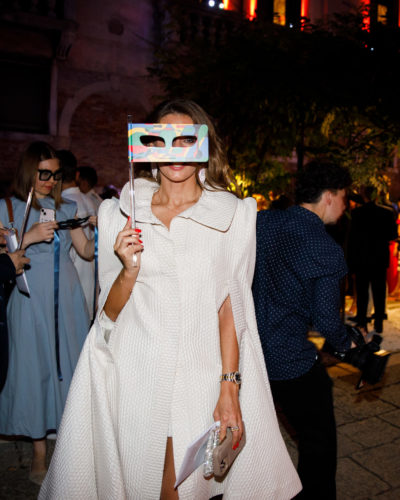
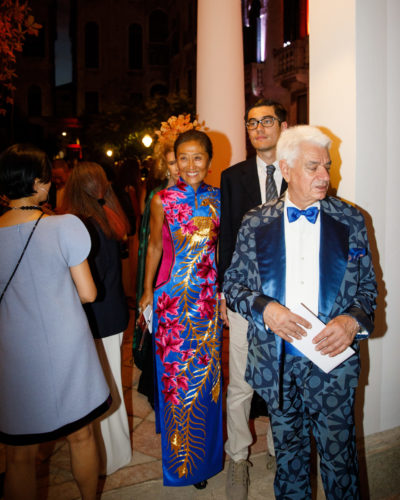
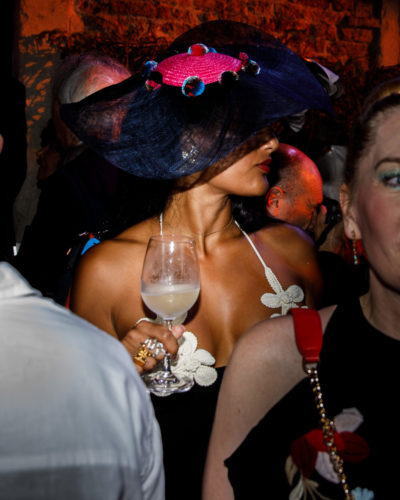
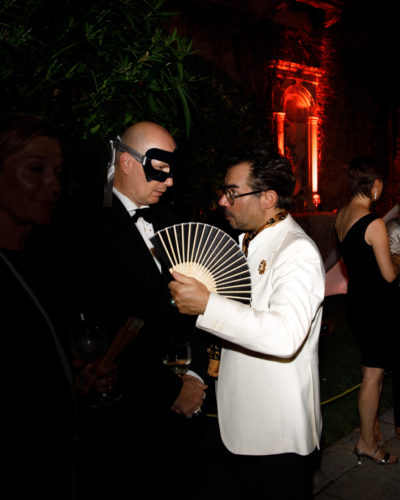
In an age of increasingly casual gatherings, here was an evening that required imagination. Lost among Venice’s bridges and calli, in an outfit seemingly borrowed from Fellini’s Casanova, I briefly became part of a film with no discernible plot. But Venice is forgiving of theatricality. Here, being overdressed and slightly lost feels like a mise-en-scène, ready to abandon the present. Guests embraced Cardin’s vocabulary through geometric silhouettes, sculptural volumes, flashes of metallic futurism, and the Space Age lines that made his work so instantly recognizable.
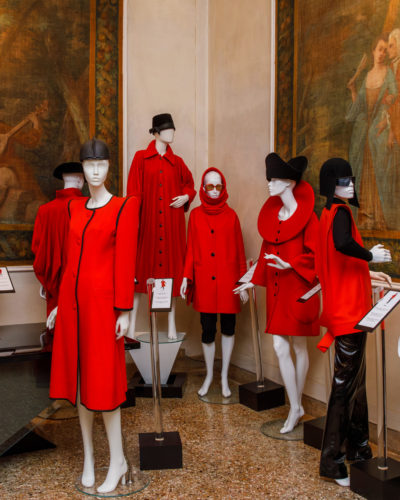
Under the direction of Rodrigo Basilicati-Cardin, Pierre Cardin’s nephew and longtime collaborator, the museum revives the legacy as intimate, sacred, and ever-evolving. Across nearly 1,000 square metres, more than 350 works trace the extraordinary breadth of that vision. Curated by Andrea Burroni, Palazzo Cardin brings together haute couture, original sketches, furniture, lighting and Cardin’s celebrated Sculptures Utilitaires — “utilitarian sculptures,” functional objects conceived as works of art. Chairs, tables, lamps and other domestic forms become extensions of the same futuristic language found in his clothing: geometric, sculptural and often almost otherworldly.
The collection reflects Cardin’s belief in design as an extension of the body, shaping spaces and objects of everyday life- a more experimental way of living. That expansive vision was inseparable from the social changes of the 1960s. As youth culture gained influence and women’s lives and wardrobes began to shift, Cardin proposed a new kind of body — mobile, graphic and liberated from the conventions of the past. His geometric dresses, unisex designs, vinyl and plastic accessories, helmets and exaggerated volumes reflected an era fascinated by the moon landing, modern architecture, automobiles and the promise of tomorrow.
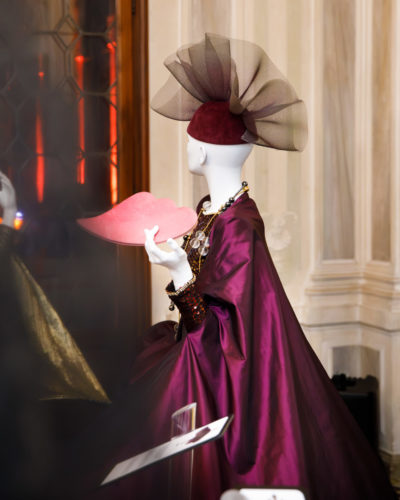
Today, viewed from a distance, we sense that palpable tension nurturing his work and making it so compelling. His apparel brought the visual language of futurism into everyday life, transforming fashion from a marker of social hierarchy into a space for experimentation, movement, and self-invention. Palazzo Cardin murmurs questions from the future: what do we wear when the world changes, and who do we become when we dare to change with it?
Photo credit: ©Filippo Ciappi/AP Content Services for Pierre Cardin
