



Dear Shaded Viewers,
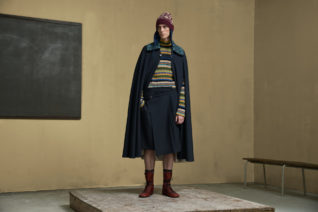
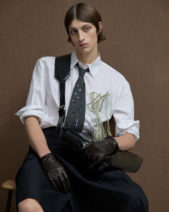
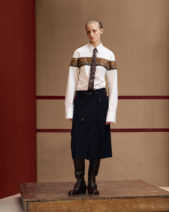
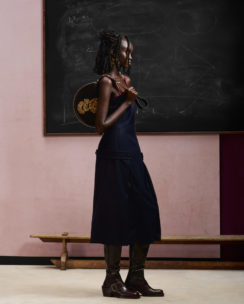
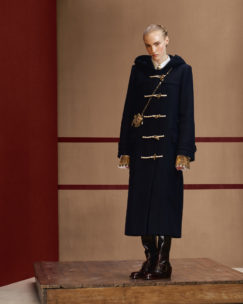
There is a particular ache in dressing for a life you haven’t yet lived, and Julian Klausner staged his third winter for the house inside an actual schoolroom — Lycée Carnot, its corridors still smelling faintly of chalk and adolescence — as if to say: growing up is the only inheritance any of us really get. The clothes agreed. Uniform blazers came cinched at the waist and piped in colors no dean would sanction; baseball jackets went oversized and crested in gold, half-armor, half-daydream. Plaid, that most institutional of fabrics, was coaxed into sleeveless dresses with ruffled collars rising like a held breath.
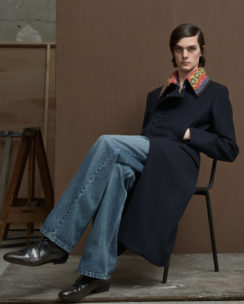
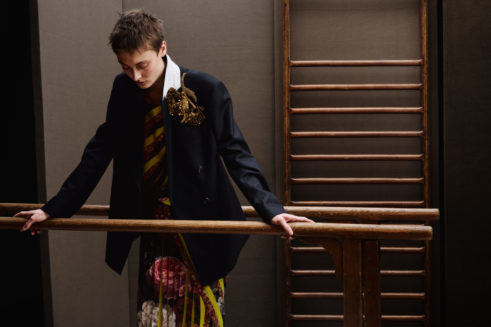
But the deeper theme was borrowed clothing — not costume, but inheritance. A father’s coat. A mother’s floral print, transplanted onto a vinyl trench like a memory refusing to fade evenly. Patchwork coats were pieced together the way an old blanket is, out of scraps too loved to discard. Kimono pajamas carried embroidered crystals across flannel, as if someone had cried a little glamour into a garment meant only for sleep. Nothing here postured. Klausner’s genius was in letting the clothes look slightly borrowed, slightly too big or too soft in the shoulder — the exact tenderness of a teenager swimming in a parent’s sweater.
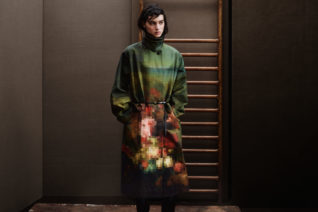
The palette read like weather changing its mind: grenadine red, matcha green, dissolving blues that felt underwater one moment and forest-lit the next, deep orange breaking through like a low winter sun. Gobeline tapestry and jacquard carried Flemish still lifes — Klausner’s nod to Antwerp’s own 16th-century polyglot soul — while satin jackets took on Japanese-cut collars, and somewhere a Peruvian bonnet appeared, unbothered by geography, because feeling has never respected a map. Jazz — Maki Asakawa, 1969 — hummed underneath it all, more elegy than soundtrack, the sound of a decade that also believed in starting over.
What lingers isn’t a silhouette but a mood: the specific, unrepeatable joy of the fresh graduate, coat still creased from someone else’s closet, walking out into a life not yet worn in. Klausner didn’t dress nostalgia so much as he dressed its opposite — the moment just before memory, when everything old still feels new because it’s newly yours.
Later,
Diane
