
Dear Shaded Viewers,
I didn’t expect to fall in love with a bande.
But somewhere between the stadium lights and the Paris runway glare, the Kappa x Junya Watanabe Man capsule flipped the script on what sportswear can be — and those caps, frankly, are beyond.
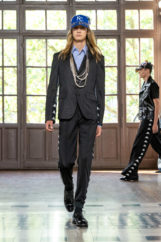
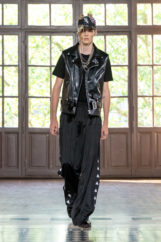
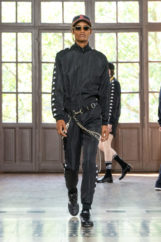
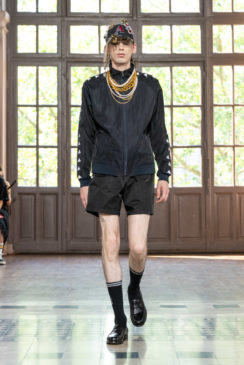
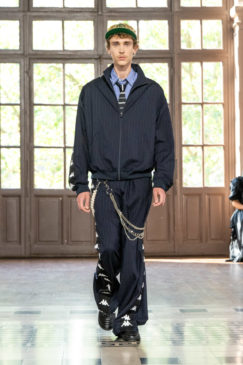
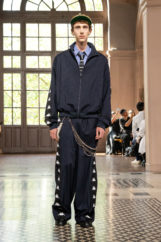
You think you know Kappa’s Omini Banda — two silhouettes, backs pressed together, the eternal logo of a certain kind of Italian sport nostalgia. Then Junya gets involved, and suddenly the Banda stops being a stripe and starts behaving like a character: glitching, multiplying, slicing through tailoring with the confidence of a striker walking onto the pitch.
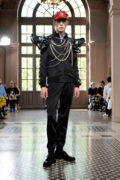
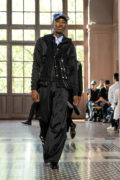
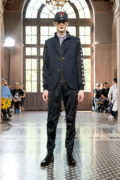
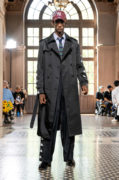
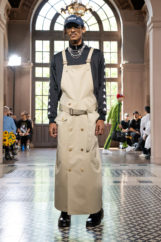
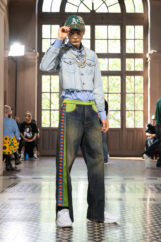
On the runway in Paris, the band wasn’t just trim; it was attitude. It wrapped, fractured, and reappeared with that quiet Junya precision, turning the familiar into something almost sci‑fi, a new chapter in what they’re calling Banda Culture — the collision between terrace mythology and experimental design.
The capsule is only 17 pieces, but it feels like a full vocabulary. Technical references are everywhere: cuts that hint at performance gear, surfaces that look ready for floodlights and flashbulbs, silhouettes built to move from daily commute to late‑night screening without losing their edge.
There’s a tension I love — everyday functionality pressed up against high‑end construction, sports heritage filtered through Junya’s methodical, almost obsessive eye. It’s the kind of collection that lets you slip between worlds: football club, film festival, gallery opening, after‑hours bar, always with that Omini Banda tracking your movement like a graphic score.
Let’s talk about the caps, because they stole my heart and the show.
They’re not just merch; they’re the new cult object, the thing you grab when you want your head to do the talking.
On the runway they felt like mini manifestos: the Banda sliced across visors, hugging panels, creating a rhythm that reads instantly Kappa yet totally Junya. They’re the piece you can wear on the days you’re not in full look, and still signal you understand that sportswear can be conceptual, that street can speak fluent couture.
I left the show thinking: this is the future of the logo cap — less souvenir, more statement, designed for people who collect narratives, not just brands.
Kappa has always been about that intersection: stadium culture, street, club, the democratically glamorous zones where sport and nightlife blur. Add Junya Watanabe Man and suddenly the story extends into archive‑level fashion, where the cut matters as much as the club.
Here, the Omini Banda becomes a backbone for contemporary dressing: a line you can follow from 90s streetwear to now, from KOMBAT™ performance jerseys to a capsule that belongs on moodboards and in wardrobes. It’s heritage without nostalgia, sport without sweat, an alliance that feels perfectly tuned to a world where jerseys sit next to tailored coats and logo bands flirt with gallery lighting.
Paris Fashion Week is always a blur of references, runway theatrics, and impossible timing — but this show cut through the noise. The Kappa x Junya Watanabe Man capsule didn’t scream; it asserted itself, quietly radical, built on authenticity and innovation rather than hype.
For me, it was one of the top shows because it understood the modern wardrobe as a cultural passport: you move, travel, curate, work, and the clothes keep up. The Banda is no longer just a stripe; it’s a route map — from the pitch to the Palais, from the club tunnel to the cinema queue — and those caps are the most compact, portable ticket into that universe.
Later,
Diane
