
Dear Shaded Viewers,
The new Costume Institute exhibition at The Met turns the question of who is naked, who is nude, and who is looking into a hall of mirrors—and it is far more intoxicating than anything happening on the red carpet upstairs tonight. The Met Ball may supply the flashbulbs, but this show delivers the after‑image that lingers.
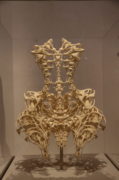
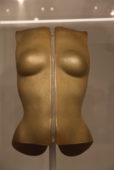
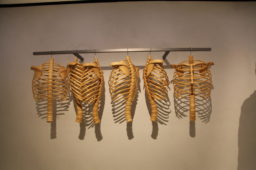
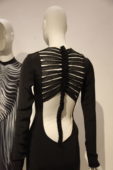
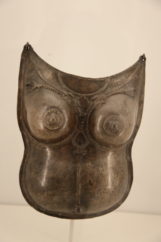
From the moment you cross the threshold, the exhibition stages the body as a site of exposure and projection—sometimes vulnerable, sometimes defiantly performative. The curatorial through‑line teases apart the “naked” body (unadorned, unprotected, often scrutinized) from the “nude” body (artfully stylized, aestheticized, historically coded), and then uses mirrors—literal and metaphorical—to collapse that distinction.
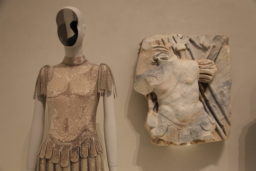
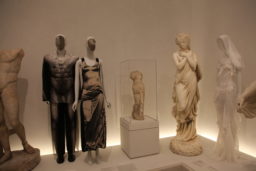
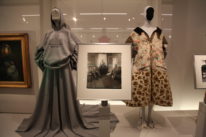
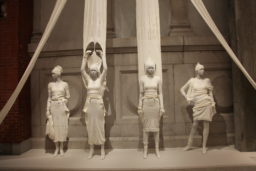
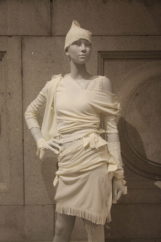
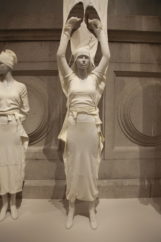
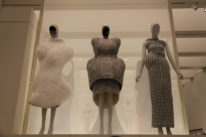
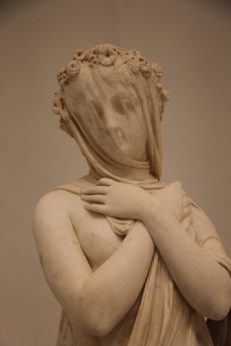
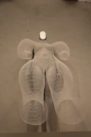
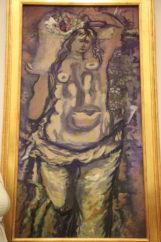
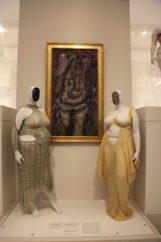
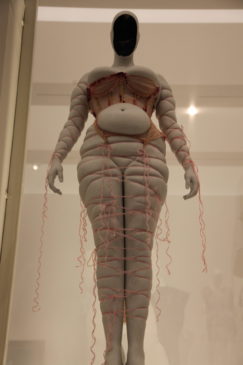
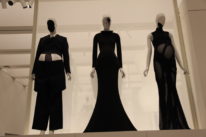
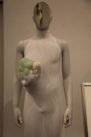
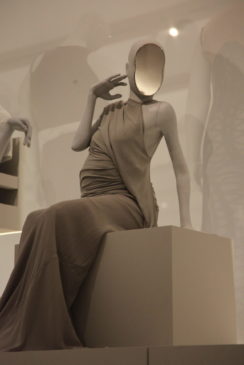
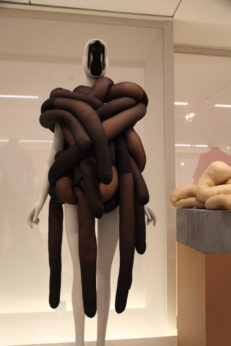
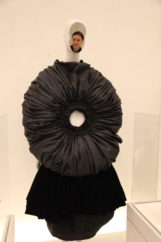
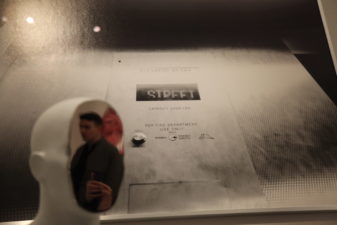
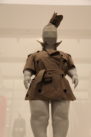
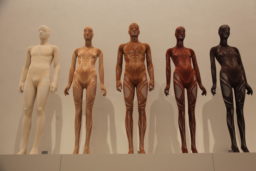
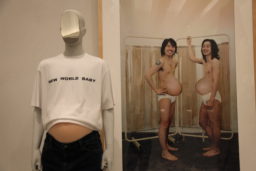
Mannequins, reflective surfaces, and images of bodies before mirrors create a mise‑en‑abyme of gazes: you look at the clothed body that quotes the nude, you catch your own reflection hovering in the glass, and suddenly you are part of the tableau, another spectator implicated in the spectacle. The show is at its sharpest when it lets fashion expose the asymmetry between who is allowed to look and who is required to display, echoing long histories in which female bodies in particular were “acceptable” only when aestheticized as art.
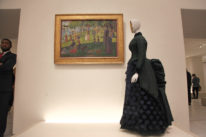
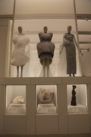
The exhibition unfolds in two distinct galleries, each with its own temperature and tempo, separated less like chapters than like a cut in a film. The first gallery is a slow burn: dimmer, more introspective, with a choreography that encourages you to move close, double back, and read the silhouettes as much as the labels.
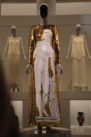
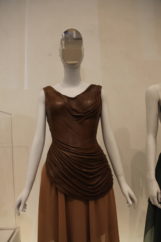
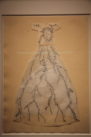
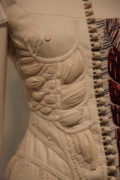
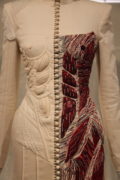
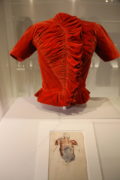
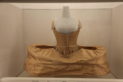
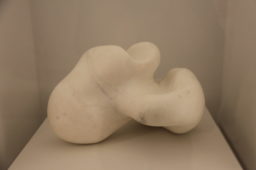
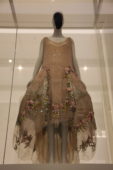
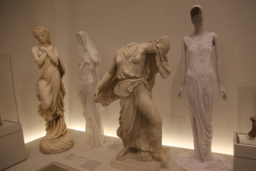
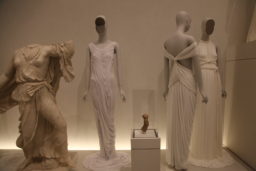
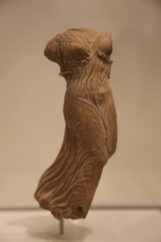
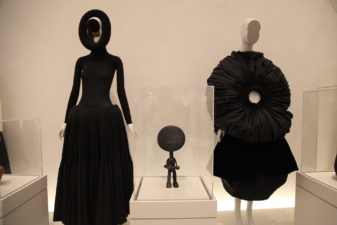
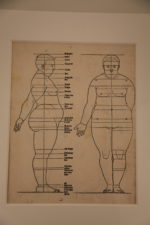
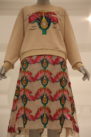
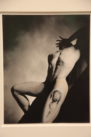
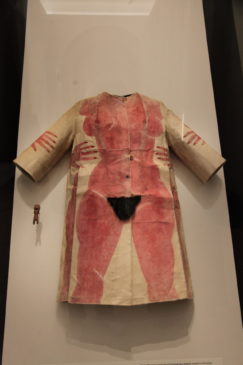
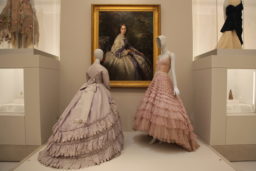
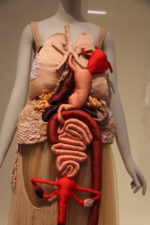
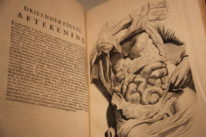
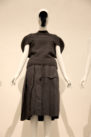
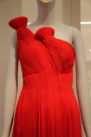
Here, the focus is on the body under scrutiny—historic references to the academic nude, photographic studies, and garments that quote classical drapery or lingerie, often paired with images of figures before mirrors. Reflections fracture the line between subject and object: a satin bias‑cut dress suddenly becomes a second skin; a mirrored plinth turns the viewer into an accidental voyeur, hovering at the edges of someone else’s intimacy.
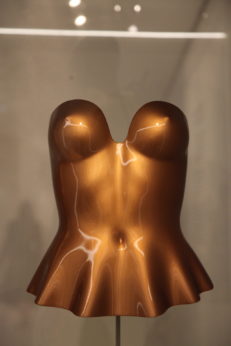
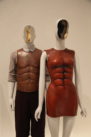
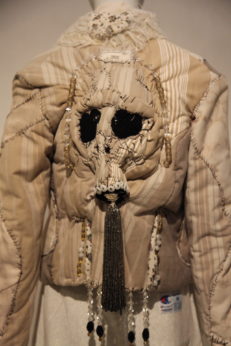
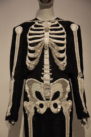
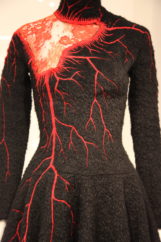
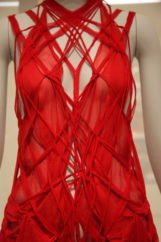
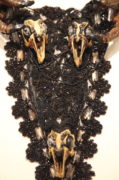
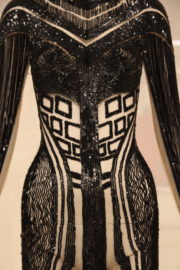
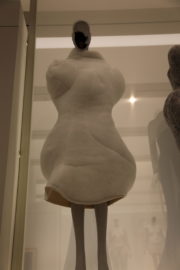
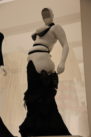
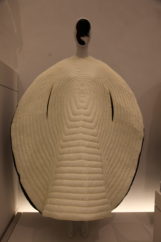
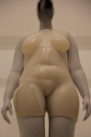
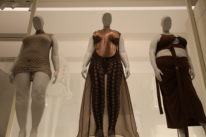
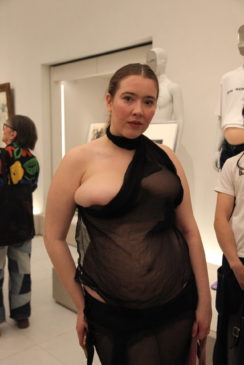
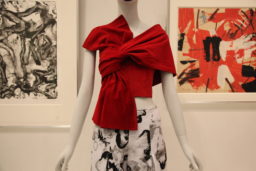
The second gallery opens out into something more theatrical and contemporary, closer in spirit to the Met Ball upstairs but undercut by a wry intelligence. Light intensifies and surfaces gleam; mirrors become stage devices, multiplying bodies into a chorus of avatars. Here the “nude” is weaponized: illusion tulle, trompe‑l’œil cuts, and flesh‑toned fabrics play with ideas of exposure and censorship, asking whether the body is ever truly bare once it has been filtered through fashion, photography, and celebrity culture.
What feels genuinely new is the location: the Costume Institute’s spring blockbusters are now anchored in the Condé M. Nast Galleries just off the Great Hall, transforming what was once retail square footage into a permanent stage for fashion’s most ambitious arguments. The proximity to the museum’s entrance shifts the energy of the entire building; you feel the gravitational pull of the show as soon as you arrive, before you’ve even glimpsed a staircase or a column.
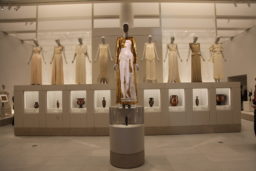
The spatial logic of the two galleries takes full advantage of this new footprint. The first room functions almost like antechamber or confessional—narrower sightlines, lower hum—while the second opens up laterally, allowing for long mirrored vistas where garments, images, and visitors ricochet off one another. It is a subtle but decisive move away from fashion as a side‑trip in the museum and toward fashion as one of its central, architectural experiences.
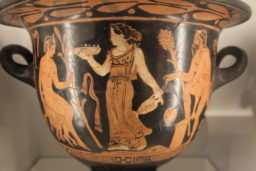
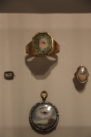
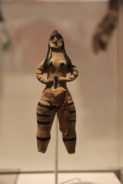
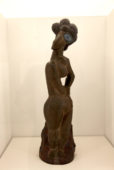
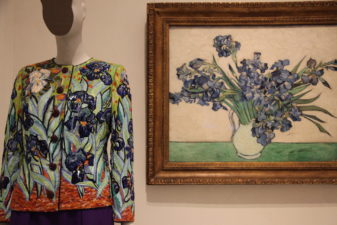
Mirrors are not just a motif; they are the exhibition’s nervous system. Strategically placed reflecting surfaces—polished floors, mirrored vitrines, reflective backdrops—create overlapping planes where garments converse across decades and mediums. A daguerreotype of a nude before a mirror reverberates against a dress that uses sequins as pixelated skin; a bronze mirror supported by a nude figure becomes a quiet ancestor of the camera phone.
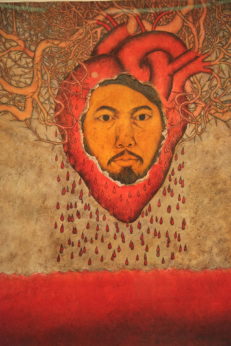
This play of reflection foregrounds the politics of looking. The show gently but firmly points to the fact that museum collections, fashion imagery, and indeed the Met’s own history have been dominated by female bodies on display and male artists behind the lens or sketchbook. In bouncing your image back at you alongside these works, the exhibition asks whether our supposedly more enlightened culture has really moved beyond the old economies of beauty, desire, and control—or merely updated their styling.
Andrew Bolton’s signature is unmistakable: that tightrope walk between scholarly rigor and cinematic staging. Since taking over as Curator in Charge of The Costume Institute, he has turned the spring exhibition into a cultural weather report, from “Savage Beauty” to “China: Through the Looking Glass,” “Heavenly Bodies,” and “Camp.”
Here, he and his team refine that language into something more piercingly intimate. Rather than relying on grand spectacle, they operate with a scalpel, cutting into how fashion constructs the body we think we inhabit and the body the world decides to see. The Costume Institute’s curatorial team—spanning associate and assistant curators and researchers—brings in a chorus of perspectives: histories of photography, feminist critiques of the nude, and contemporary conversations around gender, race, and self‑presentation.
Bolton has often spoken about using fashion as a narrative device, and this show doubles down on that ambition. The garments are treated not as isolated masterpieces but as characters—sometimes heroic, sometimes compromised—in a story about how we learn to watch ourselves, or to disappear. That curatorial polyphony is crucial; it keeps the exhibition from becoming a single, authoritative take on the body and instead turns it into a dialogue in which viewers are explicitly folded.
Upstairs, the Met Ball converts the museum into a global stage, compressing its complexity into a single night of images. Downstairs, this exhibition stretches the same themes—exposure, spectacle, self‑fashioning—across time and space, asking what remains when the borrowed diamonds have gone back to the vault and the makeup wipes have done their work.
If the Ball offers the fantasy of being seen, the galleries propose a more unsettling question: what does it mean to see yourself, naked or nude, in a culture of constant reflection? You leave not with a favorite look but with a lingering sense of having been looked at in return, as if the museum itself has held up a mirror and quietly asked, “And how are you performing your body today?”
Later,
Diane
