










Dear Shaded Viewers,
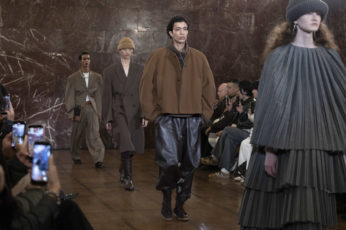
Hed Mayner’s guest designer show at Pitti Uomo in Florence unfolded like a quiet manifesto about how clothing can be “so wrong it’s right,” bending the rules of menswear until they revealed something startlingly tender. In the white‑marble modernist pavilion of La Palazzina Reale at Santa Maria Novella, his silhouettes read as studies in dislocation and intimacy rather than spectacle.
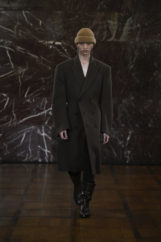
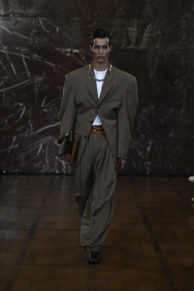
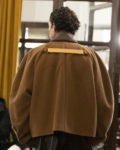
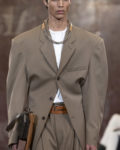
He talks about a jacket with a front‑forward shoulder, sleeves that curve away from the elbow with a jumpy, rear‑forward shift, and a very slim waist. This single garment condenses the collection’s thesis: classical tailoring nudged off its axis until the body feels slightly re‑scripted, shoulders edging ahead of you like a thought that has already arrived. He describes a double‑breasted wool gabardine coat as a strong, energy‑filled piece with shoulders tapering ahead, a round back, and a belt which squeezes it all shut—a kind of pressure chamber of elegance, containing tension as much as polish.
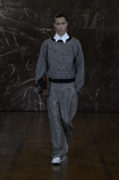
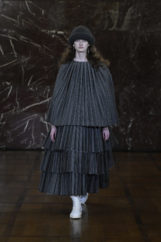
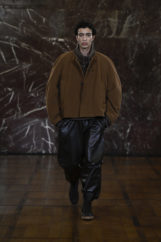
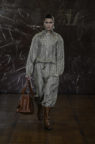
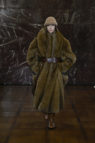
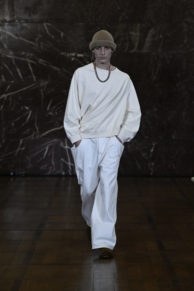
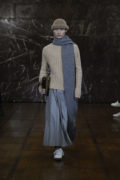
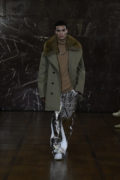
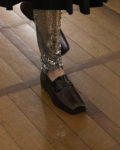
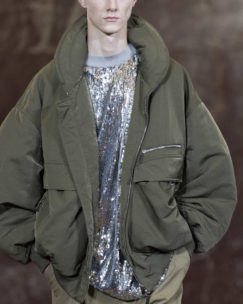
The opening looks made that theory visible. A houndstooth tailored coat with those pushed‑forward shoulders, over a pale gridded shirt, met silver, almost liquid, metallic leggings; pleated Ultrasuede smocks brushed past plump fake‑fur coats; fine houndstooth straight skirts walked alongside luminous padded jackets and crumpled flannel crew necks. Crushed velvet dresses and roomy denim jeans moved with an unexpected, almost devotional ease, as if the wearer had simply rearranged their own wardrobe in a moment of instinct rather than strategy. Modular leather bags appeared as their own mixed‑up kind of thing—a folder, a pill box, a glasses case—objects that seem to have misremembered their original purpose and become more interesting in the process.
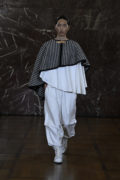
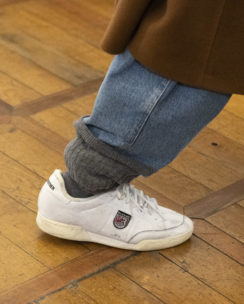
He holds up a circular cape, draped off‑centre to activate a dynamic sway, and the wrongness of it all is perfect. The archetypes are just slightly off and sit on the body with their own character: the shoulders on a trench rounded; a sweatshirt twisted; collars on shirting sliced off so the neckline feels abruptly, almost vulnerably open. A boot from Reebok’s archive, the NPC Insigna, has been heat‑washed, leaving behind a warped, stretched and elongated gesture, as if the memory of the shoe had been pulled like taffy into the present. These are garments and objects that keep their references visible while asserting their right to misbehave.
He explains the design philosophy with disarming clarity: by moving a classical element from its familiar place and creating a parallel reality, the wearer identifies with the piece as their own. Your body takes on its own life shaped by these clothes. Your shoulders are going to the front. Your back becomes wider and larger. Your arms are bending a bit. Your waist flares. Your pants are long and pooled into socks. The result is a subtle shift in posture and presence; the body is not idealized but re‑authored, allowed to be slightly excessive, slightly “too much,” without apology.
If this is a study in wrongness, it is also a study in permission. The collection asks, without didacticism: who has the freedom to look different, who tugs at the norm? Mayner’s answer is not a slogan but a series of propositions in wool, Ultrasuede, fake fur, denim, leather and heat‑warped rubber—each one offering the wearer a parallel reality, and the quiet power to decide that the off‑centre line is, in fact, the new centre.