
Dear Shaded Viewers,
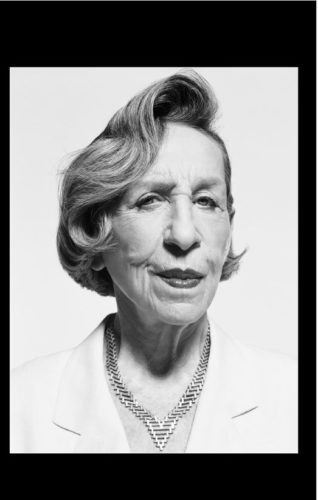
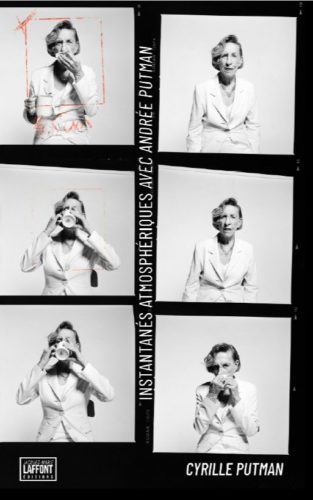
By any measure, Andrée Putman was a force of nature — a designer who transformed minimalism into an aura, whose interiors whispered restraint yet radiated presence. In Instantanés atmosphériques avec Andrée Putman, her son Cyrille offers not a biography but a series of fragments — tableaus framed by place, object, and encounter. Each moment reconstructs a life in motion, part memoir, part meditation on the beauty and fragility that define legacy.
The book opens on a rocky path in the Var countryside, where a precariously anchored house stands as the family’s only constant. From there, the scenes drift to Paris’s Left Bank — an apartment, a school, later an abbey in Burgundy filled with faded archives and ghostly echoes of ambition. The visionary mother becomes the figure known to the world: a woman who redefined interiors, imagined the Concorde cabin, signed timeless hotels, and carried everyone who entered her creations into a deeper sense of space.
Cyrille writes first as the child inside the frame, then as the man who learns to see where even the sharpest elegance casts its shadows. The story advances through the final years — a diagnosis of Lewy body dementia, the quieting of the telephone, the slow dispersal of lifelong friends, and the awkward presence of new faces unsure how to honor what came before.
What emerges is not hagiography, nor reckoning, but an act of precision and grace. Within its 180 pages, Instantanés atmosphériques interrogates the art of raising children while continually rearranging the lives of others, the weight of a name when illness erases its bearings, and the public shape of success when private fragility deepens. It speaks quietly about addiction and legacy without verdict or excuse, inviting readers to measure where chance, fault, and necessity intertwine.
Putman reminds us that beauty never protects — but it does leave traces. By the book’s close, a letter to “Andrée” brings the story full circle: the tone neither sentimental nor cold, but profoundly humane.
Elegance, this memoir reveals, is not an effect but a method. Simplicity is not renunciation but decision. Works may endure, but it is manner — the way one inhabits the world — that truly lasts.
Later,
Diane