

Dear Shaded Viewers,
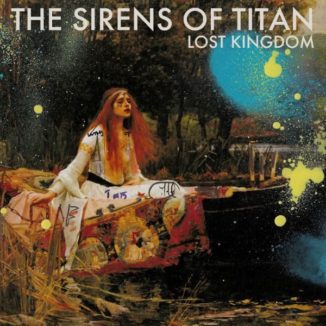
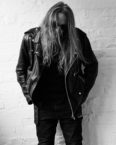
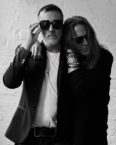
This Friday marks the much-anticipated release of Lost Kingdom, the latest album from The Sirens of Titan—a band at the creative core of John Paul Pryor, whose career I’ve had the pleasure to watch unfold since first meeting him years ago in Rome at ASVOFF. Known on the London cultural scene as a multi-disciplinary force—arts writer, creative director, editor, and songwriter—Pryor has continually blurred the boundaries between journalism and music, building a unique reputation through both his probing editorial work for style publications and his poetic, visceral songwriting. As Lost Kingdom emerges into the world, it is a testament not only to Pryor’s ever-evolving artistry but also to the cross-pollination of influences that have defined his career thus far.
How did your approach to sonic experimentation shift between Apocalypse Sessions, Age Of Treason, and the new Lost Kingdom—was there a pivotal moment that triggered these changes, or did it emerge organically?
J-PP: Apocalypse Sessions was a very instinctive process, and was recorded live over a couple of days, mistakes and all. It was an experiment, but a great experience, and it was really the beginning of my creative partnership with Jez Leather, which continued to evolve quite organically towards the sound that wound up on Age of Treason. There wasn’t really a pivotal moment, we were just finally both living in London in 2018 and followed the energy. Jez’s incredibly multifaceted skills as a musician became more and more apparent as we experimented, and we began to morph into the much more layered psyche blues outfit we are now. The pandemic put a slowdown on the release of Age of Treason, but it was also kind of the beginning of Lost Kingdom. I think On The Night of The Hunted was the first song we wrote for Lost Kingdom.
In an era where overproduction is often the norm, what internal or external pressures shape your commitment to rawness and emotional immediacy in your sound?
J-PP: We just try not to overthink or overplay when we are creating, and we aim to keep things quite analogue, live and raw in the studio. We want the music to sound honest, and I guess that would be a pressure that we actually put on ourselves. I think any music that has its roots in the blues form wants to wear its heart on its sleeve essentially – you want to hear the room in the sound, and feel the immediacy of the live takes. I love the way Phoebe White brings this incredible gospel vibe in her vocals, for example, which are purely improvised. I guess genuine human emotion lies very much in the moment, and immediacy is definitely something we reach for when laying down sonics. Everyone brings their creativity, and I love that. Marco is an exceptional drummer, and brings a wild intuitive energy to what we do.
Lost Kingdom explores themes like dark matter, apocalypse, and love as protest—how do you navigate translating such vast, abstract ideas into concrete musical expression without diluting their gravity?
J-PP: Maybe it comes back to following energy. I really like the ambiguity of the space between thought and expression, and exploring the drifting ideas passing through that kind of limbic state of reverie. To paraphrase Beckett, all words are a stain on the perfection of silence, so I don’t know if any language is truly equipped to express the deeper realities we all live through in our lifetimes in a concrete sense. I think some words or expressions can tap into something kind of magical, though, and can give us a sense of something more vast that dwells inside us – something we can maybe access in dreamtime. Hopefully the record reflects that lyrically.
Can you share a moment during the making of Lost Kingdom when the existential uncertainty you’re channeling felt most personal or overwhelming to you as creators?
J-PP: I think the title track Lost Kingdom was probably the most overwhelming moment for us all. When we finally listened back to the finished article in the studio we all realised we had navigated quite a dark inner landscape emotionally. It’s really quite a sad song, and perhaps quite dystopian, but there is some hope nestled in there too. For me, it kind of expresses this sense that we are losing touch with our humanity in the tech era, and that we are in a moment of monumental evolutionary change for better or worse. It was cut down from a half-hour long session to ten minutes for the album but it gave us a taste for creating longer soundscapes.
Your music is described as both poetic and visceral. Do you ever find tension between literary ambition and the primal energy of rock—how do you resolve or exploit that tension with Jez Leather in the studio.
J-PP: We work in symbiosis and have a kind of creative shorthand. Jez lives and breathes rock’n’roll and intuitively understands the mood at the heart of the songs, and he effortlessly conjures sonics that elevate the atmosphere I am going for in my head, or on acoustic guitar. All of the band feed in their talent, though, and most of what we create comes from engendering an environment of creative freedom, where any idea is welcome. Sometimes we really enjoy going almost too far and teetering on all-out bombast – with a track like Twilight of The Gods, for example, we are being completely indulgent.
The Sirens of Titan began life as an audio-visual project. How do your visual concepts and philosophies inform the architecture of your songs?
J-PP: That is a tough question. The idea was always short films and music, and then we became a band. I think we have achieved something quite close to our original vision with some of the films, like Dark Heart Beating, Leave A Light On and Jupiter’s Son. The film for Lost Kingdom is really an extension of that, and maybe of our obsession with David Lynch. We loved working with Bonnie Foster’s Butterfly short. We enjoy collaborating with different people and their vision, but the songs always come first. The visuals can then kind of completely transform the song, or build an aesthetic around it that we didn’t anticipate. And that is a beautiful thing.
You mention a “theology of protest.” Is there a particular incident or cultural phenomenon that compelled you to frame love as an act of resistance on this album?
J-PP: The song I Don’t Need Jesus is really about that notion of the theology of protest. The idea that rather than quote unquote be ‘religious’ or a ‘believer’ one should aim to actually express and show unconditional love. I personally love the figure of Jesus and I think faith can be a great motivational force for good, but you don’t have to espouse any religiosity to be a moral being. Now, more than ever, we need to express love as a theology of protest, and treat everyone as our brothers and sisters regardless of colour, sex or creed.
Looking back on the band’s trajectory and the worlds built in your albums, what do you hope remains with listeners years after the reverberations of Lost Kingdom have faded?
J-PP: I have no idea, to be honest. It’s all just another one of the 10,000 things in a taoist sense. It’s creative expression and what life it has beyond its creation is its own business. I guess I like to think that people will find it and listen to it and discover some enjoyment or reverie in there.
If you could disrupt one major misconception about existential art-rock through your work, what would it be—and how does Lost Kingdom push back against stereotypes in the genre?
J-PP: I mean the whole existential art-rock thing seems to just be how some people have described the music. I think there may be a misconception in the sense that people might think we are moody intellectual types, whereas actually we are probably much more kind of classic rockers. The music we make is rooted in the blues and probably has as way more in common with The Stones than it does with a bonafide modern art rock band like The Mars Volta. A massive influence for me is The Velvet Underground. I don’t know if that comes through, but, for me, they are kind of the zenith. I don’t know if we push back against any stereotypes, to be honest – everything is projection to some degree, but we try to maintain a core identity while also embracing musical flux.
What was the greatest risk taken during the creation of Lost Kingdom—musically, thematically, or personally—and what did it cost or awaken in you?
J-PP: We kind of opened up some new avenues with songs like The Black Angels Ride Again and Maybe The Sun, and Jez got quite into the violin, so that is quite new! If it awakened anything then I think it confirmed that we are keen to write a movie soundtrack and really delve more into the cinematic vibe some people have mentioned as being in the sound. We want to go much deeper into our sound going forwards.
Release Information
Album: Lost Kingdom
Artist: The Sirens of Titan
Label: Atlantic Curve / Schubert Music Europe
Distribution: The Orchard
Release Date: September 19, 2025
Genre: Existential Art-Rock / Psychedelic Rock / Experimental
Later,
Diane
