










Dear Shaded Viewers,
The Tate Modern’s current exhibition, Leigh Bowery!, is not merely a retrospective; it is an audacious plunge into the world of one of the 20th century’s most transgressive and influential cultural figures. Leigh Bowery, the Australian-born artist, performer, designer, and club icon, was a singular force in the worlds of art, fashion, and nightlife. I had the unforgettable experience of meeting him in New York during the 1980s at a dinner hosted by a friend, where the legendary Quentin Crisp was also present. Bowery’s presence was as striking in person as it was on stage-unapologetically bold, endlessly inventive, and impossible to categorize.
Today, Bowery is celebrated at the Tate Modern, honored in all his dazzling, provocative, and defiant glory-a rare institutional recognition for someone who spent his life gleefully subverting convention and resisting easy definition. Throughout his career, Bowery blurred the boundaries between art and life, transforming himself into a living work of art and challenging norms around identity, sexuality, and aesthetics. His influence reverberates through generations of artists, designers, and performers, and his legacy is a testament to the power of embracing difference and daring to shock, delight, and disturb in equal measure
Bowery’s story is one of relentless self-invention. Arriving in London in 1980, he quickly became a fixture of the city’s nightlife, founding the infamous club Taboo, and forging a reputation for performances and costumes that blurred the boundaries between fashion, sculpture, and living art. His work was a direct challenge to the drab conservatism of Thatcher-era Britain, offering instead a riotous vision of self-expression and bodily transformation.
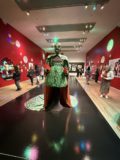
The exhibition is structured around the key spaces where Bowery’s art unfolded: the home, the club, the stage, and the street. This approach allows visitors to trace not just the evolution of his looks and performances, but the contexts-often marginal, always vibrant-in which he operated. Original club footage, immersive installations, and dazzling displays of Bowery’s costumes and collaborations bring to life the anarchic energy of his milieu.
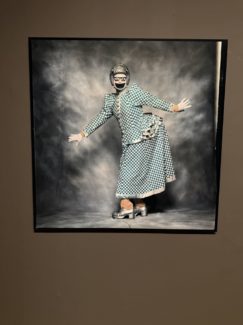
Bowery’s art was, above all, a spectacle. The show is an assault on the senses: sequins, latex, and brash colors abound, as do photographs and films documenting his most infamous performances. Yet beyond the surface excess lies a deeper interrogation of identity, gender, and the body. Bowery’s costumes and performances were not just about shock or self-promotion-though he excelled at both-but about testing the limits of what art could be, and who could make it.
A highlight of the exhibition is the inclusion of Lucian Freud’s portraits of Bowery, which strip away the masks to reveal the vulnerability and complexity beneath. This juxtaposition-between the flamboyant public persona and the unadorned sitter-invites viewers to reflect on the dualities that defined Bowery’s life: spectacle and sincerity, rebellion and introspection.
The show does not shy away from the more problematic aspects of Bowery’s legacy. Wall texts acknowledge his uncritical appropriation of diverse influences, including moments of racial insensitivity, reminding us that his art was as much a product of its time as it was ahead of it. Yet the exhibition’s overwhelming impression is one of celebration: of Bowery’s refusal to be ordinary, his embrace of the grotesque and the glamorous, and his enduring influence on artists from Alexander McQueen to Lady Gaga.
Is dressing up art? Is provocation for its own sake enough? The answer, as this exhibition makes clear, is a resounding yes-if only because Bowery’s life and work force us to reconsider the boundaries of art itself. His legacy is not just in the looks he created or the performances he staged, but in the space he carved out for those who refuse to conform, and in the generations of artists who continue to draw inspiration from his fearless example.
Leigh Bowery! at Tate Modern is more than a retrospective; it is an immersive, challenging, and at times overwhelming celebration of a singular creative force. It is a reminder that art at its best does not merely decorate the world, but disrupts, provokes, and-most importantly-liberates. For anyone interested in the intersections of art, fashion, performance, and identity, the Leigh Bowery! exhibition at Tate Modern is scheduled to run until 31 August 2025.
Later,
Diane