


Dear Shaded Viewers,
I’ve been thinking for days about something and I am sharing my thoughts. It is a question of commentaries on social media, the selling of fashion, and the title of the party for the approaching Met Gala. These three elements are swirling around in my mind as a series of connected yet separate, linked yet different, approaches and definitions of fashion. How the business of creating clothes and the art of high fashion are two sides of the same coin, and how these coexist. Fashion and clothes, what we wear and what is fashionable, the basic necessity of getting dressed and at its highest aspirational level, the art of fashion. It is an endless conversation as we try to balance two viewpoints, two attitudes and two diametrically opposed thoughts. Is fashion “art” or is it merely a business?
Today observers on social media endlessly comment but rarely bring the selling of product into their observations. How personal so much of the criticism is without thinking about the commercial side of actually selling the product. There is so much praise for the complex and the decorative, rarely for the simple and sculptural or the great jacket. Tailoring and construction, fit and proportion are just as important in designing clothes as beading, they require an equally skilled creative eye to get them correct. Like an artist instinctively knowing how to balance a painting, it is at the heart of the difference between those who are good at the job, and the genius.
In the light of the upcoming Metropolitan Museum of Art New York Costume Institute title “Costume Art,” I think we need and should allow both creativity and commerce to exist side by side, they both deserve recognition and here are my thoughts on the subject.
Like furniture, or indeed everything in interiors, we can design furniture as extraordinary works of art, or simply tables and chairs. In the end practicality must play a key part in the creation of each item, a chair you can’t sit on or a table that tips over is impractical to say the least. In fashion is it a jacket as a basic garment or is it Rei Kawakubo at Comme des Garçons view of a jacket ? I once owned a jacket of hers which had several sleeve’s one inside the other, this required a certain dexterity in inserting one’s arm down the said sleeves through layers of different fabrics. Holding a drink, let alone a meal was impossible since one of the inner sleeves extended way beyond my hands. Who is right in this, the maker of functional clothes or the creator of fashion as an art?
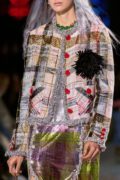
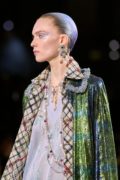
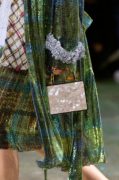
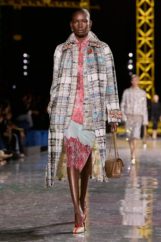
This season there is much social media activity around the first deliveries of Matthieu Blazy for the house of Chanel. How and why are there queues and people are busily buying pieces, seems a topic of importance, but surely this is what should happen with a successful designer and the collection? Is it because we have divorced the clothes themselves from the runway images and analysis of each collection. Do we merely wish to observe without the vulgarity of the commercial side of fashion intruding on our views. Designers are engaged and dismissed on their ability to sell clothes under the brand, label, or house name. The catwalk pieces and the glamour are important but for every beaded evening dress there should be pants, shirts, jackets, and in many cases today, bags and shoes to fill the retail end of the fashion chain. The last time I walked down the highly luxurious and prestigious Bond Street in London many of the designer boutiques looked more like accessories, or indeed handbag shops, than fashion sellers.
So, The Art of Dress and the business of selling clothes are weaving their way in and out of fashion right now in a way that makes me wonder if many observers are losing sight of the function of even luxury fashion, to dress people. By that we mean for the entire day, not just gala nights, back to Chanel and the cropped jacket by Blazy which has been seen again and again showing real clothes being popular. Already no doubt Zara and others are cutting out their version as I type this, but the original has already been seen an astonishing amount for a piece at this price level. So does this mean Matthieu Blazy is a “commercial” designer? I suggest yes and no, he is experienced enough to know he wants to create excitement, headlines, and excitement but he also knows to stage wonderful shows and to offer fashion moments he need big budgets. To enable him to realise this he needs big sales and for this he needs clients. I have noted elsewhere that the casting for the show was absolutely stunning, with a wonderful group of women for the potential customer to relate to as they admired the clothes. This is especially in direct contrast to other collections this season where the target customer reflected in the casting seemed to be under twenty and size zero.
Amidst all this today we confuse the desire to sell and make money by being seduced by glamour. The contemporary focus on awards, galas, red carpet, and film premieres lead us to see evening wear as the main content of fashion houses, yet these extraordinary made to order or couture special pieces do not represent sales. The publicity and the massive online coverage, social media reviews, best and worst dressed lists and stars, celebrities and “famous people” occupies our attention, but is it reflected in money? Does Demi Moore in feathers send hundreds of women to Gucci, or a made to order Vuitton floor length gown sell more bags? These people walking past the cameras are performers and the huge teams who have prepared and dressed them are just as intense as the teams working on the making of the film, show or TV series they’re publicising.
In terms of business, beyond the short lived flurry of activity and the publicity, the link between these events and making money through the selling of clothes seems tenuous. Since advertising in glossy magazines is no longer a key business strategy it is weird this seems to have replaced it. These events have no relationship to anyones real life or their wardrobe of clothes, just as it doesn’t relate to shopping online or in store and spending our hard earned money.
I note the Met Gala is not using the word fashion but costume, for the actual exhibition, but not the gala, which rather lets them off the hook about trying to place fashion and art together. Historically we know it is possible since for example Elsa Schiaparelli and Jean Charles de Castelbajac have both successfully linked fashion and art, whilst others have floundered, and fashion historians have often tried to link the art of the time with the dress and fashions running concurrently with it. There are of course links but in many cases it’s as much to do with interior design as art, wide doors for the panniers of Georgian society, extra deep chair seats for the volume of the bustle in the 1870’s, and many other examples. What clothes went with a Picasso exhibition, or who dresses to view the current Hockney in London? Indeed, Yves Saint Laurent and Monsieur Lesage turned paintings into embroideries for extraordinary jackets amongst other art inspiration for his collections, which actually did include Picasso as well as others including Braque. But this isn’t fashion as art, this is art as fashion, quite a different proposition, basically taking the art work and making it into clothes.
Ready to wear at luxury level is now exorbitantly expensive so it cannot just be a one season wonder. I suspect those lucky enough to buy this first Blazy Chanel collection will be also investing in collectables, plus of course at this level pieces are not mass produced. So, the cachet will remain, but these pieces are also selling because the designer understood what he had to accomplish. Balance the house signatures, alongside the heritage of the immensely strong woman who founded the house and who’s presence is palpable, plus the decades long influence of Karl Lagerfeld, as well as reinvigorating the house, plus tempting the clients to spend in a difficult global economy.
I am not sure that there is a clear defining answer to my question, but I do know that fashion and costume exhibitions draw crowds, where the clothes they see are only the truly special. They want to see Alexander McQueen, Marie Antoinette or Dandies, and extraordinarily little daywear, not “real” clothes. This only allows fashion as art to be taken seriously, and clothes and reality are ignored.
No doubt at Metropolitan Museum Andrew Bolton is busy looking at Coco Chanel, Karl Lagerfeld, and Matthieu Blazy to see who fits the description “costume art.” It will almost certainly be some exquisite gown, but the truth in that in the meantime the house will be selling quilted handbags, neat jackets and straight skirts that keep the name Chanel alive and functioning. The dilemma for many names right now is how to balance the heritage, the house cachet, and the ability of the team to make money. The art of balancing practicality and dreams, pieces that go straight into museums and archives, and pieces that go straight onto backs and into wardrobes. It is a precarious tightrope that fashion continues to wrestle upon, perhaps summed up by Karl Lagerfeld who was always adamant that fashion is not art and fashion designers are not artists…… ‘Fashion is Fashion Art is Art’ – Karl Lagerfeld.
2026 Met Gala and Spring Costume Art Exhibition “Costume Art”
Gala Monday May 4th and opening May 10, the show will inaugurate the Museum’s nearly 12,000-square-foot Condé M. Nast Galleries, named for the organisations late founder in recognition of a lead gift. Featuring nearly 400 objects from The Met’s vast collection, “Costume Art” will juxtapose garments and works of art to illuminate new connections. The Gala dress code will be “Fashion is Art”