





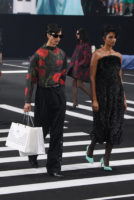
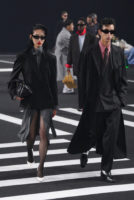
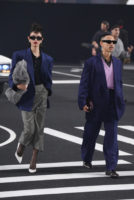
If Willy Chavarria and his designs have been described as making waves in New York, then his arena-filling show in Paris yesterday could only be called a tsunami. The all-singing, all-dancing performance ran for 20 minutes and welcomed 2,000 guests—400 of whom arrived via a last-minute invitation extended to content creator Lyas’ watch party. The result was a charged, communal atmosphere that felt as spontaneous as it was intentional.
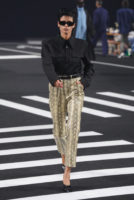
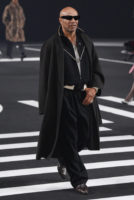
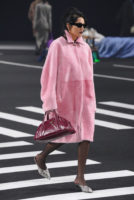
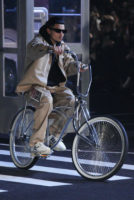
The extravaganza unveiled an expansive collection by Chavarria, showcasing the full breadth of his design language. From his signature red-carpet gowns to Big Willy, his newly launched workwear line, the show traced a bold and unapologetic vision. Big Willy made its debut on models riding lowrider bikes down the runway, while Chavarria’s latest sportswear collaboration with Adidas further underscored his growing cultural reach and fluency across categories.
Ambition pulsed through every look, each one imbued with a subtle sex appeal—the kind possessed by someone who effortlessly turns heads on a New York sidewalk. Appropriately, one of Chavarria’s key inspirations this season was the view from his street-facing apartment, watching the constant flow of people passing by below. That everyday observation translated into clothes that felt lived-in, powerful, and deeply human.
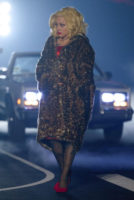
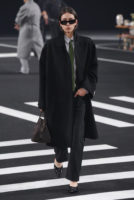
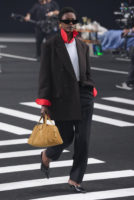
Spanning statement gowns, leopard-print coats, and razor-sharp tailoring, through to bomber jackets and tracksuits, the collection offered something for every facet of life. This breadth was cleverly brought to life through a series of mini plays interwoven throughout the show, featuring performances and appearances from Fied, Julia Fox, Latin boy band Santos Bravos, and Mexican-Chilean singer Mon Laferte, who stepped into the role of a film-noir heroine in a narrative shot and projected live onto a massive screen.
From a younger perspective, it was refreshing to see an influential designer so deeply ensconced in every aspect of how his collection was presented. At a time when world-building can sometimes feel overworked or distracting, Chavarria’s approach was instead wrapped in passion and genuine love—qualities that defined the heart of the show. In an industry where runway moments are often fleeting, this was a rare presentation that lingered long after it ended, reigniting a sense of excitement that can so easily be lost.
The spectacle felt like a declaration of the prosperous future of the brand. By blurring the lines between runway, performance, and community, Chavarria transformed fashion into a shared cultural moment. In doing so, he proved that his vision doesn’t merely belong to New York anymore—it commands a much larger stage.
