


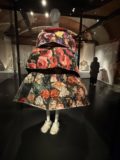


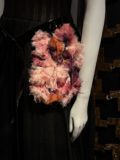

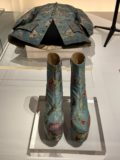
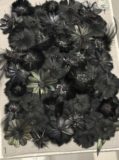


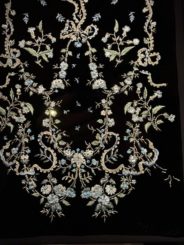


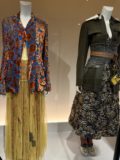


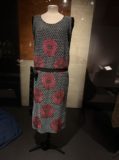


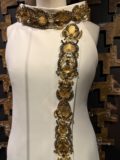
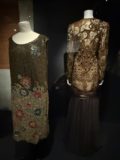
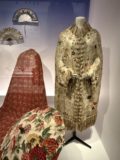


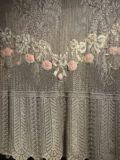
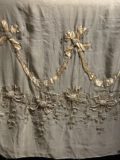

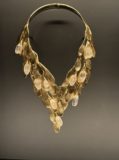


Flowers are the quiet protagonists of Tisser, Broder, Sublimer — Les Savoir-Faire de la Mode, the thread that binds centuries of textiles, gestures, and desires at the Palais Galliera from December 13, 2025 to October 18, 2026. Chosen as the guiding motif, the flower becomes a lens through which to read not only the evolution of style, but the evolution of touch itself — from the warp and weft of an 18th‑century brocade to the shimmer of contemporary artificial petals.
In this first chapter of a trilogy dedicated to fashion know-how, the museum turns its gaze to the arts of ornamentation: weaving, printing, embroidery, lace, and artificial flowers that ennoble and decorate garments and accessories. Here, the flower is more than décor; it is a language that has traversed eras, carrying codes of seduction, mourning, fantasy, and power from the 18th century to today.
The exhibition gathers over 350 works — dresses, accessories, textile samples, photographs, graphic arts, tools — revealing the dizzying variety of techniques that allow a simple floral motif to multiply into infinite forms. A single petal might be woven into a silk jacquard, reimagined in sequins by a brodeur, or sculpted in organdy by a parurier floral, each iteration a different articulation of the same fragile idea.
By spotlighting the ateliers and artisans behind the great names of fashion, the Palais Galliera makes visible the hands usually eclipsed by labels. Historic maisons and contemporary creators — from legendary embroidery houses and feather workers to young designers invited to produce pieces specifically for the show — enter into dialogue across the vitrines, proving that savoir-faire is a living, breathing ecosystem rather than a static heritage.
The scenography encourages an almost meditative viewing: magnifying tables and samples invite visitors to lean in, to follow the path of a thread or the architecture of a bud as it unfurls across tulle or velvet. In an age defined by acceleration and dematerialization, this insistence on slowness — on the irreducible time of the hand — feels radical, reminding us that true luxury is not the logo, but the gesture.
With Tisser, Broder, Sublimer, the Palais Galliera opens a new cycle devoted to the crafts and trades that have made Paris a capital of exceptional fashion craftsmanship. Anchored by the flower in all its states, this exhibition reads like a living herbarium of techniques and visions, a testament to how, in fashion, a motif as delicate as a blossom can carry the weight of history and the promise of metamorphosis.
Later,
Diane